Arborvitae 'Emerald Green' vs Hicks yew
Both make a dark evergreen hedge. Arborvitae is narrow and fast, wants sun, and is one of the plants deer eat most in winter. Yew takes sun or shade, and can be cut back hard into old wood and grow again, which arborvitae cannot. But yew is one of the most poisonous plants in any garden, to people, dogs, cats and horses alike.
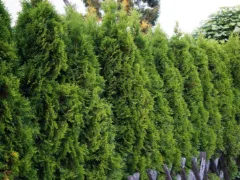 Arborvitae 'Emerald Green' Arborvitae 'Emerald Green'Thuja occidentalis 'Smaragd' | 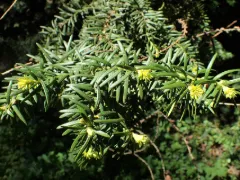 Hicks yew Hicks yewTaxus x media 'Hicksii' | |
|---|---|---|
| Size | 13 ft tall, 4 ft wide | 11½ ft tall, 5 ft wide |
| Plant | 3 ft apart | 3½ ft apart |
| Zones | 3 to 7 | 4 to 7 |
| Light | Full sun to part sun | Full sun to shade |
| Soil | Evenly moist, average fertility | Well-drained, average fertility |
| Flowers | None | None |
| Leaves | Fine, evergreen | Fine, evergreen |
| Job in a bed | Anchor | Anchor |
| Pets | No toxicity recorded | Toxic (severe) |
| Deer | Not listed as resistant | No record |
| Native | Variety of a native | No |
| Spread | Low risk | Low risk |
Rows where they differ are marked. Flowering times are for zone 5.
Which to choose
- Choose arborvitae 'Emerald Green' for colder gardens (to zone 3), moist soil, a garden with pets and a native garden.
- Choose Hicks yew for more shade.
Can they grow together?
Yes: they grow in the same conditions. They share full sun and part sun and zones 4 to 7.
Read more: all about arborvitae 'Emerald Green', and all about Hicks yew, each with a bed the planner designed around it.