Bleeding heart vs Fringed bleeding heart
Old-fashioned bleeding heart has the big arching sprays of hearts in spring, then goes dormant by midsummer and leaves a gap. Fringed bleeding heart, a native of the Appalachians, is smaller, with ferny leaves, and flowers on and off from late spring into late summer without going dormant.
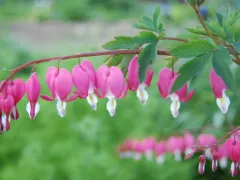 Bleeding heart Bleeding heartLamprocapnos spectabilis | 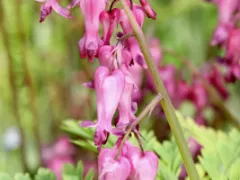 Fringed bleeding heart Fringed bleeding heartDicentra eximia | |
|---|---|---|
| Size | 2½ ft tall, 24 in wide | 16 in tall, 18 in wide |
| Plant | 24 in apart | 16 in apart |
| Zones | 3 to 9 | 3 to 9 |
| Light | Part shade to shade | Part sun to shade |
| Soil | Evenly moist, rich fertility | Well-drained, rich fertility |
| Flowers | Early May to early June; pink, white | Early May to late August; pink, white |
| Leaves | Medium, herbaceous | Fine, herbaceous |
| Job in a bed | Specimen | Drift |
| Pets | Toxic (moderate) | Toxic (mild) |
| Deer | Resistant | Resistant |
| Native | No | Yes |
| Spread | Low risk | Low risk |
Rows where they differ are marked. Flowering times are for zone 5.
Which to choose
- Choose bleeding heart for moist soil and more height (2½ ft against 16 in).
- Choose fringed bleeding heart for a native garden, a longer show (16 weeks of flower against 6), a smaller space (16 in against 2½ ft) and more wildlife.
Can they grow together?
Yes: they grow in the same conditions. Beside bleeding heart, fringed bleeding heart is in flower together for five weeks, from early May; low enough (16 in) to stand in front of it. They share part shade and shade and zones 3 to 9.
Read more: all about bleeding heart, and all about fringed bleeding heart, each with a bed the planner designed around it.