Delphinium vs Lupine
Both are the tall spires of an early-summer cottage border, and both are hard to grow well. Delphiniums want rich soil, staking and cool summers, and are taken by slugs. Lupines want lean, acid soil and hate heat and humidity; they are short-lived, and best treated as plants that last three or four years.
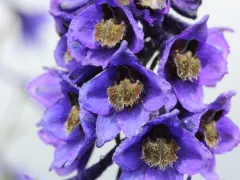 Delphinium DelphiniumDelphinium elatum | 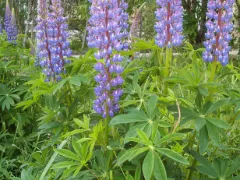 Lupine LupineLupinus polyphyllus | |
|---|---|---|
| Size | 5 ft tall, 24 in wide | 3½ ft tall, 20 in wide |
| Plant | 24 in apart | 18 in apart |
| Zones | 3 to 7 | 4 to 8 |
| Light | Full sun | Full sun to part sun |
| Soil | Well-drained, rich fertility | Well-drained, average fertility |
| Flowers | Late June to mid July; blue, purple, pink, white | Late May to early July; blue, purple, pink, red, yellow, white |
| Leaves | Medium, herbaceous | Medium, herbaceous |
| Job in a bed | Accent | Accent |
| Pets | Toxic (severe) | Toxic (mild) |
| Deer | Resistant | No record |
| Native | No | Yes |
| Spread | Low risk | Moderate risk |
Rows where they differ are marked. Flowering times are for zone 5.
Which to choose
- Choose delphinium for colder gardens (to zone 3), more height (5 ft against 3½ ft) and more wildlife.
- Choose lupine for more shade, warmer gardens (to zone 8), a native garden and a smaller space (3½ ft against 5 ft).
Can they grow together?
Yes: they grow in the same conditions. Beside delphinium, lupine is purple against yellow, opposite each other on the colour wheel, if you choose those colours, in flower together for three weeks. They share full sun and zones 4 to 7.
Read more: all about delphinium, and all about lupine, each with a bed the planner designed around it.