Japanese barberry vs Ninebark 'Little Devil'
Japanese barberry, especially in its purple forms, is a fixture of foundation plantings and is invasive in much of the eastern United States: birds spread its seed into woods, where its thickets shelter the ticks that carry Lyme disease. Dwarf ninebark 'Little Devil' gives the same small purple-leaved mound, and is a variety of a native shrub.
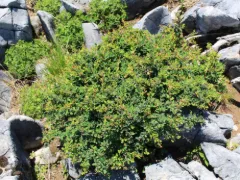 Japanese barberry Japanese barberryBerberis thunbergii | 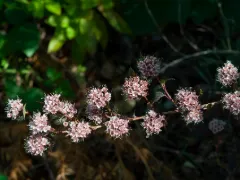 Ninebark 'Little Devil' Ninebark 'Little Devil'Physocarpus opulifolius 'Little Devil' | |
|---|---|---|
| Size | 4 ft tall, 5 ft wide | 3½ ft tall, 3½ ft wide |
| Plant | 4 ft apart | 3½ ft apart |
| Zones | 4 to 8 | 3 to 7 |
| Light | Full sun | Full sun |
| Soil | Well-drained, average fertility | Well-drained, average fertility |
| Flowers | Late April to early May; yellow | Late May to late June; pink |
| Leaves | Fine, deciduous | Fine, deciduous |
| Job in a bed | Anchor | Anchor |
| Pets | No toxicity recorded | No toxicity recorded |
| Deer | Resistant | Not listed as resistant |
| Native | No | Variety of a native |
| Spread | Invasive in places | Low risk |
Rows where they differ are marked. Flowering times are for zone 5.
Which to choose
- Choose Japanese barberry for warmer gardens (to zone 8) and deer country.
- Choose ninebark 'Little Devil' for colder gardens (to zone 3), a native garden, a plant that stays put (the other is invasive in places) and more wildlife.
Read more: all about Japanese barberry, and all about ninebark 'Little Devil', each with a bed the planner designed around it.