Siberian iris vs Bearded iris
Bearded iris wants sun and sharp drainage, with its fat rhizomes sitting on the surface to bake, and its leaves look tired by August. Siberian iris grows in ordinary to moist soil, makes a grassy clump that looks good all summer, and has smaller, more delicate flowers. Where bearded iris rots, Siberian iris is the answer.
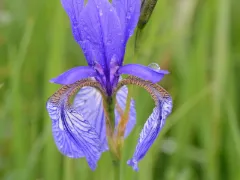 Siberian iris Siberian irisIris sibirica | 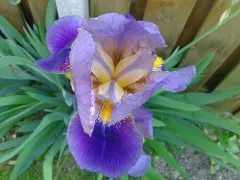 Bearded iris Bearded irisIris x germanica | |
|---|---|---|
| Size | 2½ ft tall, 18 in wide | 2½ ft tall, 18 in wide |
| Plant | 18 in apart | 16 in apart |
| Zones | 3 to 9 | 3 to 9 |
| Light | Full sun to part sun | Full sun |
| Soil | Evenly moist, average fertility | Dry and sharply drained, average fertility |
| Flowers | Late May to late June; blue, purple, white | Late May to mid June; purple, blue, white, yellow, pink, orange, red |
| Leaves | Fine, herbaceous | Medium, semi-evergreen |
| Job in a bed | Accent | Accent |
| Pets | Toxic (mild) | Toxic (mild) |
| Deer | Resistant | Resistant |
| Native | No | No |
| Spread | Low risk | Low risk |
Rows where they differ are marked. Flowering times are for zone 5.
Which to choose
- Choose Siberian iris for more shade, moist soil and more wildlife.
Can they grow together?
Yes: they grow in the same conditions. Beside Siberian iris, bearded iris is purple against yellow, opposite each other on the colour wheel, if you choose those colours, in flower together for three weeks. They share full sun and zones 3 to 9.
Read more: all about Siberian iris, and all about bearded iris, each with a bed the planner designed around it.