Blue fescue vs Blue oat grass
Both are steel-blue grasses for sun and dry soil. Blue fescue is a small tuft, a few inches tall, for the front edge, and is short-lived: divide it every few years. Blue oat grass is twice the size, a fountain of stiff blue blades, and a better middle-of-the-bed plant.
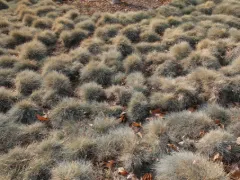 Blue fescue Blue fescueFestuca glauca | 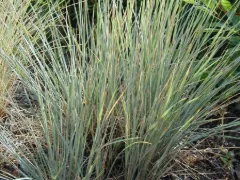 Blue oat grass Blue oat grassHelictotrichon sempervirens | |
|---|---|---|
| Size | 10 in tall, 10 in wide | 2½ ft tall, 2½ ft wide |
| Plant | 10 in apart | 24 in apart |
| Zones | 4 to 8 | 4 to 8 |
| Light | Full sun | Full sun |
| Soil | Dry and sharply drained, lean fertility | Dry and sharply drained, lean fertility |
| Flowers | Mid June to late June; tan | Early June to early July; tan |
| Leaves | Fine, semi-evergreen | Fine, semi-evergreen |
| Job in a bed | Edging | Specimen |
| Pets | No toxicity recorded | No toxicity recorded |
| Deer | Not listed as resistant | Resistant |
| Native | No | No |
| Spread | Low risk | Low risk |
Rows where they differ are marked. Flowering times are for zone 5.
Which to choose
- Choose blue fescue for a smaller space (10 in against 2½ ft).
- Choose blue oat grass for deer country and more height (2½ ft against 10 in).
Can they grow together?
Yes: they grow in the same conditions. Beside blue fescue, blue oat grass is adds the flowers, early June to early July; tall enough (2½ ft) to stand behind it; happy in the same dry soil. They share full sun and zones 4 to 8.
Read more: all about blue fescue, and all about blue oat grass, each with a bed the planner designed around it.