American vs purple beautyberry
Both are grown for their autumn berries, a vivid magenta-purple like nothing else in the garden. American beautyberry is the native of the Southeast, a bigger, looser shrub with berries in tight clusters around the stem, hardy to about zone 6. Purple beautyberry, from Asia, is smaller, hardier and more graceful, with slender arching branches lined with small clusters, but it seeds itself and has begun to escape into the wild in parts of the eastern United States. Where it is hardy, the native is the safer choice.
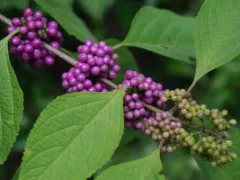 American beautyberry Callicarpa americana | 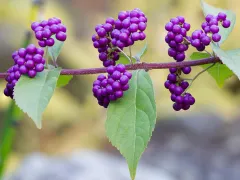 Purple beautyberry Callicarpa dichotoma | |
|---|---|---|
| Size | 6 ft tall, 6 ft wide | 4 ft tall, 5 ft wide |
| Plant | 5 ft apart | 4 ft apart |
| Zones | 6 to 10 | 5 to 8 |
| Light | Full sun to part sun | Full sun to part sun |
| Soil | Well-drained, average fertility | Well-drained, average fertility |
| Flowers | Late June to late July; pink | Late June to early August; pink |
| Leaves | Medium, deciduous | Medium, deciduous |
| Job in a bed | Anchor | Anchor |
| Pets | No toxicity recorded | No toxicity recorded |
| Deer | Resistant | Resistant |
| Native | Yes | No |
| Spread | Low risk | Moderate risk |
Rows where they differ are marked. Flowering times are for zone 5.
Which to choose
- Choose American beautyberry for warmer gardens (to zone 10), a native garden and more height (6 ft against 4 ft).
- Choose purple beautyberry for colder gardens (to zone 5) and a smaller space (4 ft against 6 ft).
Can they grow together?
Yes: they grow in the same conditions. What purple beautyberry brings beside American beautyberry: in flower together for five weeks, from late June. They share full sun and part sun and zones 6 to 8.
Read more: all about American beautyberry, and all about purple beautyberry, each with a bed the planner designed around it.