Bee balm vs Wild bergamot
Both are native monardas, with shaggy flower heads that bring hummingbirds and bees. Bee balm (Monarda didyma) is the red one, also sold in pink and purple: it comes from moist woodland edges in the East, wants rich soil that stays damp, and runs fast at the root. Wild bergamot (Monarda fistulosa) is lavender-pink, from dry prairies and fields across most of the continent, and is the one for dry soil. Both get powdery mildew by late summer; good air around them helps.
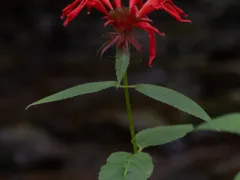 Bee balm Monarda didyma | 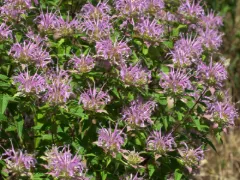 Wild bergamot Monarda fistulosa | |
|---|---|---|
| Size | 3 ft tall, 24 in wide | 3½ ft tall, 2½ ft wide |
| Plant | 24 in apart | 24 in apart |
| Zones | 4 to 9 | 3 to 9 |
| Light | Full sun to part sun | Full sun to part sun |
| Soil | Evenly moist, rich fertility | Dry and sharply drained, average fertility |
| Flowers | Early July to early August; red, pink, purple | Early July to late August; lavender |
| Leaves | Medium, herbaceous | Medium, herbaceous |
| Job in a bed | Drift | Drift |
| Pets | No toxicity recorded | No toxicity recorded |
| Deer | Resistant | Resistant |
| Native | Yes | Yes |
| Spread | High risk | Moderate risk |
Rows where they differ are marked. Flowering times are for zone 5.
Which to choose
- Choose bee balm for moist soil and more wildlife.
- Choose wild bergamot for colder gardens (to zone 3) and dry summers.
Can they grow together?
Yes: they grow in the same conditions. What wild bergamot brings beside bee balm: in flower together for six weeks, from early July. They share full sun and part sun and zones 4 to 9.
Read more: all about bee balm, and all about wild bergamot, each with a bed the planner designed around it.