Daffodil vs Jonquil
Every jonquil is a daffodil: both are Narcissus, and in the southern United States 'jonquil' is used for any daffodil. Strictly, jonquils are Narcissus jonquilla and its hybrids: several small, very fragrant flowers to a stem, over narrow, rush-like leaves. The big trumpet daffodils carry one large flower on each stem and little scent. Jonquils stand southern heat better, and their thin leaves are less of an eyesore as they die down.
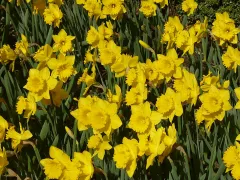 Daffodil Narcissus | 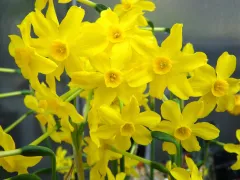 Jonquil Narcissus jonquilla | |
|---|---|---|
| Size | 16 in tall, 6 in wide | 12 in tall, 5 in wide |
| Plant | 6 in apart | 4 in apart |
| Zones | 3 to 8 | 4 to 8 |
| Light | Full sun to part sun | Full sun |
| Soil | Well-drained, average fertility | Well-drained, average fertility |
| Flowers | Mid April to early May; yellow, white, orange | Mid April to early May; yellow |
| Leaves | Fine, summer-dormant | Fine, summer-dormant |
| Job in a bed | Bulb layer | Bulb layer |
| Pets | Toxic (moderate) | Toxic (moderate) |
| Deer | No record | Resistant |
| Native | No | No |
| Spread | Low risk | Low risk |
Rows where they differ are marked. Flowering times are for zone 5.
Which to choose
- Choose daffodil for more shade and colder gardens (to zone 3).
- Choose jonquil for dry summers.
Can they grow together?
Yes: they grow in the same conditions. What jonquil brings beside daffodil: in flower together for four weeks, from mid April. They share full sun and zones 4 to 8.
Read more: all about daffodil, and all about jonquil, each with a bed the planner designed around it.