Pampas grass vs maiden grass
Both are big grasses with plumes in autumn, and both are invasive in parts of the United States. Pampas grass is the giant: ten feet, with dense silver or pink plumes and evergreen leaves whose edges cut skin, hardy only to about zone 7; its wind-blown seed has overrun coastal hillsides in California. Maiden grass (Miscanthus) is smaller, finer and hardier, with copper plumes and buff winter leaves, and is listed as invasive in many eastern states. Switchgrass is the native alternative to both.
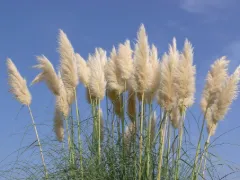 Pampas grass Cortaderia selloana | 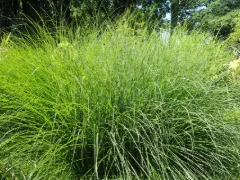 Maiden grass 'Gracillimus' Miscanthus sinensis 'Gracillimus' | |
|---|---|---|
| Size | 10 ft tall, 6½ ft wide | 6 ft tall, 4 ft wide |
| Plant | 6 ft apart | 3½ ft apart |
| Zones | 7 to 10 | 5 to 9 |
| Light | Full sun | Full sun |
| Soil | Well-drained, average fertility | Well-drained, average fertility |
| Flowers | Late August to late November; cream, pink | Mid September to early November; tan |
| Leaves | Medium, evergreen | Fine, herbaceous |
| Job in a bed | Specimen | Specimen |
| Pets | No toxicity recorded | No toxicity recorded |
| Deer | Resistant | Resistant |
| Native | No | No |
| Spread | Invasive in places | Invasive in places |
Rows where they differ are marked. Flowering times are for zone 5.
Which to choose
- Choose pampas grass for warmer gardens (to zone 10), leaves in winter, a longer show (14 weeks of flower against 7) and more height (10 ft against 6 ft).
- Choose maiden grass 'Gracillimus' for colder gardens (to zone 5) and a smaller space (6 ft against 10 ft).
Read more: all about pampas grass, and all about maiden grass 'Gracillimus', each with a bed the planner designed around it.