Siberian iris vs Japanese iris
Both are beardless irises with grassy leaves, and they flower one after the other. Siberian iris comes first, in early summer, with smaller flowers on slender stems, and grows almost anywhere in sun: ordinary to wet soil, and dry spells once it is settled. Japanese iris flowers a few weeks later with the largest, flattest flowers of any iris, but it is fussier: it wants acid soil that is wet in summer and drier in winter, and it hates lime.
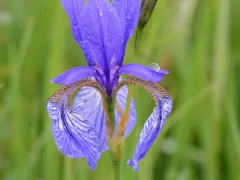 Siberian iris Iris sibirica | 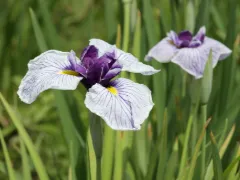 Japanese iris Iris ensata | |
|---|---|---|
| Size | 2½ ft tall, 18 in wide | 3 ft tall, 20 in wide |
| Plant | 18 in apart | 18 in apart |
| Zones | 3 to 9 | 4 to 9 |
| Light | Full sun to part sun | Full sun to part sun |
| Soil | Evenly moist, average fertility | Moist to wet, rich fertility |
| Flowers | Late May to late June; blue, purple, white | Late June to mid July; purple, blue, white, pink |
| Leaves | Fine, herbaceous | Medium, herbaceous |
| Job in a bed | Accent | Accent |
| Pets | Toxic (mild) | Toxic (mild) |
| Deer | Resistant | Resistant |
| Native | No | No |
| Spread | Low risk | Low risk |
Rows where they differ are marked. Flowering times are for zone 5.
Which to choose
- Choose Siberian iris for colder gardens (to zone 3), dry summers and more wildlife.
Can they grow together?
Yes: they grow in the same conditions. They share full sun and part sun and zones 4 to 9.
Read more: all about Siberian iris, and all about Japanese iris, each with a bed the planner designed around it.