Solomon's seal vs False Solomon's seal
Both have arching stems of ladder-like leaves in shade, and the way to tell them apart is the flowers. Solomon's seal hangs small, greenish-white bells in pairs under the stem, followed by blue-black berries. False Solomon's seal carries a creamy, scented plume at the tip of the stem, where it shows better, followed by red berries. Both are natives of North American woods, both spread slowly into colonies, and both turn gold in autumn.
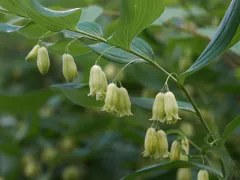 Solomon's seal Polygonatum biflorum | 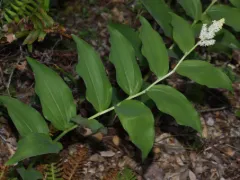 False Solomon's seal Maianthemum racemosum | |
|---|---|---|
| Size | 3 ft tall, 24 in wide | 2½ ft tall, 24 in wide |
| Plant | 18 in apart | 18 in apart |
| Zones | 3 to 9 | 3 to 8 |
| Light | Part shade to shade | Part shade to shade |
| Soil | Evenly moist, rich fertility | Evenly moist, rich fertility |
| Flowers | Early May to late May; white | Early May to early June; white |
| Leaves | Medium, herbaceous | Medium, herbaceous |
| Job in a bed | Drift | Drift |
| Pets | Toxic (mild) | No toxicity recorded |
| Deer | Not listed as resistant | Not listed as resistant |
| Native | Yes | Yes |
| Spread | Low risk | Low risk |
Rows where they differ are marked. Flowering times are for zone 5.
Which to choose
- Choose Solomon's seal for warmer gardens (to zone 9).
- Choose false Solomon's seal for a garden with pets.
Can they grow together?
Yes: they grow in the same conditions. What false Solomon's seal brings beside Solomon's seal: in flower together for four weeks, from early May; happy in the same moist soil. They share part shade and shade and zones 3 to 8.
Read more: all about Solomon's seal, and all about false Solomon's seal, each with a bed the planner designed around it.