Wild columbine vs European columbine
Wild columbine is the native of eastern North America: nodding red and yellow flowers with long spurs, timed to the return of the hummingbirds that pollinate it. European columbine, the granny's bonnet of cottage gardens, has short-spurred flowers in violet, pink, plum or white, flowers a little later, and seeds into every crack, each seedling a slightly different colour. Both keep going by seeding themselves.
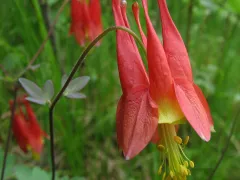 Wild columbine Aquilegia canadensis | 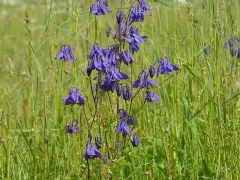 European columbine Aquilegia vulgaris | |
|---|---|---|
| Size | 24 in tall, 12 in wide | 2½ ft tall, 18 in wide |
| Plant | 12 in apart | 14 in apart |
| Zones | 3 to 8 | 3 to 8 |
| Light | Full sun to part shade | Full sun to part shade |
| Soil | Well-drained, average fertility | Well-drained, average fertility |
| Flowers | Early May to early June; red, yellow | Mid May to late June; purple, blue, pink, white |
| Leaves | Fine, herbaceous | Medium, herbaceous |
| Job in a bed | Weaver | Drift |
| Pets | Toxic (mild) | Toxic (mild) |
| Deer | Resistant | No record |
| Native | Yes | No |
| Spread | Moderate risk | Moderate risk |
Rows where they differ are marked. Flowering times are for zone 5.
Which to choose
- Choose wild columbine for a native garden and more wildlife.
Can they grow together?
Yes: they grow in the same conditions. What European columbine brings beside wild columbine: purple against yellow, opposite each other on the colour wheel, if you choose those colours, in flower together for four weeks. They share full sun, part sun and part shade and zones 3 to 8.
Read more: all about wild columbine, and all about European columbine, each with a bed the planner designed around it.