Yellow flag iris vs Blue flag iris
Both are irises of wet ground and shallow water, with sword-shaped leaves. Yellow flag, from Europe, is the bigger and bolder, and has become one of the worst wetland invaders in North America: it spreads by rhizomes and by seed that floats, and it is banned from sale in many states. Blue flag is the native: a smaller plant with violet-blue flowers veined in yellow and white, which does the same job beside a pond and belongs there.
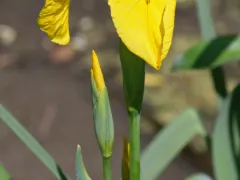 Yellow flag iris Iris pseudacorus | 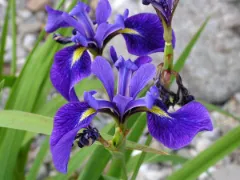 Blue flag iris Iris versicolor | |
|---|---|---|
| Size | 4 ft tall, 2½ ft wide | 2½ ft tall, 24 in wide |
| Plant | 24 in apart | 18 in apart |
| Zones | 4 to 9 | 3 to 9 |
| Light | Full sun to part sun | Full sun to part sun |
| Soil | Moist to wet, rich fertility | Moist to wet, rich fertility |
| Flowers | Late May to late June; yellow | Late May to late June; blue |
| Leaves | Medium, herbaceous | Medium, herbaceous |
| Job in a bed | Accent | Accent |
| Pets | Toxic (mild) | Toxic (mild) |
| Deer | Not listed as resistant | Resistant |
| Native | No | Yes |
| Spread | Invasive in places | Low risk |
Rows where they differ are marked. Flowering times are for zone 5.
Which to choose
- Choose yellow flag iris for more height (4 ft against 2½ ft).
- Choose blue flag iris for colder gardens (to zone 3), deer country, a native garden, a plant that stays put (the other is invasive in places) and a smaller space (2½ ft against 4 ft).
Read more: all about yellow flag iris, and all about blue flag iris, each with a bed the planner designed around it.