English lavender vs Spanish lavender
Spanish lavender is easy to tell apart: each plump flower head is topped with a tuft of purple bracts like rabbit's ears. It flowers earlier, from spring, and stands heat and humidity better than English lavender, but it is far less hardy, to about zone 8 against zone 5. English lavender is the one for cold winters, for the sweetest scent and for cooking.
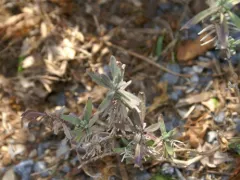 English lavender 'Munstead' Lavandula angustifolia 'Munstead' | 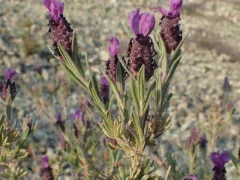 Spanish lavender Lavandula stoechas | |
|---|---|---|
| Size | 16 in tall, 18 in wide | 24 in tall, 24 in wide |
| Plant | 18 in apart | 24 in apart |
| Zones | 5 to 8 | 8 to 9 |
| Light | Full sun | Full sun |
| Soil | Dry and sharply drained, lean fertility | Dry and sharply drained, lean fertility |
| Flowers | Late June to late July; lavender | Early May to late June; purple |
| Leaves | Fine, evergreen | Fine, evergreen |
| Job in a bed | Edging | Drift |
| Pets | Toxic (mild) | Toxic (mild) |
| Deer | Not listed as resistant | Resistant |
| Native | No | No |
| Spread | Low risk | Low risk |
Rows where they differ are marked. Flowering times are for zone 5.
Which to choose
- Choose English lavender 'Munstead' for colder gardens (to zone 5) and a smaller space (16 in against 24 in).
- Choose Spanish lavender for warmer gardens (to zone 9), deer country, a longer show (9 weeks of flower against 6) and more height (24 in against 16 in).
Can they grow together?
Yes: they grow in the same conditions. What Spanish lavender brings beside English lavender 'Munstead': in flower together for two weeks, from late June; a low mound at the foot of its spires; happy in the same dry soil. They share full sun and zone 8.
Read more: all about English lavender 'Munstead', and all about Spanish lavender, each with a bed the planner designed around it.