What flowers in February
The perennials, bulbs and shrubs in flower in February, which of them start this month, and how the dates move with your zone.
February is the month of snowdrops, hellebores and witch hazel: few flowers, but every one of them noticed.
22 of the planner's plants are in flower at some point in February in zone 5, and 15 of them start this month. Spring flowers move with the zone: in zone 7 expect them about two weeks earlier than the dates here, in zone 3 two weeks later.
22 plants: 4 perennials, 4 bulbs and 14 shrubs.
The dozen to start with
-
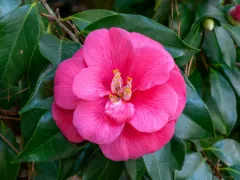
Japanese camellia
10 ft · early February to early April · starts early February
Polished, dark evergreen leaves and large, formal flowers in red, pink or white from late winter into spring.
-
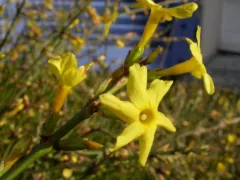
Winter jasmine
4 ft · early January to late March · until late March
Bright yellow flowers open on bare, arching, green stems through the mildest spells of winter.
-
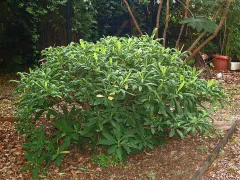
Paperbush
6 ft · early February to late March · starts early February
Silvery, silk-covered buds hang from the bare, cinnamon-brown branches all winter and open in late winter to nodding globes of yellow, scented flowers.
-
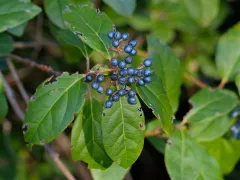
Laurustinus
8 ft · early January to early April · until early April
A dense, dark evergreen that carries pink buds and white flowers from late autumn right through winter into spring, followed by metallic blue berries.
-
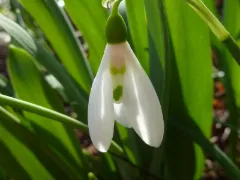
Giant snowdrop
8 in · mid February to mid March · starts mid February
A larger, earlier snowdrop with broad, grey-green leaves and big flowers marked with green.
-

Corsican hellebore
2½ ft · late February to late April · starts late February
Stout stems carry leathery, three-part, spiny-edged leaves of pale jade green, topped from late winter with big clusters of apple-green cups.
-
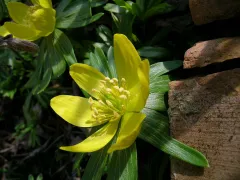
Winter aconite
4 in · late February to mid March · starts late February
Bright yellow cups, each sitting on a green ruff, open at ground level in late winter, often through snow.
-

Winter cyclamen
3 in · early February to late March · starts early February
Small, swept-back flowers in magenta, pink or white in the depths of winter, over rounded leaves that are often marbled with silver.
A bed at its best in February
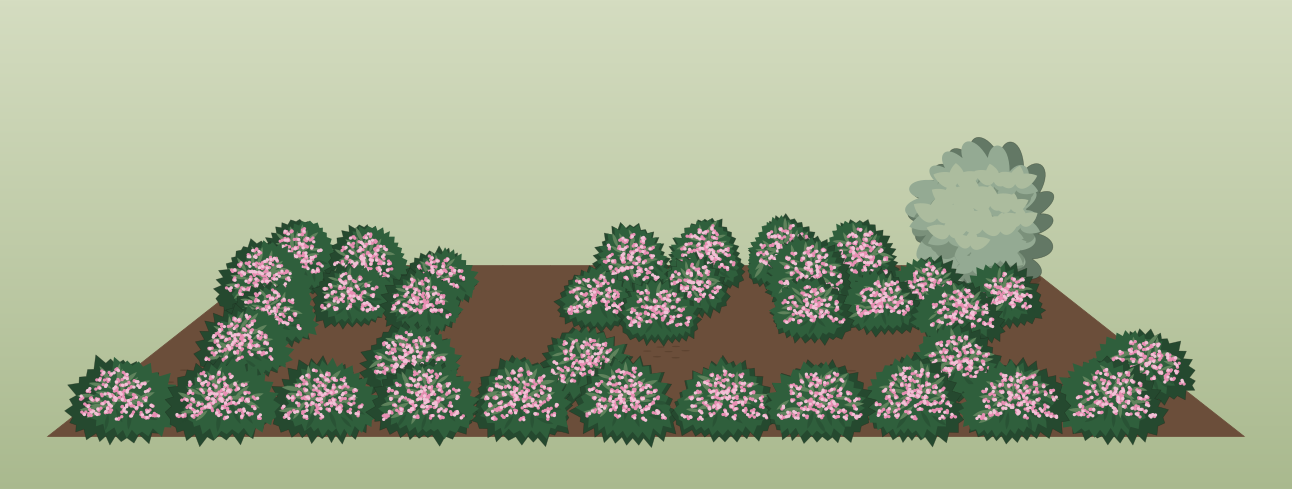
The planner was given only the plants on this page that suit zone 6 and full sun, and designed this 16 × 8 ft (4.9 × 2.4 m) bed from them when the page was made. It is a bed for February on purpose, so its design check marks it down for the rest of the year: a real border would add plants for the other seasons.
The plants
- 1 Winter heath × 28, pink
- 2 Corsican hellebore × 1, green
- 3 Winter heath 'Kramer's Red' × 8, pink
- 4 Giant snowdrop × 12, white
- 5 Winter aconite × 12, yellow
- 6 Double snowdrop × 12, white
Planned as a cottage garden: 22 of the 37 plants (59%), bulbs aside, stand alone or in groups of no more than five, small enough for the kinds to mingle. Cool colours (pink) with yellow as the warm note, and green and white to calm things between them. Winter heath 'Kramer's Red' is the first into flower, in mid January, and corsican hellebore the last to finish, in late April. This plan is weakest on the flowering season and cover for dying bulb leaves, a Fail in the Design check, which also says heights needs revision.
The planner's own design check: 6 Excellent, 6 Good, 2 Satisfactory, 1 Needs revision, 2 Fail. Its weakest point is succession: Something is in flower for 16 weeks of the year, from mid January to late April, with no pause. Nothing flowers in summer and autumn.
Open this bed in the planner Change its size, the sun or the style, move plants about, or swap one for another.
All 22 plants
Front of a bed 9
- Christmas rose 12 in · late February to early April · starts late February
- Double snowdrop 5 in · early February to mid March · starts early February
- Giant snowdrop 8 in · mid February to mid March · starts mid February
- Hellebore 'Pink Frost' 16 in · late February to mid April · starts late February
- Sweet box 18 in · early February to late March · starts early February
- Winter aconite 4 in · late February to mid March · starts late February
- Winter cyclamen 3 in · early February to late March · starts early February
- Winter heath 10 in · late January to mid April · until mid April
- Winter heath 'Kramer's Red' 14 in · mid January to mid April · until mid April
Middle of a bed 2
- Corsican hellebore 2½ ft · late February to late April · starts late February
- Stinking hellebore 24 in · late February to mid April · starts late February
Back of a bed 11
- Christmas box 4 ft · early January to early March · until early March
- Corkscrew hazel 8 ft · late February to late March · starts late February
- Japanese camellia 10 ft · early February to early April · starts early February
- Laurustinus 8 ft · early January to early April · until early April
- Paperbush 6 ft · early February to late March · starts early February
- Vernal witch hazel 8 ft · mid January to early March · until early March
- Winter daphne 4 ft · early February to late March · starts early February
- Winter jasmine 4 ft · early January to late March · until late March
- Witch hazel 'Arnold Promise' 13 ft · early February to mid March · starts early February
- Witch hazel 'Diane' 10 ft · early February to mid March · starts early February
- Witch hazel 'Jelena' 11½ ft · late January to mid March · until mid March