Host plants for the spring azure
The garden plants whose leaves spring azure caterpillars eat, and a bed the planner designed around them.
The spring azure (Celastrina ladon) is a butterfly. Like every butterfly and moth, it can lay its eggs only on the plants its caterpillars can eat, its host plants. A garden with nectar flowers feeds the adults as they pass; a garden with host plants is where the next generation is raised.
These 10 garden plants are recorded by NC State as hosts for its caterpillars. Expect chewed leaves: that is the point. Do not spray, and leave fallen leaves under the plants in winter, where many caterpillars and pupae spend it.
10 plants: 1 perennial and 9 shrubs.
The host plants
-

Staghorn sumac 'Tiger Eyes'
6 ft · late June to mid July
Deeply cut, ferny leaves that open chartreuse, turn bright yellow on fuzzy, rose-pink stems, and end the year in orange and scarlet.
-
Red twig dogwood 'Arctic Fire'
4 ft · grown for its leaves
A compact form of the native red twig dogwood, with dark red winter stems, and it does not sucker.
-
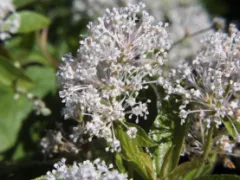
New Jersey tea
3 ft · mid June to mid July
A compact native shrub with fluffy clusters of white flowers in early summer that draw an extraordinary range of small pollinators and hummingbirds.
-

Red osier dogwood
8 ft · late May to mid June
A thicket of dark red stems, brightest in late winter, with flat white flower heads, white berries and purple-red leaves in autumn.
-
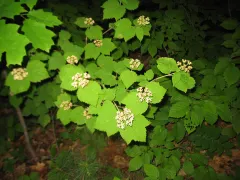
Mapleleaf viburnum
5 ft · late May to mid June
A small native viburnum with maple-shaped leaves, flat white flower heads and black berries.
-

Black cohosh
5 ft · early July to early August
Wands of white, bottlebrush flowers rise to head height above a mound of dark, divided leaves in midsummer and glow in shade.
-

Arrowwood viburnum 'Blue Muffin'
6 ft · late May to mid June
A compact arrowwood with creamy flower heads in early summer and clusters of intensely blue berries in late summer.
-

-

Witherod viburnum 'Winterthur'
6½ ft · early June to late June
Glossy leaves that turn deep maroon-red in autumn, and berries that ripen from white through pink to blue, with all the colours showing at once.
-
White meadowsweet
4 ft · late June to late August
Upright, yellowish-brown stems end in fuzzy cones of small white flowers through summer.
A bed for the spring azure
The planner designed this 16 × 8 ft (4.9 × 2.4 m) bed for zone 6 and part sun when this page was made, keeping arrowwood viburnum 'Blue Muffin', black cohosh and mapleleaf viburnum on it.
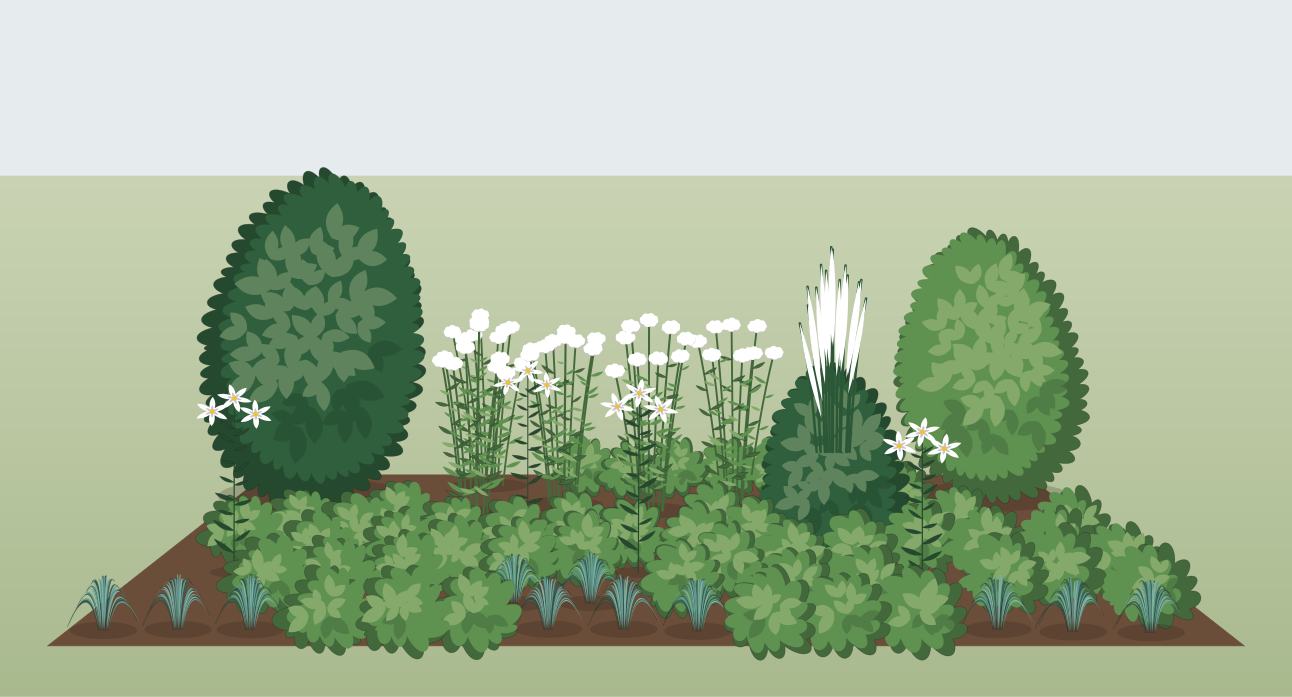
The plants
- 1 Arrowwood viburnum 'Blue Muffin' × 1, white
- 2 Black cohosh × 1, white
- 3 Mapleleaf viburnum × 1, white
- 4 Leadwort × 50, blue
- 5 Sedge 'Bunny Blue' × 11, blue-green leaves
- 6 Swamp milkweed 'Ice Ballet' × 5, white
- 7 Easter lily × 4, white
- 8 Grecian windflower × 3, pink
- 9 Double snowdrop × 8, white
Planned as a naturalistic planting: low grasses and groundcovers, the matrix, make up 56% of the planted ground. The flowers stay on the cool side of the palette: blue, pink and white. The back corners are held by arrowwood viburnum 'Blue Muffin' and mapleleaf viburnum, the tallest plants on the plan.
The planner's own design check: 10 Excellent, 6 Good, 1 Satisfactory.
Open this bed in the planner Change its size, the sun or the style, move plants about, or swap one for another.
All 10 plants
Middle of a bed 1
- New Jersey tea 3 ft · mid June to mid July
Back of a bed 9
- Arrowwood viburnum 'Blue Muffin' 6 ft · late May to mid June
- Black cohosh 5 ft · early July to early August
- Mapleleaf viburnum 5 ft · late May to mid June
- Red osier dogwood 8 ft · late May to mid June
- Red twig dogwood 'Arctic Fire' 4 ft · grown for its leaves
- Staghorn sumac 'Tiger Eyes' 6 ft · late June to mid July
- White meadowsweet 4 ft · late June to late August
- Witherod viburnum 'Winterthur' 6½ ft · early June to late June
- Yellow twig dogwood 6½ ft · grown for its leaves