Host plants for the fritillary butterflies
The garden plants whose leaves fritillary butterflies caterpillars eat, and a bed the planner designed around them.
The fritillary butterflies (Speyeria and Boloria species) is a butterfly. Like every butterfly and moth, it can lay its eggs only on the plants its caterpillars can eat, its host plants. A garden with nectar flowers feeds the adults as they pass; a garden with host plants is where the next generation is raised.
These four garden plants are recorded by NC State as hosts for its caterpillars. Expect chewed leaves: that is the point. Do not spray, and leave fallen leaves under the plants in winter, where many caterpillars and pupae spend it.
4 plants: 4 perennials.
The host plants
-
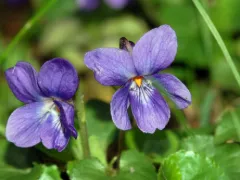
Sweet violet
6 in · late March to early May
The scented violet of florists and perfumers: small, deep violet or white flowers in late winter and early spring, with a sweet fragrance.
-
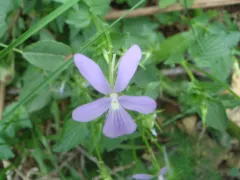
Horned violet
6 in · mid April to late June
Small, pansy-like flowers on a tufted plant, in purple, blue, yellow or white, from spring until the weather turns hot.
-
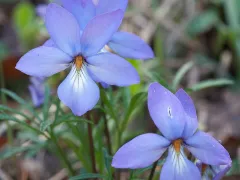
Bird's-foot violet
5 in · late April to late May
Large, flat, pansy-like flowers of lilac and deep violet, with orange stamens, over leaves cut into narrow fingers like a bird's foot.
-
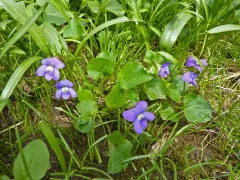
Common blue violet
8 in · mid April to late May
The familiar wild violet of lawns and woods: blue-violet flowers over heart-shaped leaves in spring.
A bed for the fritillary butterflies
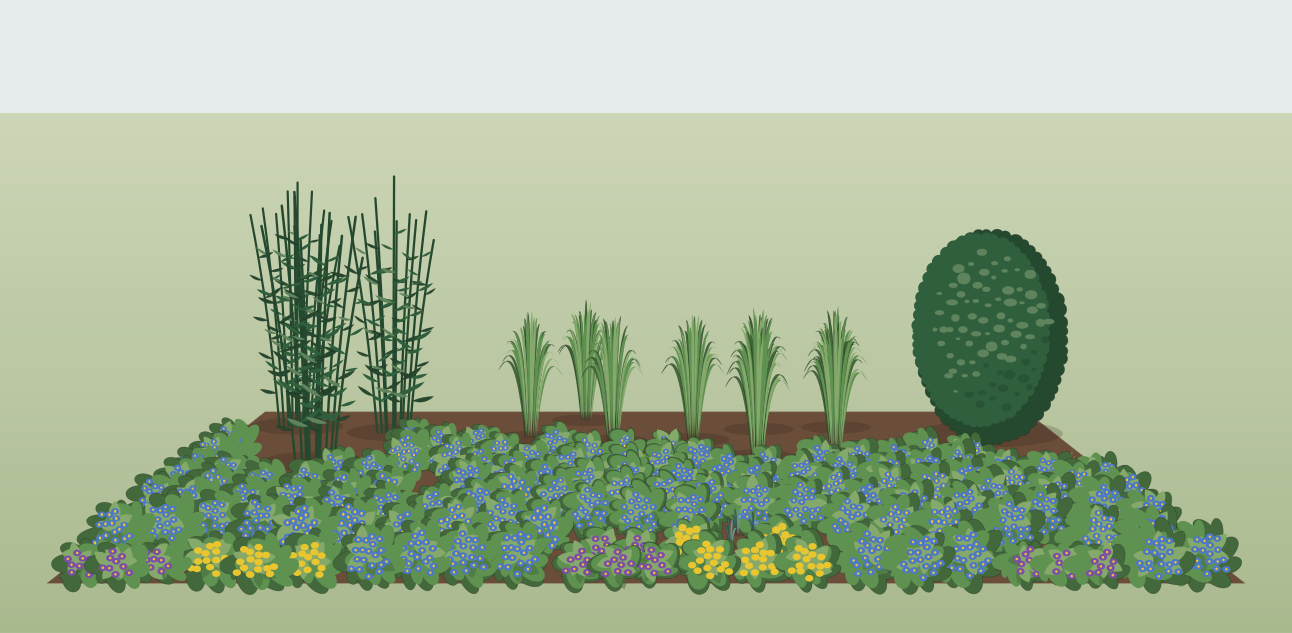
The planner designed this 16 × 8 ft (4.9 × 2.4 m) bed for zone 6 and part sun when this page was made, keeping bird's-foot violet, common blue violet and horned violet on it.
The plants
- 1 Bird's-foot violet × 11, purple
- 2 Common blue violet × 108, blue
- 3 Horned violet × 8, yellow
- 4 Littleleaf boxwood 'Winter Gem' × 1, dark green leaves
- 5 Culver's root 'Fascination' × 3, lavender
- 6 Northern sea oats × 8, tan
- 7 Giant snowdrop × 3, white
- 8 Snowdrop × 5, white
Planned as a naturalistic planting: low grasses and groundcovers, the matrix, make up 71% of the planted ground. Culver's root 'Fascination' and littleleaf boxwood 'Winter Gem' anchor the back corners of the bed: the tallest plants on the plan stand there. Neither end outweighs the other: the visual weight is split 54 to 46, left to right.
The planner's own design check: 11 Excellent, 4 Good, 1 Satisfactory, 1 Needs revision. Its weakest point is right plant, right place: Every plant here suits your hardiness zone and light. Most of these plants want moist soil, but bird's-foot violet wants dry soil. It flags one thing to watch: Common blue violet spreads aggressively. Northern sea oats spreads aggressively.
Open this bed in the planner Change its size, the sun or the style, move plants about, or swap one for another.
All 4 plants
Front of a bed 4
- Bird's-foot violet 5 in · late April to late May
- Common blue violet 8 in · mid April to late May
- Horned violet 6 in · mid April to late June
- Sweet violet 6 in · late March to early May