Perennials for zone 4
What grows in USDA zone 4, where winters reach −20 to −10 °F, and when it flowers there.
USDA zone 4 is where the coldest night of an average winter falls between −20 and −10 °F (−29 to −23 °C). Zones measure only that one night, so they say what will survive a winter, not how hot the summer is or how long the season runs.
925 of the planner's 1400 plants are hardy in zone 4. Below are the dozen to start with, when things flower in zone 4 month by month, the plants at the very edge of their range here, and a bed the planner designed for a zone-4 garden in full sun.
925 plants: 594 perennials, 33 ferns, 71 bulbs, 44 grasses and 183 shrubs.
The dozen to start with
-
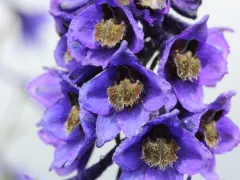
Delphinium
5 ft · late June to late July
The great blue spire of the English border: dense columns of flowers up to head height in early summer.
-
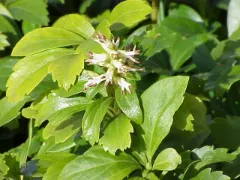
Japanese pachysandra
8 in · grown for its leaves
Whorls of glossy, toothed, evergreen leaves form a uniform carpet under trees.
-
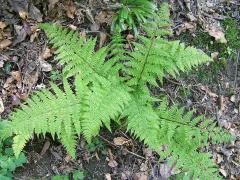
Lady fern
2½ ft · grown for its leaves
The classic lacy fern: light green, finely cut, arching fronds that keep unfurling all summer.
-
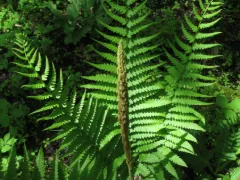
Cinnamon fern
4 ft · grown for its leaves
A tall vase of green fronds surrounds stiff, upright, cinnamon-brown spore stalks in spring.
-
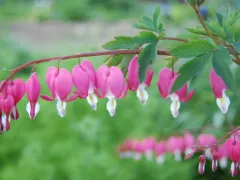
Bleeding heart
2½ ft · early May to mid June
An old-fashioned favourite with arching stems of heart-shaped flowers in late spring.
-

Mock orange
10 ft · early June to late June
A big, old-fashioned shrub covered in white, four-petalled flowers in early summer, with a scent like orange blossom that carries across the garden.
-

Blue fescue
10 in · grown for its leaves
A compact ornamental grass that forms neat tufts of striking blue-silver blades.
-

Christmas fern
20 in · grown for its leaves
The most useful native fern: leathery, dark green fronds that stay green through winter, in a tidy clump that never spreads.
-
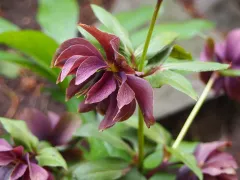
Lenten rose
18 in · late March to mid May
One of the first perennials to flower, with nodding, long-lasting blooms that often open while snow is still melting.
-
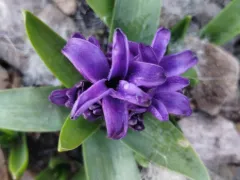
Hyacinth
10 in · mid April to early May
Dense, waxy spikes of intensely fragrant flowers in blue, purple, pink, white or soft yellow, in mid-spring.
-
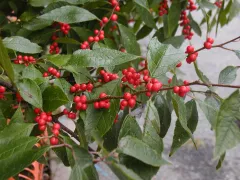
Winterberry
8 ft · grown for its leaves · host plant
A native holly that drops its leaves in autumn to show branches packed with bright red berries, which last into winter until the birds take them.
-
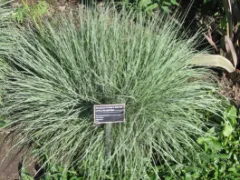
Little bluestem
3 ft · grown for its leaves · host plant
Blue-green summer blades turn copper and bronze in autumn and hold their colour through winter.
When things flower in zone 4
How many of these plants are in flower in each month in zone 4, and some of the familiar ones that open that month. Spring flowers here are about a week later than in zone 5.
| Month | In flower | Opening this month |
|---|---|---|
| January | 1 | |
| February | 3 | |
| March | 21 | Crocus, Lenten rose and Snowdrop |
| April | 85 | Creeping phlox, Creeping phlox 'Emerald Blue' and Daffodil |
| May | 271 | Bearded iris, Bleeding heart and Blue false indigo |
| June | 362 | Asiatic lily, Astilbe and Blanket flower 'Arizona Sun' |
| July | 357 | Bee balm, Bee balm 'Jacob Cline' and Bigleaf hydrangea 'Endless Summer' |
| August | 338 | Black-eyed Susan 'Goldsturm', Hardy hibiscus and Hosta 'Guacamole' |
| September | 217 | |
| October | 77 | |
| November | 6 | |
| December | 1 |
A zone-4 bed
The planner designed this 16 × 8 ft (4.9 × 2.4 m) bed for zone 4 and full sun when this page was made.
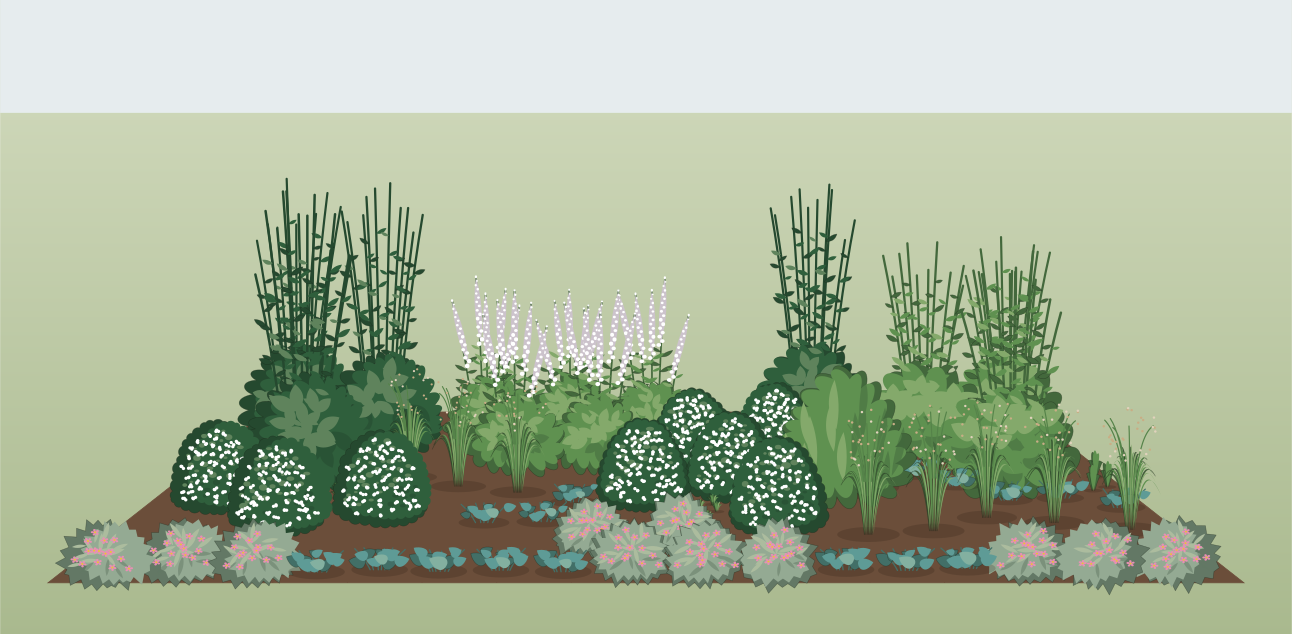
The plants
- 1 Dianthus 'Kahori' × 11, pink
- 2 Sedum 'Lidakense' × 16, pink
- 3 White mugwort × 4, cream
- 4 Tatarian aster 'Jindai' × 3, purple
- 5 Globe arborvitae 'Danica' × 1, green leaves
- 6 Foxglove beardtongue × 5, white
- 7 Quaking grass × 8, tan
- 8 Lowbush blueberry × 8, white
- 9 Hyacinth × 3, blue
- 10 Crocus 'Ruby Giant' × 12, purple
Planned as an English border: 9 of the 12 groups (75%) are drifts, longer along the bed than they are deep. Sedum 'Lidakense' repeats along the bed to tie it together. The flowering year starts with crocus 'Ruby Giant' in early March and ends with Tatarian aster 'Jindai' in early November.
The planner's own design check: 12 Excellent, 5 Good. It flags one thing to watch: Nothing on this plan is highly poisonous or an aggressive spreader.
Open this bed in the planner Change its size, the sun or the style, move plants about, or swap one for another.
At the edge of their range in zone 4
Hardy to zone 4 and no colder (429). They survive a normal zone-4 winter but not a harder one: give them the warmest, best-drained spot you have, and a mulch in their first winter.
- Astilbe
- Bee balm
- Bee balm 'Jacob Cline'
- Bigleaf hydrangea 'Endless Summer'
- Black-eyed Susan 'American Gold Rush'
- Blue fescue
- Blue fescue 'Elijah Blue'
- Catmint 'Walker's Low'
- Coral bells
- Coral bells 'Caramel'
- Coral bells 'Palace Purple'
- Creeping thyme
- Daffodil 'Tete-a-Tete'
- Dwarf Hinoki cypress
- Feather reed grass 'Karl Foerster'
- Foxglove
- Garden phlox
- Garden phlox 'David'
- Grape hyacinth
- Hardy hibiscus
- Hicks yew
- Hyacinth
- Hyacinth 'Delft Blue'
- Itoh peony 'Bartzella'
- Japanese anemone
- Japanese pachysandra
- Japanese painted fern
- Lamb's ear
- Lenten rose
- Lupine
And 399 more.