Perennials for zone 7
What grows in USDA zone 7, where winters reach 10 to 20 °F, and when it flowers there.
USDA zone 7 is where the coldest night of an average winter falls between 10 and 20 °F (−12 to −7 °C). Zones measure only that one night, so they say what will survive a winter, not how hot the summer is or how long the season runs.
1335 of the planner's 1400 plants are hardy in zone 7. Below are the dozen to start with, when things flower in zone 7 month by month, the plants at the very edge of their range here, and a bed the planner designed for a zone-7 garden in full sun.
1335 plants: 755 perennials, 55 ferns, 105 bulbs, 85 grasses and 335 shrubs.
The dozen to start with
-
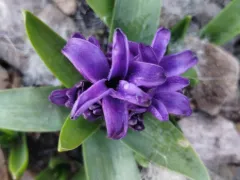
Hyacinth
10 in · late March to mid April
Dense, waxy spikes of intensely fragrant flowers in blue, purple, pink, white or soft yellow, in mid-spring.
-

Mexican feather grass
20 in · late May to mid July
The finest-textured grass: hair-thin, bright green leaves and silky, blond flower heads that ripple like water in the slightest breeze.
-
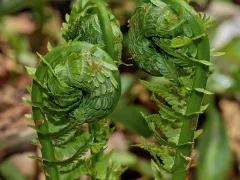
Ostrich fern
4 ft · grown for its leaves
Tall, feathery fronds form an elegant green vase that gives height at the back of a shady bed.
-

Common lilac
11½ ft · late April to mid May · host plant
The lilac of old farmyards: large, heavily scented flower trusses in lilac, purple, white or pink in mid-spring, on a tall, suckering shrub that can live for a century.
-
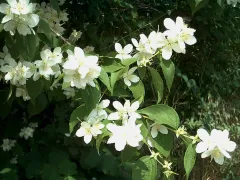
Mock orange
10 ft · mid May to mid June
A big, old-fashioned shrub covered in white, four-petalled flowers in early summer, with a scent like orange blossom that carries across the garden.
-
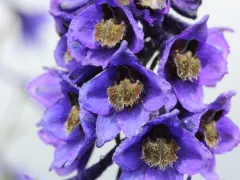
Delphinium
5 ft · mid June to mid July
The great blue spire of the English border: dense columns of flowers up to head height in early summer.
-

Blue fescue
10 in · grown for its leaves
A compact ornamental grass that forms neat tufts of striking blue-silver blades.
-
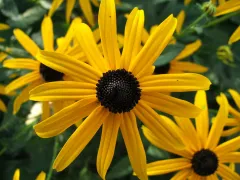
Black-eyed Susan
24 in · early July to mid September · host plant
Masses of golden, dark-centred flowers from midsummer into fall.
-
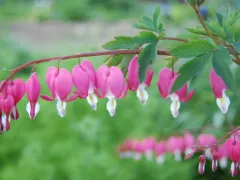
Bleeding heart
2½ ft · mid April to late May
An old-fashioned favourite with arching stems of heart-shaped flowers in late spring.
-
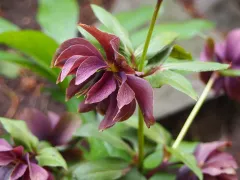
Lenten rose
18 in · early March to late April
One of the first perennials to flower, with nodding, long-lasting blooms that often open while snow is still melting.
-

Rose of Sharon
10 ft · early July to mid September
An upright shrub with hollyhock-like flowers in pink, purple, white or violet-blue from midsummer to autumn, when few shrubs flower.
-

Christmas fern
20 in · grown for its leaves
The most useful native fern: leathery, dark green fronds that stay green through winter, in a tidy clump that never spreads.
When things flower in zone 7
How many of these plants are in flower in each month in zone 7, and some of the familiar ones that open that month. Spring flowers here are about two weeks earlier than in zone 5.
| Month | In flower | Opening this month |
|---|---|---|
| January | 14 | Japanese camellia |
| February | 30 | Snowdrop |
| March | 110 | Crocus, Daffodil and Daffodil 'Dutch Master' |
| April | 248 | Azalea 'Delaware Valley White', Azalea 'Hino-Crimson' and Bleeding heart |
| May | 447 | Allium 'Globemaster', Bearded iris and Blue false indigo |
| June | 562 | Abelia 'Kaleidoscope', Asiatic lily and Astilbe |
| July | 513 | Black-eyed Susan, Black-eyed Susan 'American Gold Rush' and Black-eyed Susan 'Goldsturm' |
| August | 450 | Japanese anemone, Lilyturf and Little bluestem 'Standing Ovation' |
| September | 314 | Garden chrysanthemum and Pink muhly grass |
| October | 139 | Sasanqua camellia |
| November | 15 | |
| December | 5 |
A zone-7 bed
The planner designed this 16 × 8 ft (4.9 × 2.4 m) bed for zone 7 and full sun when this page was made.
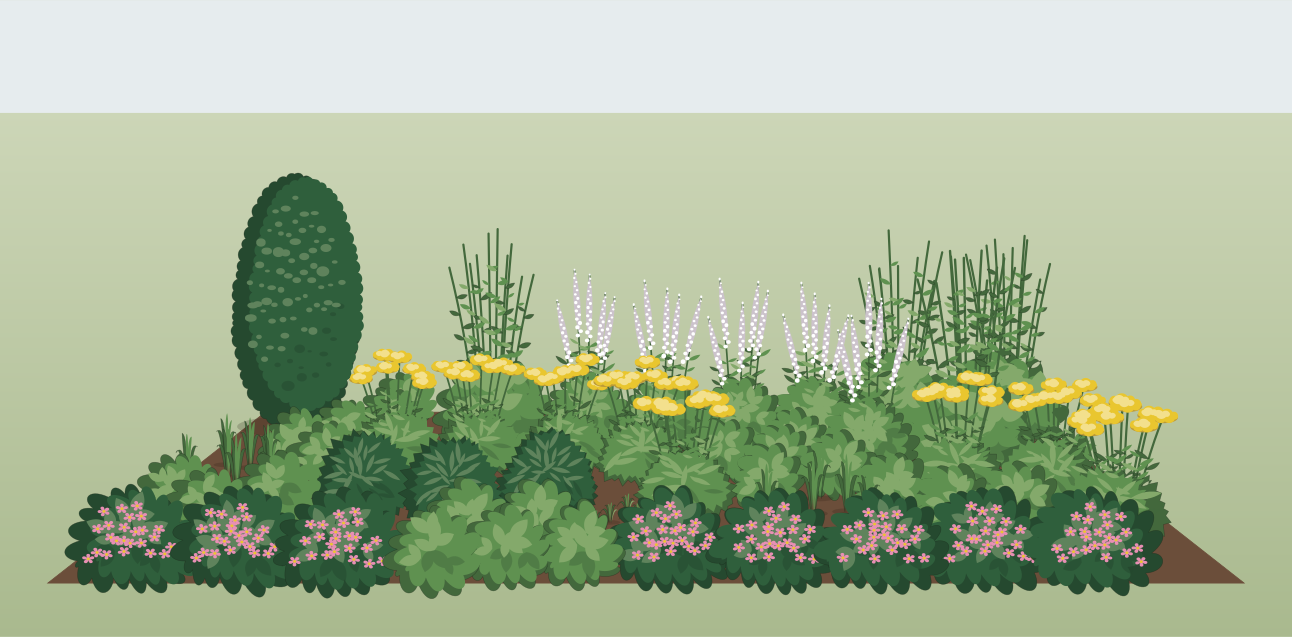
The plants
- 1 Bloody cranesbill × 8, pink
- 2 Leadwort × 21, blue
- 3 Tatarian aster 'Jindai' × 4, purple
- 4 Boxwood 'Green Mountain' × 1, dark green leaves
- 5 Foxglove beardtongue × 5, white
- 6 Winter heath 'Kramer's Red' × 3, pink
- 7 Yarrow × 8, yellow
- 8 Tulip × 3, red
- 9 Surprise lily × 12, pink
- 10 Grape hyacinth × 10, blue
Planned as an English border: 9 of the 10 groups (90%) are drifts, longer along the bed than they are deep. Boxwood 'Green Mountain' and Tatarian aster 'Jindai' anchor the back corners of the bed: the tallest plants on the plan stand there. Winter heath 'Kramer's Red' is the first into flower, in mid January, and Tatarian aster 'Jindai' the last to finish, in early November.
The planner's own design check: 14 Excellent, 3 Good. It flags one thing to watch: Nothing on this plan is highly poisonous or an aggressive spreader.
Open this bed in the planner Change its size, the sun or the style, move plants about, or swap one for another.
At the edge of their range in zone 7
Hardy to zone 7 and no colder (39). They survive a normal zone-7 winter but not a harder one: give them the warmest, best-drained spot you have, and a mulch in their first winter.
- Japanese camellia
- Japanese holly fern
- Mexican feather grass
- Sasanqua camellia
- Tall verbena
- Alpine geranium
- Anise sage 'Black and Blue'
- Bear's breeches
- Burford holly
- California fuchsia
- Cast iron plant
- Chinese fringe flower
- Crinum lily
- David viburnum
- Dwarf yaupon holly
- Florida anise
- Fringe flower 'Purple Diamond'
- Giant rhubarb
- Holly osmanthus 'Goshiki'
- Japanese aucuba
- Japanese fatsia
- Japanese skimmia
- Leopard plant
- Mahonia 'Charity'
- Mahonia 'Soft Caress'
- Mediterranean spurge
- Mexican orange blossom
- Paperbush
- Pineapple lily
- Pineapple lily 'Sparkling Burgundy'
And 9 more.
At their warmest zone (158). Zone 7 is as warm as they like: give them afternoon shade and steady moisture, and expect them to be shorter-lived than further north.
- Arborvitae 'Emerald Green'
- Blue holly 'Blue Princess'
- Common lilac
- Darwin hybrid tulip
- Delphinium
- Dwarf Korean lilac 'Palibin'
- Elderberry 'Black Lace'
- Hicks yew
- Lilac 'Sensation'
- Lily of the valley
- Mugo pine
- Ninebark 'Diabolo'
- Ninebark 'Summer Wine'
- Northern Lights azalea
- Oriental poppy
- Ostrich fern
- Reblooming lilac 'Bloomerang'
- Red twig dogwood 'Arctic Fire'
- Shrubby cinquefoil 'Goldfinger'
- Spreading yew 'Densiformis'
- Tulip
- Tulip 'Angelique'
- Tulip 'Queen of Night'
- Alpine aster
- Alpine currant
- American cranberrybush
- Appalachian sedge
- Arborvitae 'Degroot's Spire'
- Arborvitae 'Hetz Midget'
- Arborvitae 'Mr. Bowling Ball'
And 128 more.