Perennials for zone 6
What grows in USDA zone 6, where winters reach 0 to 10 °F, and when it flowers there.
USDA zone 6 is where the coldest night of an average winter falls between 0 and 10 °F (−18 to −12 °C). Zones measure only that one night, so they say what will survive a winter, not how hot the summer is or how long the season runs.
1306 of the planner's 1400 plants are hardy in zone 6. Below are the dozen to start with, when things flower in zone 6 month by month, the plants at the very edge of their range here, and a bed the planner designed for a zone-6 garden in full sun.
1306 plants: 746 perennials, 51 ferns, 101 bulbs, 83 grasses and 325 shrubs.
The dozen to start with
-
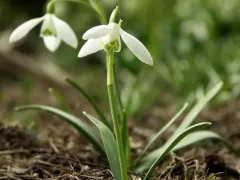
Snowdrop
6 in · early March to late March
Nodding white bells that push up through the last of the snow, weeks before anything else.
-

Bee balm
3 ft · early July to early August · host plant
Shaggy, colourful flower heads that draw hummingbirds, bees and butterflies.
-

Tiger lily
4 ft · late July to late August
Orange, black-spotted flowers with petals curled right back, up to twenty on a stem, in late summer.
-

Western sword fern
3½ ft · grown for its leaves
Long, dark, leathery fronds like swords form a large evergreen clump.
-
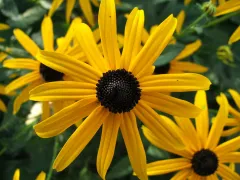
Black-eyed Susan
24 in · mid July to mid September · host plant
Masses of golden, dark-centred flowers from midsummer into fall.
-
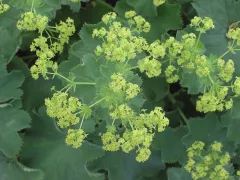
Lady's mantle
18 in · late May to early July
Scalloped, velvety leaves that hold beads of rain like mercury, under a froth of tiny chartreuse flowers in early summer.
-
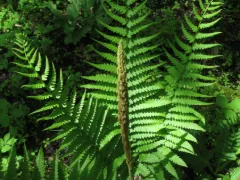
Cinnamon fern
4 ft · grown for its leaves
A tall vase of green fronds surrounds stiff, upright, cinnamon-brown spore stalks in spring.
-
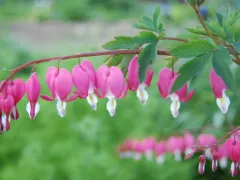
Bleeding heart
2½ ft · late April to early June
An old-fashioned favourite with arching stems of heart-shaped flowers in late spring.
-
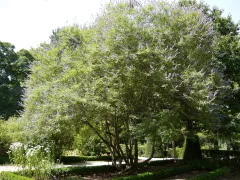
Chaste tree
11½ ft · early July to early September
A large shrub or small, multi-stemmed tree with aromatic, grey-green, fingered leaves and long spikes of lavender-blue flowers in the heat of summer, loved by bees and butterflies.
-
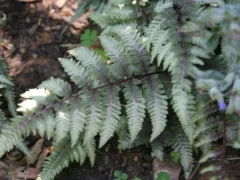
Japanese painted fern
18 in · grown for its leaves
Arching fronds brushed with silver and burgundy brighten dark corners all season.
-

Rose of Sharon
10 ft · mid July to mid September
An upright shrub with hollyhock-like flowers in pink, purple, white or violet-blue from midsummer to autumn, when few shrubs flower.
-
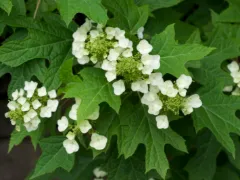
Oakleaf hydrangea
6½ ft · mid June to early August
A native shrub for every season: cone-shaped white flowers that age to pink, huge oak-shaped leaves that turn wine red and purple in autumn, and peeling, cinnamon-coloured bark in winter.
When things flower in zone 6
How many of these plants are in flower in each month in zone 6, and some of the familiar ones that open that month. Spring flowers here are about a week earlier than in zone 5.
| Month | In flower | Opening this month |
|---|---|---|
| January | 7 | |
| February | 22 | |
| March | 73 | Crocus, Daffodil 'Dutch Master' and Daffodil 'Ice Follies' |
| April | 202 | Azalea 'Delaware Valley White', Azalea 'Hino-Crimson' and Bleeding heart |
| May | 415 | Allium 'Globemaster', Bearded iris and Blue false indigo |
| June | 545 | Abelia 'Kaleidoscope', Asiatic lily and Astilbe |
| July | 520 | Bee balm, Black-eyed Susan and Black-eyed Susan 'American Gold Rush' |
| August | 462 | Hosta 'Guacamole', Japanese anemone and Lilyturf |
| September | 305 | Garden chrysanthemum and Pink muhly grass |
| October | 131 | |
| November | 10 | |
| December | 2 |
A zone-6 bed
The planner designed this 16 × 8 ft (4.9 × 2.4 m) bed for zone 6 and full sun when this page was made.
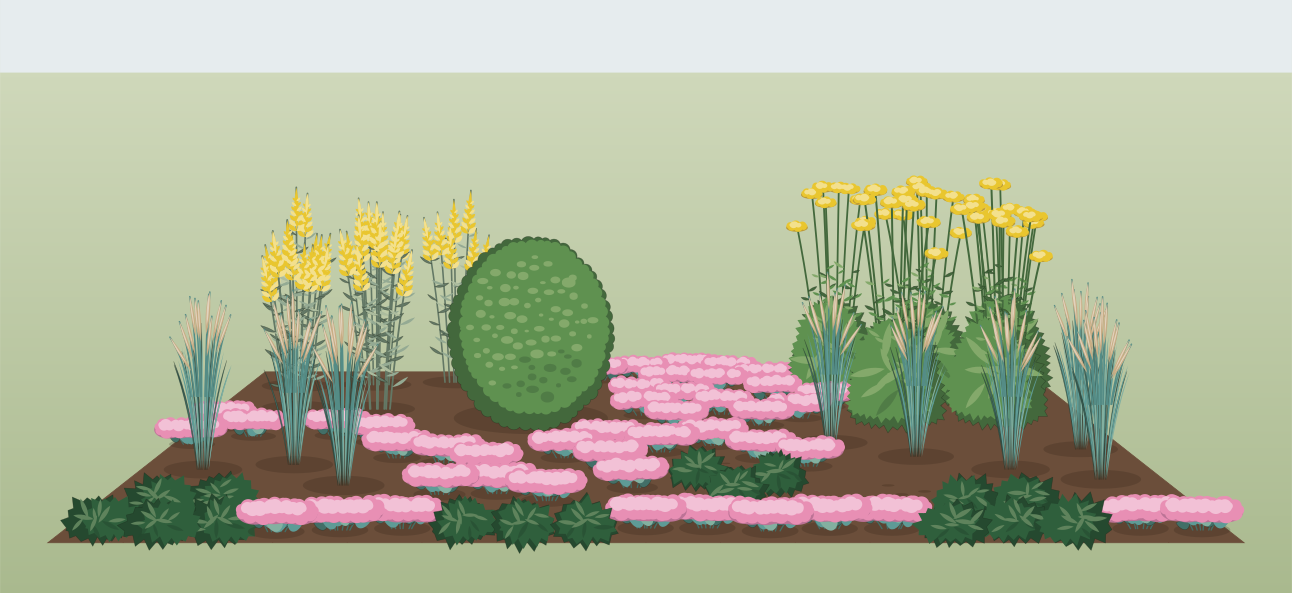
The plants
- 1 Sea thrift × 16, pink
- 2 Sedum 'Lidakense' × 45, pink
- 3 Fernleaf yarrow 'Cloth of Gold' × 5, yellow
- 4 Korean boxwood 'Wintergreen' × 1, green leaves
- 5 Stiff goldenrod × 5, yellow
- 6 Little bluestem 'The Blues' × 8, tan
- 7 Tarda tulip × 5, yellow
- 8 Netted iris × 10, blue
- 9 Grecian windflower × 8, white
Planned as an English border: 9 of the 9 groups (100%) are drifts, longer along the bed than they are deep. Cool colours (pink and blue) set against hot ones (yellow), with tan and white to calm things between them. The bed is tied together by its repeats: three kinds come round again along it, among them sedum 'Lidakense' and sea thrift.
The planner's own design check: 14 Excellent, 3 Good. It flags one thing to watch: Nothing on this plan is highly poisonous or an aggressive spreader.
Open this bed in the planner Change its size, the sun or the style, move plants about, or swap one for another.
At the edge of their range in zone 6
Hardy to zone 6 and no colder (79). They survive a normal zone-6 winter but not a harder one: give them the warmest, best-drained spot you have, and a mulch in their first winter.
- Abelia 'Kaleidoscope'
- Azalea 'Delaware Valley White'
- Bigleaf hydrangea
- Bigleaf hydrangea 'Nikko Blue'
- Chaste tree
- Evergreen azalea
- Pink muhly grass
- Reblooming azalea
- Abelia 'Rose Creek'
- American beautyberry
- Autumn sage
- Black mondo grass
- Blue star creeper
- Bodinier's beautyberry 'Profusion'
- Bog sage
- Box honeysuckle 'Baggesen's Gold'
- Burkwood osmanthus
- Buttercup winter hazel
- Camellia 'April Blush'
- Cherry laurel 'Otto Luyken'
- Christmas box
- Corsican hellebore
- Crocosmia 'Emily McKenzie'
- Daphne 'Eternal Fragrance'
- Deer grass
- Dutch iris
- Dwarf crape myrtle 'Pocomoke'
- Dwarf Japanese cedar
- Firethorn 'Mohave'
- Flowering currant
And 49 more.
At their warmest zone (10). Zone 6 is as warm as they like: give them afternoon shade and steady moisture, and expect them to be shorter-lived than further north.