Perennials for zone 8
What grows in USDA zone 8, where winters reach 20 to 30 °F, and when it flowers there.
USDA zone 8 is where the coldest night of an average winter falls between 20 and 30 °F (−7 to −1 °C). Zones measure only that one night, so they say what will survive a winter, not how hot the summer is or how long the season runs.
1194 of the planner's 1400 plants are hardy in zone 8. Below are the dozen to start with, when things flower in zone 8 month by month, the plants at the very edge of their range here, and a bed the planner designed for a zone-8 garden in full sun.
1194 plants: 693 perennials, 53 ferns, 99 bulbs, 84 grasses and 265 shrubs.
The dozen to start with
-
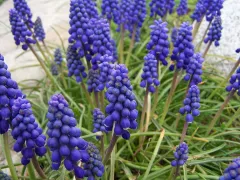
Grape hyacinth
6 in · late March to mid April
Tight spikes of cobalt-blue beads that make a river of colour under taller spring bulbs.
-
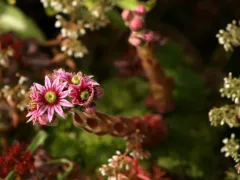
Hens and chicks
4 in · grown for its leaves
Tight, fleshy rosettes, green or flushed with burgundy, surrounded by a crowd of smaller offsets.
-
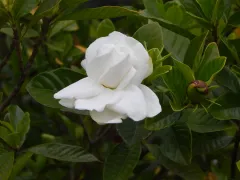
Gardenia
5 ft · early May to mid July
Glossy, dark evergreen leaves and creamy white, waxy flowers with a rich, heavy perfume in early summer.
-

Calla lily
2½ ft · late April to early July
Pure white, funnel-shaped flowers of great elegance, each wrapped around a yellow spike, above glossy, arrow-shaped leaves.
-
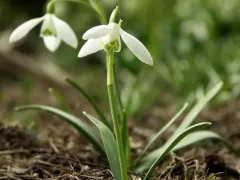
Snowdrop
6 in · mid February to early March
Nodding white bells that push up through the last of the snow, weeks before anything else.
-
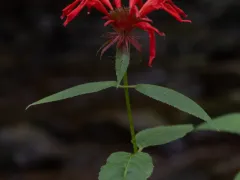
Bee balm
3 ft · late June to early August · host plant
Shaggy, colourful flower heads that draw hummingbirds, bees and butterflies.
-
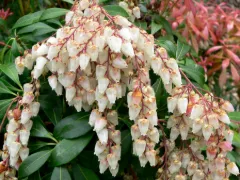
Japanese pieris
8 ft · early March to early April
An elegant evergreen with drooping chains of white or pink, lily-of-the-valley bells in early spring, and new leaves that open bronze or bright red.
-
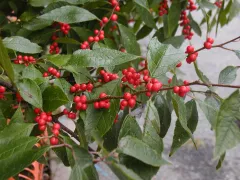
Winterberry
8 ft · grown for its leaves · host plant
A native holly that drops its leaves in autumn to show branches packed with bright red berries, which last into winter until the birds take them.
-
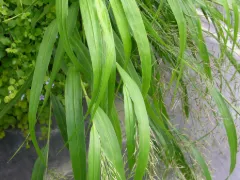
Japanese forest grass
18 in · grown for its leaves
The plain green species: a cascading mound of bright green, bamboo-like leaves that all flow in one direction, like water over a stone.
-
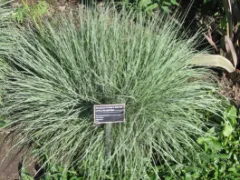
Little bluestem
3 ft · grown for its leaves · host plant
Blue-green summer blades turn copper and bronze in autumn and hold their colour through winter.
-
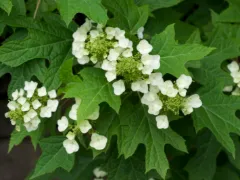
Oakleaf hydrangea
6½ ft · early June to early August
A native shrub for every season: cone-shaped white flowers that age to pink, huge oak-shaped leaves that turn wine red and purple in autumn, and peeling, cinnamon-coloured bark in winter.
-
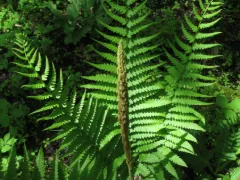
Cinnamon fern
4 ft · grown for its leaves
A tall vase of green fronds surrounds stiff, upright, cinnamon-brown spore stalks in spring.
When things flower in zone 8
How many of these plants are in flower in each month in zone 8, and some of the familiar ones that open that month. Spring flowers here are about three weeks earlier than in zone 5.
| Month | In flower | Opening this month |
|---|---|---|
| January | 13 | Japanese camellia |
| February | 30 | Rosemary and Snowdrop |
| March | 126 | Creeping phlox, Creeping phlox 'Emerald Blue' and Crocus |
| April | 255 | Azalea 'Delaware Valley White', Azalea 'Hino-Crimson' and Bleeding heart |
| May | 347 | Allium 'Globemaster', Bearded iris and Blue false indigo |
| June | 510 | Abelia 'Kaleidoscope', African lily and Asiatic lily |
| July | 479 | Black-eyed Susan, Black-eyed Susan 'American Gold Rush' and Black-eyed Susan 'Goldsturm' |
| August | 430 | Japanese anemone, Lilyturf and Little bluestem 'Standing Ovation' |
| September | 309 | Garden chrysanthemum and Pink muhly grass |
| October | 141 | Sasanqua camellia |
| November | 16 | |
| December | 4 |
A zone-8 bed
The planner designed this 16 × 8 ft (4.9 × 2.4 m) bed for zone 8 and full sun when this page was made.
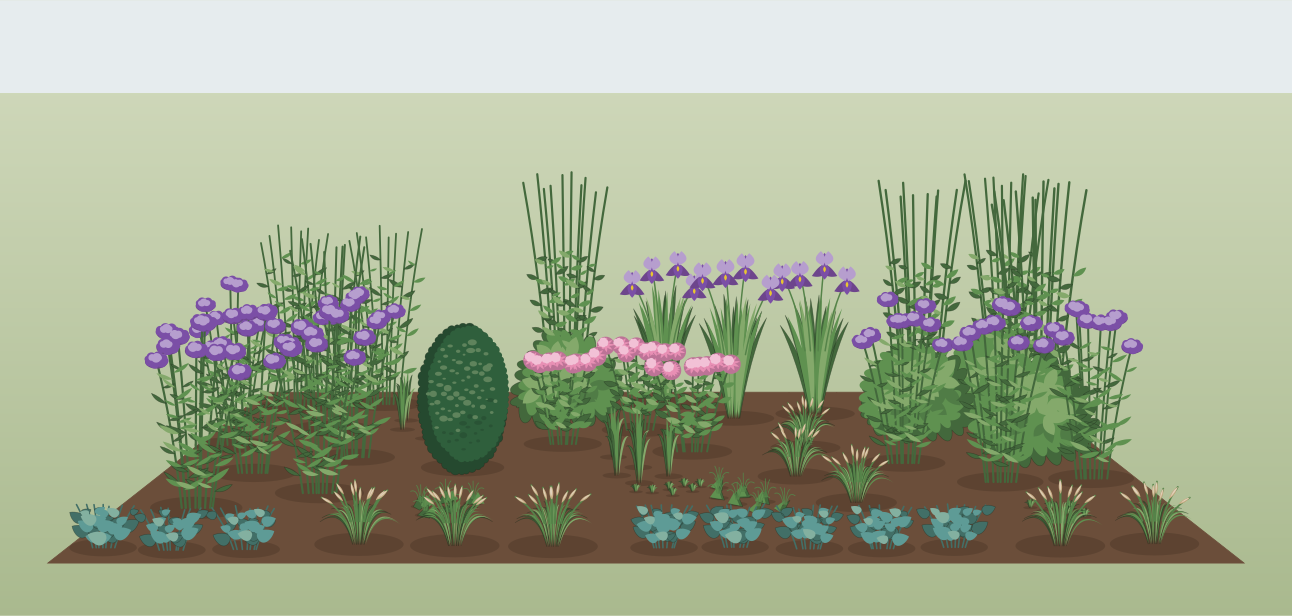
The plants
- 1 Moor grass 'Greenlee' × 8, tan
- 2 October daphne × 8, pink
- 3 Sweet coneflower 'Henry Eilers' × 4, yellow
- 4 Garden phlox 'David' × 3, white
- 5 Dwarf English boxwood × 1, dark green leaves
- 6 Siberian iris 'Caesar's Brother' × 3, purple
- 7 Eastern bee balm × 3, pink
- 8 Purple milkweed × 8, purple
- 9 Grecian windflower × 12, blue
- 10 Snow crocus × 12, yellow
- 11 Daffodil × 12, yellow
Planned as an English border: 7 of the 10 groups (70%) are drifts, longer along the bed than they are deep. Dwarf English boxwood is grown for its leaves rather than its flowers. Neither end outweighs the other: the visual weight is split 52 to 48, left to right.
The planner's own design check: 10 Excellent, 7 Good. It flags one thing to watch: Nothing on this plan is highly poisonous or an aggressive spreader.
Open this bed in the planner Change its size, the sun or the style, move plants about, or swap one for another.
At the edge of their range in zone 8
Hardy to zone 8 and no colder (17). They survive a normal zone-8 winter but not a harder one: give them the warmest, best-drained spot you have, and a mulch in their first winter.
- African lily
- Calla lily
- Canna
- Dahlia
- Elephant ear
- Gardenia
- Gladiolus
- Oleander
- Rosemary
- Dahlia 'Bishop of Llandaff'
- Dahlia 'Café au Lait'
- Indian hawthorn
- Japanese pittosporum
- Laurustinus
- Mexican bush sage
- Spanish lavender
- Sweet olive
At their warmest zone (599). Zone 8 is as warm as they like: give them afternoon shade and steady moisture, and expect them to be shorter-lived than further north.
- Allium 'Globemaster'
- Asiatic lily
- Astilbe
- Azalea 'Hino-Crimson'
- Blue fescue
- Blue fescue 'Elijah Blue'
- Boxwood 'Green Velvet'
- Carpathian bellflower 'Blue Clips'
- Catmint 'Walker's Low'
- Columbine
- Common boxwood
- Coneflower 'Magnus'
- Coneflower 'PowWow Wild Berry'
- Coneflower 'White Swan'
- Cranesbill 'Rozanne'
- Crocus
- Daffodil
- Daffodil 'Dutch Master'
- Daffodil 'Ice Follies'
- Daffodil 'Tete-a-Tete'
- Dappled willow
- Dwarf Hinoki cypress
- English lavender 'Hidcote'
- English lavender 'Munstead'
- Forsythia
- Forsythia 'Lynwood'
- Foxglove
- Garden phlox
- Garden phlox 'David'
- Grape hyacinth
And 569 more.