Deer-resistant plants for shade
Shade plants deer usually leave alone, from ferns to hellebores, with a sample bed planned from them.
Deer do their worst damage in shade, because the classic shade plants are their favourites: hostas are eaten to the stalks overnight, and so are daylilies and many lilies. The plants below are listed by NC State as deer resistant.
Resistant is not proof. A deer tastes before it decides, so young plants and new shoots get nibbled even of plants they then leave alone; and in a hard late winter a hungry deer eats almost anything. What deer avoid, on the whole, are plants that are aromatic, furry, leathery, bitter or poisonous: ferns, hellebores, foamflowers and the spurges are reliable.
214 plants: 80 perennials, 40 ferns, 13 bulbs, 16 grasses and 65 shrubs.
The dozen to start with
-
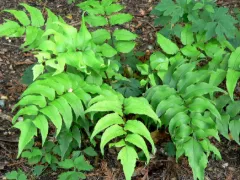
Japanese holly fern
24 in · grown for its leaves
Thick, glossy, dark green fronds with large, pointed leaflets like holly leaves.
-
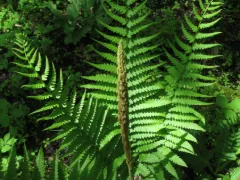
Cinnamon fern
4 ft · grown for its leaves
A tall vase of green fronds surrounds stiff, upright, cinnamon-brown spore stalks in spring.
-
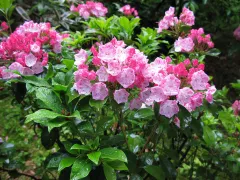
Mountain laurel
8 ft · late May to late June
A native evergreen with crimped, sugar-icing buds that open into cup-shaped flowers of white, pink or red in late spring, in clusters that cover the plant.
-
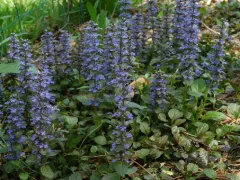
Bugleweed
6 in · early May to late May
Glossy, dark rosettes knit into a dense carpet that smothers weeds in shade.
-
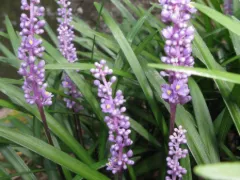
Lilyturf
16 in · early August to mid September
Evergreen clumps of dark, strap-shaped, grassy leaves, with spikes of violet flowers like grape hyacinths in late summer, followed by black berries.
-
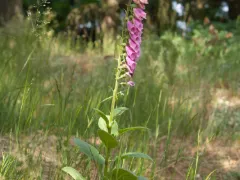
Foxglove
4 ft · early June to mid July
Tall spires of spotted, bell-shaped flowers bring height to part-shade beds in early summer.
-
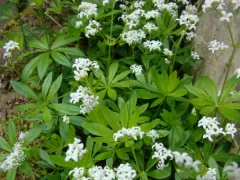
Sweet woodruff
8 in · early May to early June
Whorls of bright green leaves make a soft, even carpet under shrubs and trees.
-

Calla lily
2½ ft · mid May to mid July
Pure white, funnel-shaped flowers of great elegance, each wrapped around a yellow spike, above glossy, arrow-shaped leaves.
-
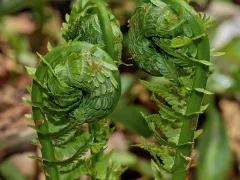
Ostrich fern
4 ft · grown for its leaves
Tall, feathery fronds form an elegant green vase that gives height at the back of a shady bed.
-
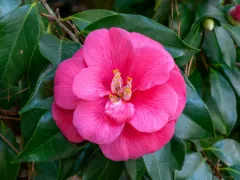
Japanese camellia
10 ft · early February to early April
Polished, dark evergreen leaves and large, formal flowers in red, pink or white from late winter into spring.
-
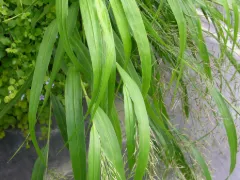
Japanese forest grass
18 in · grown for its leaves
The plain green species: a cascading mound of bright green, bamboo-like leaves that all flow in one direction, like water over a stone.
-
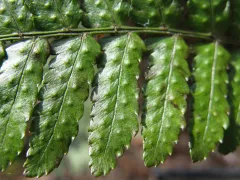
Autumn fern
22 in · grown for its leaves
New fronds unfurl coppery red in spring and mature to glossy, dark green.
A bed planned only from these plants
The planner was given only the plants on this page that suit zone 6 and part shade, and designed this 16 × 8 ft (4.9 × 2.4 m) bed from them when the page was made.
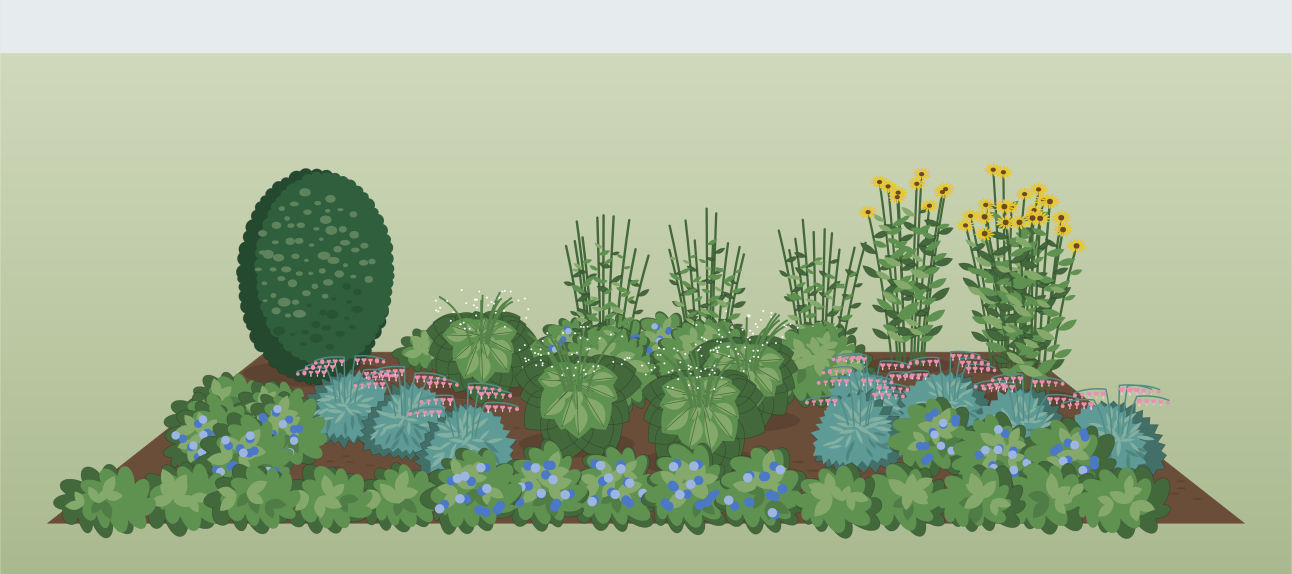
The plants
- 1 Green-and-gold × 16, yellow
- 2 Leadwort × 14, blue
- 3 Littleleaf boxwood 'Winter Gem' × 1, dark green leaves
- 4 White snakeroot × 3, white
- 5 Woodland sunflower × 3, yellow
- 6 Hairy alumroot 'Autumn Bride' × 4, white
- 7 Fringed bleeding heart × 8, pink
- 8 Snowdrop × 12, white
- 9 Striped squill × 12, blue
- 10 Winter aconite × 12, yellow
Planned as an English border: 10 of the 13 groups (77%) are drifts, longer along the bed than they are deep. The flowering is at its height from late August, with 4 kinds out together. Hot and cool in equal measure: yellow against blue and pink, with white to calm things between them.
The planner's own design check: 10 Excellent, 6 Good, 1 Satisfactory. It flags one thing to watch: White snakeroot is highly poisonous to people and horses. Winter aconite is highly poisonous to people, dogs, cats and horses.
Open this bed in the planner Change its size, the sun or the style, move plants about, or swap one for another.
All 214 plants
Show all 214, by where they go in a bed
Front of a bed 79
- American alumroot 12 in · grown for its leaves
- Barrenwort 'Frohnleiten' 12 in · mid April to mid May
- Broad beech fern 18 in · grown for its leaves
- Brunnera 'Alexander's Great' 16 in · late April to late May
- Brunnera 'Looking Glass' 14 in · late April to late May
- Bugleweed 6 in · early May to late May
- Bugleweed 'Black Scallop' 6 in · early May to late May
- Bugleweed 'Burgundy Glow' 6 in · early May to late May
- Bugleweed 'Catlin's Giant' 8 in · early May to late May
- Bulblet fern 18 in · grown for its leaves
- Checkered lily 12 in · mid April to early May
- Chinese wild ginger 8 in · grown for its leaves
- Christmas rose 12 in · late February to early April
- Christmas rose 'Jacob' 10 in · late November to late December
- Common blue violet 8 in · mid April to late May · host plant
- Common polypody 12 in · grown for its leaves
- Coral bells 'Green Spice' 10 in · grown for its leaves
- Creeping lilyturf 12 in · grown for its leaves
- Creeping mahonia 12 in · mid April to early May
- Creeping phlox 'Sherwood Purple' 8 in · early May to late May
- Creeping woodland phlox 8 in · late April to late May
- Deer fern 16 in · grown for its leaves
- Double snowdrop 5 in · early February to mid March
- Dutchman's breeches 8 in · mid April to early May
- Dwarf crested iris 6 in · late April to mid May
- Dwarf Solomon's seal 8 in · early May to early June
- Early crocus 4 in · early March to late March
- Foamflower 10 in · late April to late May
- Fringed bleeding heart 16 in · early May to late August
- Giant snowdrop 8 in · mid February to mid March
- Green-and-gold 6 in · late April to mid June
- Hardy cyclamen 5 in · late August to mid October
- Jack-in-the-pulpit 18 in · early May to late May
- Japanese beech fern 18 in · grown for its leaves
- Japanese forest grass 18 in · grown for its leaves
- Japanese forest grass 'All Gold' 14 in · grown for its leaves
- Japanese forest grass 'Aureola' 16 in · grown for its leaves
- Japanese forest grass 'Beni-kaze' 24 in · grown for its leaves
- Japanese pachysandra 8 in · grown for its leaves
- Japanese painted fern 18 in · grown for its leaves
- Korean rock fern 14 in · grown for its leaves
- Lady's mantle 18 in · late May to early July
- Leadwort 10 in · early August to early October
- Lily of the valley 8 in · early May to late May
- Lilyturf 16 in · early August to mid September
- Maidenhair spleenwort 6 in · grown for its leaves
- Marsh marigold 16 in · mid April to early May
- Mayapple 16 in · grown for its leaves
- Mondo grass 8 in · grown for its leaves
- New York fern 18 in · grown for its leaves
- Pennsylvania sedge 8 in · grown for its leaves
- Pink lily of the valley 8 in · early May to late May
- Rock polypody 8 in · grown for its leaves
- Scarlet coral bells 18 in · late May to late July
- Sedge 'Everest' 12 in · grown for its leaves
- Sedge 'Evergold' 12 in · grown for its leaves
- Sedge 'Everillo' 14 in · grown for its leaves
- Siberian bugloss 16 in · late April to late May
- Siberian bugloss 'Jack Frost' 16 in · late April to late May
- Siberian cypress 12 in · grown for its leaves
- Siberian squill 5 in · late March to mid April
- Snowdrop 6 in · early March to late March
- Southern maidenhair fern 14 in · grown for its leaves
- Spanish bluebell 16 in · early May to late May
- Spotted dead nettle 8 in · early May to mid July
- Spotted dead nettle 'Beacon Silver' 6 in · early May to late July
- Spotted dead nettle 'White Nancy' 6 in · early May to late July
- Spring snowflake 10 in · early March to late March
- Squirrel corn 8 in · mid April to early May
- Striped squill 5 in · late March to mid April
- Summer snowflake 18 in · late April to mid May
- Sweet violet 6 in · late March to early May · host plant
- Sweet woodruff 8 in · early May to early June
- Variegated lilyturf 14 in · early August to mid September
- Wherry's foamflower 10 in · early May to late June
- Wild geranium 'Espresso' 16 in · early May to early June
- Wild ginger 6 in · grown for its leaves · host plant
- Winter aconite 4 in · late February to mid March
- Woodland stonecrop 4 in · late April to late May
Middle of a bed 68
- Astilbe 'Bridal Veil' 2½ ft · late June to mid July
- Astilbe 'Deutschland' 20 in · late May to late June
- Astilbe 'Fanal' 24 in · mid June to mid July
- Autumn fern 22 in · grown for its leaves
- Autumn fern 'Brilliance' 22 in · grown for its leaves
- Bleeding heart 2½ ft · early May to early June
- Bleeding heart 'Gold Heart' 2½ ft · early May to early June
- Blue wood aster 3 ft · mid September to mid October · host plant
- Blue-stemmed goldenrod 2½ ft · early September to mid October · host plant
- Bowles' golden sedge 2½ ft · grown for its leaves
- Braun's holly fern 24 in · grown for its leaves
- Calla lily 2½ ft · mid May to mid July
- Cast iron plant 24 in · grown for its leaves
- Christmas fern 20 in · grown for its leaves
- Columbine meadow rue 3 ft · late May to late June
- Corsican hellebore 2½ ft · late February to late April
- David viburnum 3½ ft · mid May to late May
- Doll's eyes 2½ ft · early May to late May
- Dwarf English boxwood 2½ ft · grown for its leaves
- Dwarf fothergilla 3 ft · late April to mid May
- Dwarf hemlock 'Jeddeloh' 3 ft · grown for its leaves
- Evergreen wood fern 2½ ft · grown for its leaves
- Formosa toad lily 2½ ft · late August to mid October
- Fortune's holly fern 20 in · grown for its leaves
- Foxglove 'Dalmatian Purple' 3½ ft · late May to mid July
- Fragrant sumac 'Gro-Low' 24 in · mid April to early May
- Golden columbine 3 ft · late May to mid July
- Gray's sedge 2½ ft · late May to early September
- Great blue lobelia 2½ ft · early August to mid September
- Hairy alumroot 'Autumn Bride' 24 in · late August to early October
- Hay-scented fern 24 in · grown for its leaves
- Japanese holly 'Soft Touch' 2½ ft · grown for its leaves
- Japanese holly fern 24 in · grown for its leaves
- Lady fern 2½ ft · grown for its leaves
- Lady fern 'Lady in Red' 2½ ft · grown for its leaves
- Leopard plant 24 in · early October to early November
- Male fern 3 ft · grown for its leaves
- Marginal wood fern 24 in · grown for its leaves
- Marsh fern 24 in · grown for its leaves · host plant
- Mountain laurel 'Elf' 3 ft · late May to late June
- Netted chain fern 20 in · grown for its leaves
- Northern maidenhair fern 20 in · grown for its leaves
- Northern sea oats 'River Mist' 2½ ft · late July to mid September · host plant
- Palm sedge 2½ ft · grown for its leaves
- Pieris 'Cavatine' 2½ ft · early April to early May
- Pieris 'Little Heath' 2½ ft · grown for its leaves
- Red baneberry 24 in · early May to late May
- Sensitive fern 24 in · grown for its leaves
- Silvery glade fern 3 ft · grown for its leaves
- Soft shield fern 2½ ft · grown for its leaves
- Southern shield fern 3 ft · grown for its leaves
- Southern wood fern 3½ ft · grown for its leaves
- Spreading plum yew 2½ ft · grown for its leaves
- Stinking hellebore 24 in · late February to mid April
- Summersweet 'Hummingbird' 3 ft · mid July to mid August
- Sweetspire 'Little Henry' 2½ ft · early June to early July
- Tassel fern 20 in · grown for its leaves
- Toad lily 2½ ft · mid September to mid October
- Tufted hair grass 3 ft · late June to late August
- Tufted hair grass 'Goldtau' 24 in · mid June to late August
- Turtlehead 'Hot Lips' 3 ft · mid August to late September
- Victorian lady fern 2½ ft · grown for its leaves
- White bleeding heart 2½ ft · early May to early June
- White snakeroot 3½ ft · late August to mid October
- Wild columbine 24 in · early May to early June
- Wild geranium 20 in · early May to late May
- Wood spurge 20 in · late April to late May
- Yellowroot 2½ ft · grown for its leaves
Back of a bed 67
- Alpine currant 5 ft · grown for its leaves
- Arrowwood viburnum 8 ft · late May to late June
- Arrowwood viburnum 'Blue Muffin' 6 ft · late May to mid June · host plant
- Black cohosh 5 ft · early July to early August · host plant
- Bugbane 'Brunette' 5 ft · early September to early October
- Bugbane 'Hillside Black Beauty' 5 ft · late August to early October
- Burkwood osmanthus 8 ft · mid April to early May
- Camellia 'April Blush' 5 ft · late March to early May
- Carolina allspice 8 ft · early May to late June
- Chinese fringe flower 6½ ft · late March to early May
- Christmas box 4 ft · early January to early March
- Cinnamon fern 4 ft · grown for its leaves
- Common boxwood 10 ft · grown for its leaves
- Common witch hazel 15 ft · mid October to late November · host plant
- Coral bark maple 16½ ft · grown for its leaves · host plant
- Double Japanese kerria 6½ ft · mid April to mid May
- Drooping leucothoe 4 ft · early May to late May
- Drooping leucothoe 'Rainbow' 4 ft · early May to late May
- Foxglove 4 ft · early June to mid July
- Fragrant sumac 5 ft · mid April to late April
- Fringe flower 'Purple Diamond' 5 ft · late March to early May
- Gardenia 5 ft · late May to late July
- Goat's beard 5 ft · early June to late June · host plant
- Holly osmanthus 'Goshiki' 5 ft · grown for its leaves
- Interrupted fern 3½ ft · grown for its leaves
- Japanese camellia 10 ft · early February to early April
- Japanese kerria 5 ft · mid April to mid May
- Japanese maple 'Bloodgood' 15 ft · grown for its leaves · host plant
- Japanese pieris 8 ft · late March to late April
- Japanese skimmia 3½ ft · mid April to early May
- Korean feather reed grass 4 ft · late August to mid October
- Laurustinus 8 ft · early January to early April
- Littleleaf boxwood 'Winter Gem' 4 ft · grown for its leaves
- Log fern 3½ ft · grown for its leaves
- Mahonia 'Charity' 10 ft · early November to late December
- Mahonia 'Soft Caress' 4 ft · early November to late December
- Mapleleaf viburnum 5 ft · late May to mid June · host plant
- Mountain laurel 8 ft · late May to late June
- Mountain laurel 'Olympic Fire' 6½ ft · late May to late June
- Northern sea oats 3½ ft · late July to mid September · host plant
- Oregon grape 5 ft · early April to early May
- Ostrich fern 4 ft · grown for its leaves
- Pieris 'Mountain Fire' 6½ ft · late March to late April
- Purple-stemmed royal fern 4 ft · grown for its leaves
- Red osier dogwood 8 ft · late May to mid June · host plant
- Royal fern 5 ft · grown for its leaves
- Sasanqua camellia 8 ft · early October to mid December
- Shadblow serviceberry 16½ ft · mid April to early May · host plant
- Siberian dogwood 6½ ft · late May to early June
- Snowberry 4 ft · mid June to mid July · host plant
- Summersweet 6½ ft · mid July to mid August
- Summersweet 'Ruby Spice' 6 ft · mid July to mid August
- Tall larkspur 5 ft · mid July to late August
- Vernal witch hazel 8 ft · mid January to early March
- Virginia sweetspire 5 ft · early June to early July
- Virginia sweetspire 'Henry's Garnet' 4 ft · early June to early July
- Wallich's wood fern 3½ ft · grown for its leaves
- Weeping Canadian hemlock 5 ft · grown for its leaves
- White snakeroot 'Chocolate' 3½ ft · mid September to mid October
- Winter daphne 4 ft · early February to late March
- Winter jasmine 4 ft · early January to late March
- Winterberry 8 ft · grown for its leaves · host plant
- Winterberry 'Berry Poppins' 3½ ft · early June to late June · host plant
- Winterberry 'Red Sprite' 4 ft · grown for its leaves · host plant
- Winterberry 'Winter Red' 8 ft · early June to late June · host plant
- Witch hazel 'Diane' 10 ft · early February to mid March
- Woodland sunflower 4 ft · mid July to early September · host plant