Plants for deep shade
Plants that grow with less than two hours of sun: the north side of a house, under evergreens, between buildings.
Deep shade is less than two hours of direct sun a day: the north side of a house, under conifers and big evergreens, a passage between buildings. Flowers are few down here, because flowering takes energy that only sun provides. So a deep-shade bed is designed with leaves.
Play the leaves against each other: bold against fine (a hosta beside a fern), plain against marked, and above all, light against dark. Chartreuse, silver and white-variegated leaves catch what light there is and seem to glow; dark green ones disappear. One pale plant repeated down a dark bed does more than any flower.
Every plant here is listed by NC State as tolerating deep shade.
98 plants: 37 perennials, 34 ferns, 2 bulbs, 6 grasses and 19 shrubs.
The dozen to start with
-

Caladium
20 in · grown for its leaves · variegated leaves
Paper-thin, heart-shaped leaves in mixtures of white, pink, red and green, veined and splashed, from early summer until the first cool nights.
-
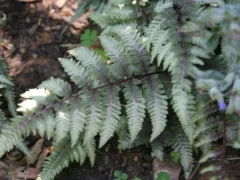
Japanese painted fern
18 in · grown for its leaves · silver leaves
Arching fronds brushed with silver and burgundy brighten dark corners all season.
-
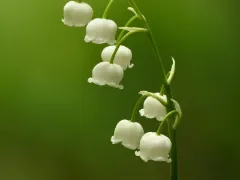
Lily of the valley
8 in · early May to late May
Arching sprays of small, white, intensely scented bells in May, between pairs of broad green leaves.
-
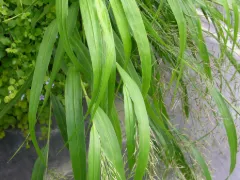
Japanese forest grass
18 in · grown for its leaves
The plain green species: a cascading mound of bright green, bamboo-like leaves that all flow in one direction, like water over a stone.
-
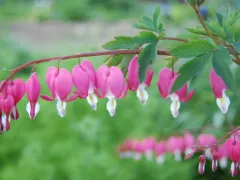
Bleeding heart
2½ ft · early May to early June
An old-fashioned favourite with arching stems of heart-shaped flowers in late spring.
-
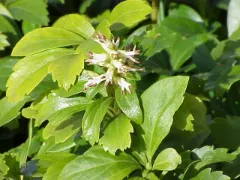
Japanese pachysandra
8 in · grown for its leaves
Whorls of glossy, toothed, evergreen leaves form a uniform carpet under trees.
-

Christmas fern
20 in · grown for its leaves
The most useful native fern: leathery, dark green fronds that stay green through winter, in a tidy clump that never spreads.
-
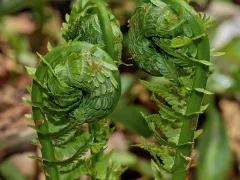
Ostrich fern
4 ft · grown for its leaves
Tall, feathery fronds form an elegant green vase that gives height at the back of a shady bed.
-
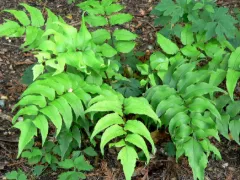
Japanese holly fern
24 in · grown for its leaves
Thick, glossy, dark green fronds with large, pointed leaflets like holly leaves.
-
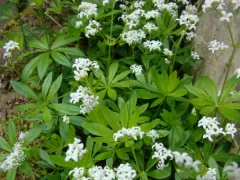
Sweet woodruff
8 in · early May to early June
Whorls of bright green leaves make a soft, even carpet under shrubs and trees.
-
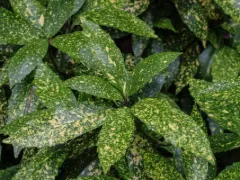
Japanese aucuba
6½ ft · grown for its leaves · variegated leaves
A rounded evergreen with large, glossy, leathery leaves, plain green or splashed with yellow as if dusted with gold.
-
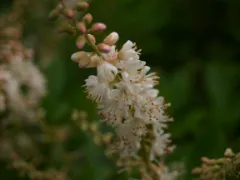
Summersweet
6½ ft · mid July to mid August
Upright spikes of white or pink flowers with a rich, spicy fragrance in the heat of late summer.
A bed planned only from these plants
The planner was given only the plants on this page that suit zone 6 and shade, and designed this 16 × 8 ft (4.9 × 2.4 m) bed from them when the page was made.
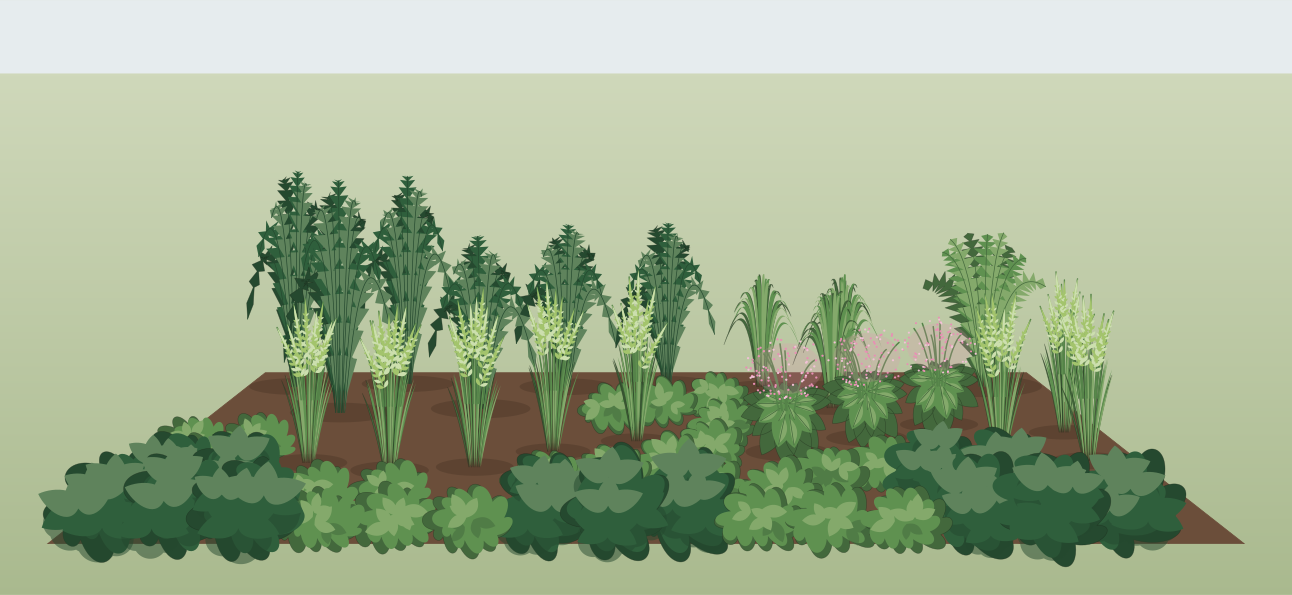
The plants
- 1 Green-and-gold × 24, yellow
- 2 Christmas rose × 13, white
- 3 Dixie wood fern × 3, dark green leaves
- 4 Interrupted fern × 1, green leaves
- 5 Southern wood fern × 3, dark green leaves
- 6 Toad lily × 3, purple
- 7 Hardy begonia × 3, pink
- 8 Bottlebrush grass × 8, green
Planned as an English border: 10 of the 10 groups (100%) are drifts, longer along the bed than they are deep. Hardy begonia stands beside toad lily, a proven pairing. Christmas rose and green-and-gold finish the front edge.
The planner's own design check: 9 Excellent, 4 Good, 3 Satisfactory. It flags one thing to watch: Nothing on this plan is highly poisonous or an aggressive spreader.
Open this bed in the planner Change its size, the sun or the style, move plants about, or swap one for another.
All 98 plants
Show all 98, by where they go in a bed
Front of a bed 40
- Barrenwort 'Frohnleiten' 12 in · mid April to mid May
- Bergenia 16 in · mid April to early May
- Bergenia 'Winter Glow' 14 in · mid April to mid May
- Broad beech fern 18 in · grown for its leaves
- Bulblet fern 18 in · grown for its leaves
- Caladium 20 in · grown for its leaves · variegated leaves
- Celandine poppy 16 in · mid April to late May
- Chinese wild ginger 8 in · grown for its leaves · silver leaves
- Christmas rose 12 in · late February to early April
- Christmas rose 'Jacob' 10 in · late November to late December
- Creeping lilyturf 12 in · grown for its leaves
- Deer fern 16 in · grown for its leaves
- Foamflower 10 in · late April to late May
- Green-and-gold 6 in · late April to mid June
- Jack-in-the-pulpit 18 in · early May to late May
- Japanese beech fern 18 in · grown for its leaves
- Japanese forest grass 18 in · grown for its leaves
- Japanese forest grass 'All Gold' 14 in · grown for its leaves · chartreuse leaves
- Japanese forest grass 'Aureola' 16 in · grown for its leaves · chartreuse leaves
- Japanese forest grass 'Beni-kaze' 24 in · grown for its leaves
- Japanese pachysandra 8 in · grown for its leaves
- Japanese painted fern 18 in · grown for its leaves · silver leaves
- Korean rock fern 14 in · grown for its leaves
- Lily of the valley 8 in · early May to late May
- Lilyturf 16 in · early August to mid September
- Maidenhair spleenwort 6 in · grown for its leaves
- Mondo grass 8 in · grown for its leaves
- New York fern 18 in · grown for its leaves
- Pennsylvania sedge 8 in · grown for its leaves
- Pink lily of the valley 8 in · early May to late May
- Rock polypody 8 in · grown for its leaves
- Rue anemone 6 in · mid April to mid May
- Southern maidenhair fern 14 in · grown for its leaves
- Summer snowflake 18 in · late April to mid May
- Sweet box 18 in · early February to late March
- Sweet woodruff 8 in · early May to early June
- Variegated lilyturf 14 in · early August to mid September · variegated leaves
- Wherry's foamflower 10 in · early May to late June
- Wild ginger 6 in · grown for its leaves · host plant
- Wintergreen 5 in · late June to late July
Middle of a bed 38
- Astilbe 'Bridal Veil' 2½ ft · late June to mid July
- Astilbe 'Deutschland' 20 in · late May to late June
- Astilbe 'Fanal' 24 in · mid June to mid July
- August lily 24 in · mid August to mid September
- Autumn fern 22 in · grown for its leaves
- Autumn fern 'Brilliance' 22 in · grown for its leaves
- Bleeding heart 2½ ft · early May to early June
- Bleeding heart 'Gold Heart' 2½ ft · early May to early June · chartreuse leaves
- Bottlebrush grass 3 ft · late June to late August · host plant
- Braun's holly fern 24 in · grown for its leaves
- Cast iron plant 24 in · grown for its leaves
- Christmas fern 20 in · grown for its leaves
- Corsican hellebore 2½ ft · late February to late April
- Doll's eyes 2½ ft · early May to late May
- Dwarf hemlock 'Jeddeloh' 3 ft · grown for its leaves
- Evergreen wood fern 2½ ft · grown for its leaves
- Fortune's holly fern 20 in · grown for its leaves
- Hardy begonia 24 in · mid August to late September
- Japanese holly fern 24 in · grown for its leaves
- Lady fern 2½ ft · grown for its leaves
- Lady fern 'Lady in Red' 2½ ft · grown for its leaves
- Large-flowered bellwort 20 in · late April to mid May
- Leopard plant 24 in · early October to early November
- Male fern 3 ft · grown for its leaves
- Netted chain fern 20 in · grown for its leaves
- Northern maidenhair fern 20 in · grown for its leaves
- Sensitive fern 24 in · grown for its leaves
- Silvery glade fern 3 ft · grown for its leaves
- Soft shield fern 2½ ft · grown for its leaves
- Southern shield fern 3 ft · grown for its leaves
- Southern wood fern 3½ ft · grown for its leaves
- Stinking hellebore 24 in · late February to mid April
- Summersweet 'Hummingbird' 3 ft · mid July to mid August
- Tassel fern 20 in · grown for its leaves
- Toad lily 2½ ft · mid September to mid October
- Victorian lady fern 2½ ft · grown for its leaves
- White bleeding heart 2½ ft · early May to early June
- White wood aster 24 in · late August to early October · host plant
Back of a bed 20
- Alpine currant 5 ft · grown for its leaves
- Cherry laurel 'Otto Luyken' 3½ ft · late April to mid May · host plant
- Cinnamon fern 4 ft · grown for its leaves
- Dixie wood fern 4½ ft · grown for its leaves
- Drooping leucothoe 4 ft · early May to late May
- Drooping leucothoe 'Rainbow' 4 ft · early May to late May · variegated leaves
- Indian hawthorn 4 ft · early April to early May
- Interrupted fern 3½ ft · grown for its leaves
- Japanese aucuba 6½ ft · grown for its leaves · variegated leaves
- Japanese fatsia 6½ ft · mid October to late November
- Japanese skimmia 3½ ft · mid April to early May
- Log fern 3½ ft · grown for its leaves
- Oregon grape 5 ft · early April to early May
- Ostrich fern 4 ft · grown for its leaves
- Salal 4 ft · late May to late June · host plant
- Schip laurel 10 ft · late April to early May · host plant
- Summersweet 6½ ft · mid July to mid August
- Summersweet 'Ruby Spice' 6 ft · mid July to mid August
- Weeping Canadian hemlock 5 ft · grown for its leaves
- Winter jasmine 4 ft · early January to late March