Plants that grow near black walnut
Plants that tolerate juglone, the chemical black walnut roots release, for gardens under and near the tree.
Black walnut (Juglans nigra) poisons the ground around it. Its roots, leaves and husks release a chemical called juglone, and many plants that take it up wilt and die: tomatoes, rhododendrons and azaleas are well-known victims. The roots reach well beyond the branches, so the affected ground is wider than the tree's shadow.
The plants below are listed by NC State as tolerating black walnut. Clear walnut leaves and husks off the beds in autumn rather than composting them, and plant new beds in fresh soil on top if you can: juglone breaks down within a few weeks once it is out of the roots' reach.
121 plants: 46 perennials, 17 bulbs, 37 grasses and 21 shrubs.
The dozen to start with
-
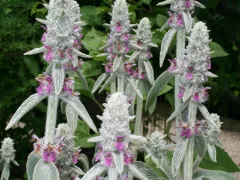
Lamb's ear
12 in · grown for its leaves
Soft, fuzzy silver leaves make it a favourite for edging and for softening bolder colours around it.
-

Blue fescue
10 in · grown for its leaves
A compact ornamental grass that forms neat tufts of striking blue-silver blades.
-
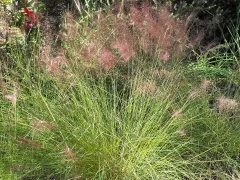
Pink muhly grass
3 ft · mid September to early November
In October a quiet mound of wiry, dark green leaves disappears under a billowing cloud of vivid pink that looks like cotton candy.
-
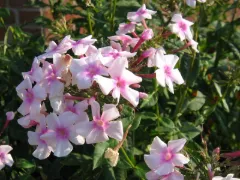
Garden phlox
3½ ft · mid July to early September
Tall, often fragrant clusters of flowers that carry colour through the height of summer.
-
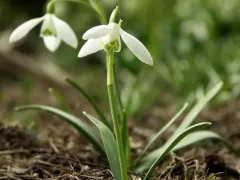
Snowdrop
6 in · early March to late March
Nodding white bells that push up through the last of the snow, weeks before anything else.
-

Bee balm
3 ft · early July to early August · host plant
Shaggy, colourful flower heads that draw hummingbirds, bees and butterflies.
-
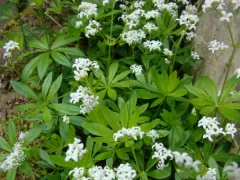
Sweet woodruff
8 in · early May to early June
Whorls of bright green leaves make a soft, even carpet under shrubs and trees.
-
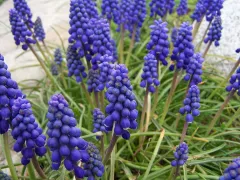
Grape hyacinth
6 in · mid April to early May
Tight spikes of cobalt-blue beads that make a river of colour under taller spring bulbs.
-
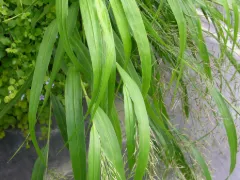
Japanese forest grass
18 in · grown for its leaves
The plain green species: a cascading mound of bright green, bamboo-like leaves that all flow in one direction, like water over a stone.
-
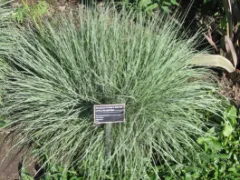
Little bluestem
3 ft · grown for its leaves · host plant
Blue-green summer blades turn copper and bronze in autumn and hold their colour through winter.
-
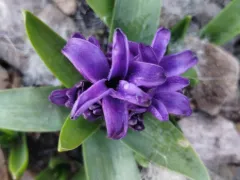
Hyacinth
10 in · mid April to early May
Dense, waxy spikes of intensely fragrant flowers in blue, purple, pink, white or soft yellow, in mid-spring.
-

Smooth hydrangea 'Annabelle'
4 ft · late June to early September · host plant
Enormous white flower globes open lime-green, turn pure white and fade back to green.
A bed planned only from these plants
The planner was given only the plants on this page that suit zone 6 and part shade, and designed this 16 × 8 ft (4.9 × 2.4 m) bed from them when the page was made.
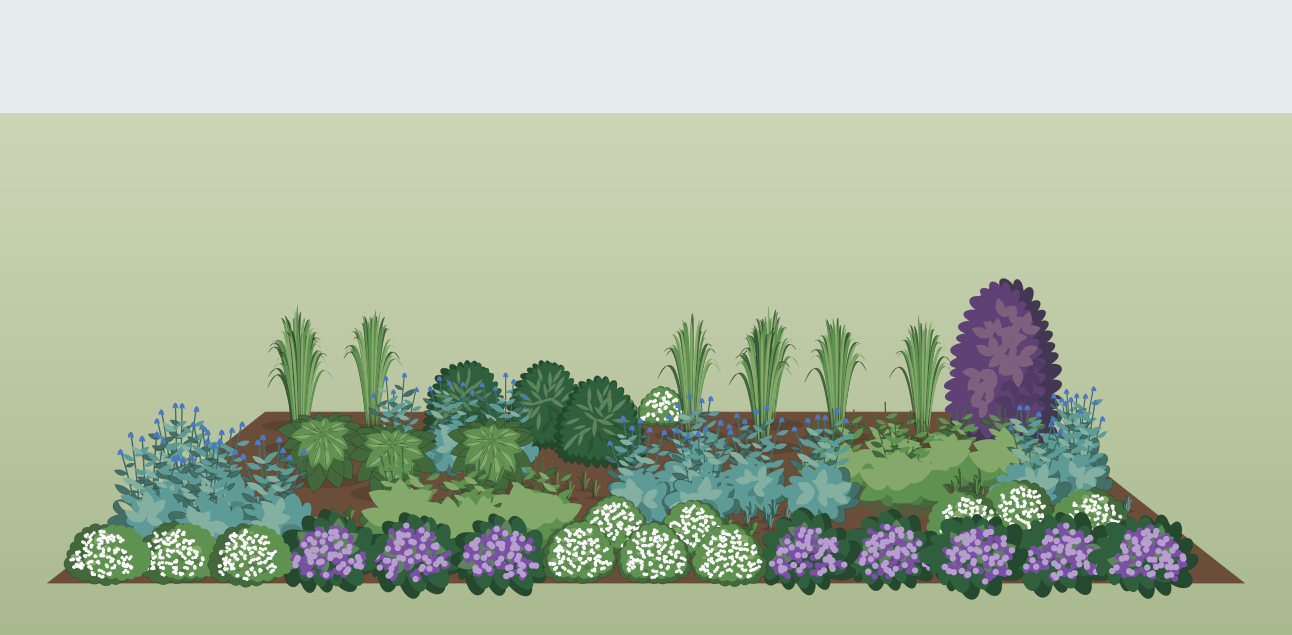
The plants
- 1 Creeping phlox 'Sherwood Purple' × 8, purple
- 2 Sweet woodruff × 14, white
- 3 Northern sea oats × 8, tan
- 4 Bugbane 'Hillside Black Beauty' × 1, white
- 5 Astilbe 'Bridal Veil' × 3, white
- 6 Mayapple × 8, green leaves
- 7 Virginia bluebells × 16, blue
- 8 Hardy begonia × 3, pink
- 9 Snowdrop × 12, white
- 10 Double snowdrop × 12, white
- 11 Winter aconite × 12, yellow
Planned as an English border: 15 of the 16 groups (94%) are drifts, longer along the bed than they are deep. The bed is balanced: the left half carries 49% of the visual weight and the right half 51%. Low plants run along 97% of the front edge: sweet woodruff and creeping phlox 'Sherwood Purple'.
The planner's own design check: 14 Excellent, 2 Good, 1 Satisfactory. It flags one thing to watch: Bugbane 'Hillside Black Beauty' is highly poisonous to people, dogs, cats and horses. Mayapple is highly poisonous to people, dogs, cats and horses.
Open this bed in the planner Change its size, the sun or the style, move plants about, or swap one for another.
All 121 plants
Show all 121, by where they go in a bed
Front of a bed 44
- American alumroot 12 in · grown for its leaves
- Autumn moor grass 16 in · mid August to early October
- Blue fescue 10 in · grown for its leaves
- Blue fescue 'Elijah Blue' 10 in · grown for its leaves
- Blue moor grass 10 in · mid April to mid May
- Bugleweed 6 in · early May to late May
- Bugleweed 'Black Scallop' 6 in · early May to late May
- Bugleweed 'Burgundy Glow' 6 in · early May to late May
- Bugleweed 'Catlin's Giant' 8 in · early May to late May
- Chives 14 in · mid May to mid June
- Common blue violet 8 in · mid April to late May · host plant
- Coral bells 'Green Spice' 10 in · grown for its leaves
- Creeping phlox 'Sherwood Purple' 8 in · early May to late May
- Creeping woodland phlox 8 in · late April to late May
- Crocus 'Ruby Giant' 4 in · early March to late March
- Double snowdrop 5 in · early February to mid March
- Early crocus 4 in · early March to late March
- Giant snowdrop 8 in · mid February to mid March
- Golden garlic 12 in · late May to late June
- Grape hyacinth 6 in · mid April to early May
- Horned violet 6 in · mid April to late June · host plant
- Hyacinth 10 in · mid April to early May
- Hyacinth 'Delft Blue' 10 in · mid April to early May
- Japanese forest grass 18 in · grown for its leaves
- Japanese forest grass 'All Gold' 14 in · grown for its leaves
- Japanese forest grass 'Aureola' 16 in · grown for its leaves
- Japanese forest grass 'Beni-kaze' 24 in · grown for its leaves
- Lady tulip 12 in · mid April to early May
- Lamb's ear 12 in · grown for its leaves
- Lamb's ear 'Big Ears' 12 in · grown for its leaves
- Lamb's ear 'Silver Carpet' 6 in · grown for its leaves
- Mayapple 16 in · grown for its leaves
- Mondo grass 8 in · grown for its leaves
- Netted iris 5 in · early March to late March
- Nodding onion 18 in · early July to early August
- Prairie dropseed 'Tara' 24 in · early August to mid September
- Purple love grass 16 in · early August to mid September
- Snowdrop 6 in · early March to late March
- Spanish bluebell 16 in · early May to late May
- Spring snowflake 10 in · early March to late March
- Striped squill 5 in · late March to mid April
- Summer snowflake 18 in · late April to mid May
- Sweet woodruff 8 in · early May to early June
- Winter aconite 4 in · late February to mid March
Middle of a bed 37
- Arborvitae 'Hetz Midget' 3 ft · grown for its leaves
- Arborvitae 'Mr. Bowling Ball' 2½ ft · grown for its leaves
- Astilbe 'Bridal Veil' 2½ ft · late June to mid July
- Astilbe 'Deutschland' 20 in · late May to late June
- Astilbe 'Fanal' 24 in · mid June to mid July
- August lily 24 in · mid August to mid September
- Bee balm 3 ft · early July to early August · host plant
- Bee balm 'Purple Rooster' 3 ft · late June to mid August · host plant
- Bleeding heart 2½ ft · early May to early June
- Bleeding heart 'Gold Heart' 2½ ft · early May to early June
- Blue grama 'Blonde Ambition' 2½ ft · mid July to mid October
- Blue oat grass 2½ ft · early June to early July
- Bottlebrush grass 3 ft · late June to late August · host plant
- Dwarf hemlock 'Jeddeloh' 3 ft · grown for its leaves
- Fragrant sumac 'Gro-Low' 24 in · mid April to early May
- Garden phlox 'Bright Eyes' 2½ ft · mid July to late August
- Garden phlox 'Laura' 2½ ft · mid July to early September
- Globe arborvitae 'Danica' 24 in · grown for its leaves
- Hairy alumroot 'Autumn Bride' 24 in · late August to early October
- Hardy begonia 24 in · mid August to late September
- Little bluestem 3 ft · grown for its leaves · host plant
- Little bluestem 'The Blues' 3 ft · early August to early October · host plant
- New Jersey tea 3 ft · mid June to mid July · host plant
- Northern sea oats 'River Mist' 2½ ft · late July to mid September · host plant
- Pink muhly grass 3 ft · mid September to early November
- Prairie dropseed 2½ ft · mid August to mid September
- Purple moor grass 'Moorhexe' 2½ ft · mid July to early September
- Purple moor grass 'Variegata' 24 in · mid July to mid September
- Red baneberry 24 in · early May to late May
- Siberian iris 2½ ft · late May to late June
- Siberian iris 'Caesar's Brother' 3½ ft · late May to late June
- Solitary clematis 24 in · mid June to early August
- Switchgrass 'Cheyenne Sky' 3 ft · late July to mid September · host plant
- Tufted hair grass 3 ft · late June to late August
- Tufted hair grass 'Goldtau' 24 in · mid June to late August
- Virginia bluebells 20 in · mid April to early May
- White bleeding heart 2½ ft · early May to early June
Back of a bed 40
- Arborvitae 'Degroot's Spire' 11½ ft · grown for its leaves
- Arborvitae 'Emerald Green' 13 ft · grown for its leaves
- Arborvitae 'Rheingold' 5 ft · grown for its leaves
- Arrowwood viburnum 8 ft · late May to late June
- Arrowwood viburnum 'Blue Muffin' 6 ft · late May to mid June · host plant
- Bee balm 'Jacob Cline' 4 ft · late June to mid August · host plant
- Bitter switchgrass 'Dewey Blue' 4 ft · early August to early October · host plant
- Black hollyhock 6 ft · late June to late August
- Bugbane 'Brunette' 5 ft · early September to early October
- Bugbane 'Hillside Black Beauty' 5 ft · late August to early October
- Crown imperial 3½ ft · late April to early May
- Dwarf arctic willow 4 ft · grown for its leaves · host plant
- Feather reed grass 'Avalanche' 5 ft · mid June to early October
- Fragrant sumac 5 ft · mid April to late April
- Frost grass 4½ ft · late July to early September
- Garden phlox 3½ ft · mid July to early September
- Garden phlox 'David' 3½ ft · mid July to early September
- Garden phlox 'Jeana' 4 ft · mid July to mid September
- Globe arborvitae 'Little Giant' 4 ft · grown for its leaves
- Golden Japanese euonymus 6 ft · grown for its leaves
- Ground clematis 'Purpurea' 5 ft · early June to mid July
- Hollyhock 6 ft · early July to late August
- Indian grass 6 ft · late August to early October
- Indian grass 'Sioux Blue' 6 ft · late August to mid October
- Korean feather reed grass 4 ft · late August to mid October
- Koreanspice viburnum 5 ft · late April to early May
- Lilac 'Miss Kim' 6 ft · late May to mid June
- Little bluestem 'Standing Ovation' 3½ ft · early August to mid September · host plant
- Muhly grass 'White Cloud' 4 ft · early October to early November
- Northern sea oats 3½ ft · late July to mid September · host plant
- Smooth hydrangea 'Annabelle' 4 ft · late June to early September · host plant
- Smooth hydrangea 'Incrediball' 5 ft · late June to early September · host plant
- Smooth hydrangea 'Invincibelle Spirit II' 3½ ft · late June to mid September · host plant
- Switchgrass 'Cloud Nine' 7 ft · early August to early October · host plant
- Switchgrass 'Heavy Metal' 4½ ft · late July to mid September · host plant
- Switchgrass 'Northwind' 5½ ft · early August to early October · host plant
- Switchgrass 'Prairie Sky' 5 ft · early August to early October · host plant
- Switchgrass 'Shenandoah' 4 ft · grown for its leaves · host plant
- Weeping Canadian hemlock 5 ft · grown for its leaves
- Wild bergamot 3½ ft · early July to late August