Plants for dry shade
What really grows in dry shade, under trees and beside walls, and how to plant it so it lives.
Dry shade is the hardest place in a garden: the ground under trees and in the lee of walls and fences, where roots take the water and the canopy or the eaves keep off the rain. Most shade plants come from moist woodland and sulk here, so the list is short, and it is worth knowing.
The trick is in the planting, not the plant. Plant small, in autumn or early spring while the ground still holds some moisture, water through the first summer, and mulch every spring with leaf mould or compost: it is what a woodland floor does for itself. After the first year the plants below manage on their own.
Evergreens earn their place twice over here. Dry shade is often bare in winter, and a carpet of glossy leaves is worth more than a few weeks of flower.
103 plants: 39 perennials, 7 ferns, 5 bulbs, 10 grasses and 42 shrubs.
The dozen to start with
-
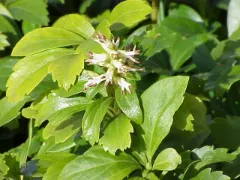
Japanese pachysandra
8 in · grown for its leaves · evergreen
Whorls of glossy, toothed, evergreen leaves form a uniform carpet under trees.
-
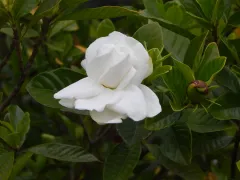
Gardenia
5 ft · late May to late July · evergreen
Glossy, dark evergreen leaves and creamy white, waxy flowers with a rich, heavy perfume in early summer.
-
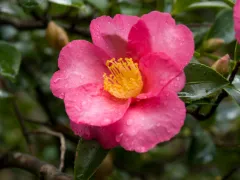
Sasanqua camellia
8 ft · early October to mid December · evergreen
A camellia that flowers in autumn and early winter, with smaller leaves, a looser habit and masses of single or semi-double, lightly scented flowers.
-
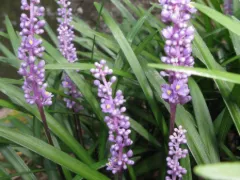
Lilyturf
16 in · early August to mid September · evergreen
Evergreen clumps of dark, strap-shaped, grassy leaves, with spikes of violet flowers like grape hyacinths in late summer, followed by black berries.
-

Common boxwood
10 ft · grown for its leaves · evergreen
The classic boxwood of old gardens: a large, billowing, dark evergreen that can be clipped into hedges and shapes or left to grow into a small tree over many decades.
-
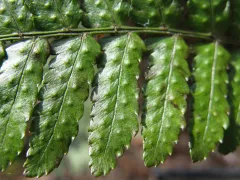
Autumn fern
22 in · grown for its leaves · evergreen
New fronds unfurl coppery red in spring and mature to glossy, dark green.
-
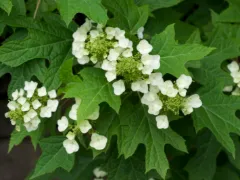
Oakleaf hydrangea
6½ ft · mid June to early August
A native shrub for every season: cone-shaped white flowers that age to pink, huge oak-shaped leaves that turn wine red and purple in autumn, and peeling, cinnamon-coloured bark in winter.
-
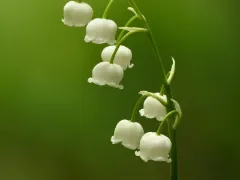
Lily of the valley
8 in · early May to late May
Arching sprays of small, white, intensely scented bells in May, between pairs of broad green leaves.
-
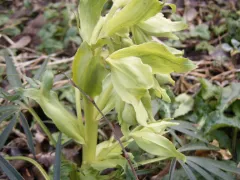
Stinking hellebore
24 in · late February to mid April · evergreen
Clusters of pale green, maroon-rimmed bells stand above almost black, finely fingered evergreen leaves from late winter to spring.
-
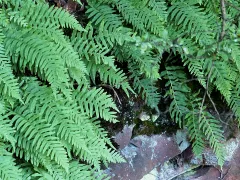
Common polypody
12 in · grown for its leaves · evergreen
Leathery, ladder-like, evergreen fronds rise from creeping rhizomes that run over rocks, logs and mossy walls.
-
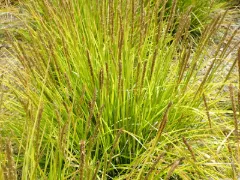
Autumn moor grass
16 in · mid August to early October
A neat, long-lived tuft of yellow-green leaves with narrow, silvery-white flower spikes in late summer.
-
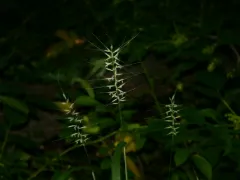
Bottlebrush grass
3 ft · late June to late August · host plant
Open, bristly seed heads like bottle brushes stand above the leaves in summer.
A bed planned only from these plants
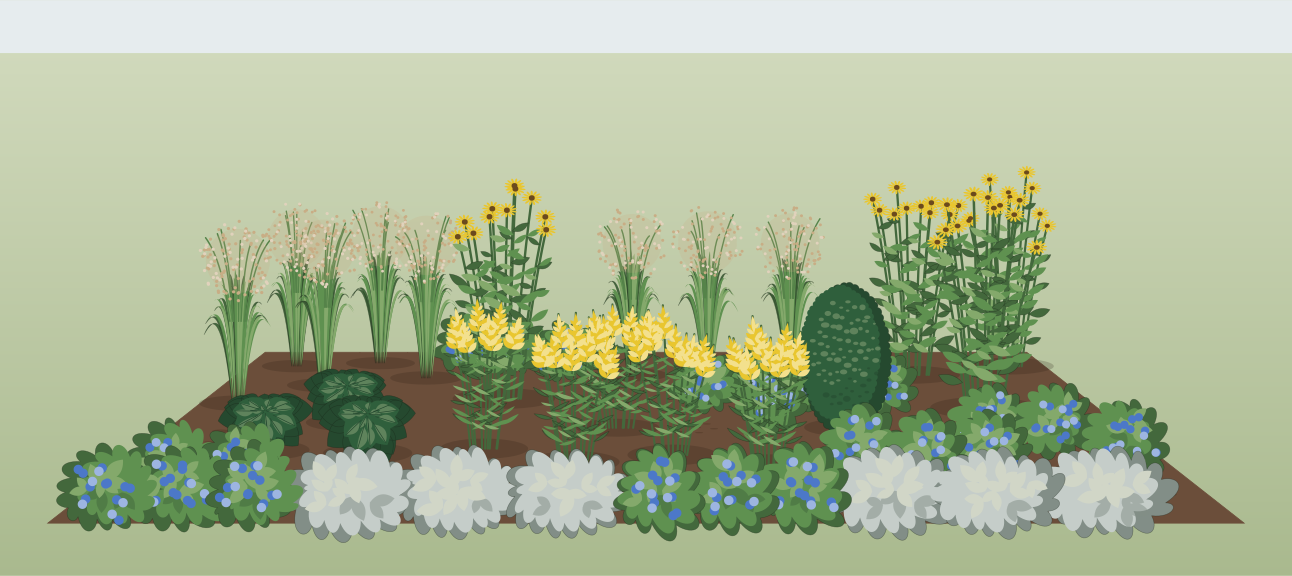
The planner was given only the plants on this page that suit zone 6 and part shade, and designed this 16 × 8 ft (4.9 × 2.4 m) bed from them when the page was made.
The plants
- 1 Spotted dead nettle 'White Nancy' × 6, white
- 2 Leadwort × 22, blue
- 3 Woodland sunflower × 4, yellow
- 4 Northern sea oats × 8, tan
- 5 Dwarf English boxwood × 1, dark green leaves
- 6 Bergenia × 3, pink
- 7 Blue-stemmed goldenrod × 5, yellow
- 8 Winter aconite × 12, yellow
- 9 Grecian windflower × 10, blue
- 10 Hardy cyclamen × 5, pink
Planned as an English border: 9 of the 10 groups (90%) are drifts, longer along the bed than they are deep. The flowers run from late February to mid October: 33 weeks in all. The most in flower at one time is 5 kinds, in early September.
The planner's own design check: 10 Excellent, 6 Good, 1 Satisfactory. It flags one thing to watch: Winter aconite is highly poisonous to people, dogs, cats and horses. Woodland sunflower spreads aggressively.
Open this bed in the planner Change its size, the sun or the style, move plants about, or swap one for another.
All 103 plants
Show all 103, by where they go in a bed
Front of a bed 42
- Aaron's beard 14 in · late June to late August
- Allegheny spurge 10 in · early April to early May
- American alumroot 12 in · grown for its leaves
- Autumn moor grass 16 in · mid August to early October
- Barrenwort 'Frohnleiten' 12 in · mid April to mid May · evergreen
- Bergenia 16 in · mid April to early May · evergreen
- Bergenia 'Winter Glow' 14 in · mid April to mid May · evergreen
- Bigroot cranesbill 16 in · mid May to late June
- Christmas rose 12 in · late February to early April · evergreen
- Christmas rose 'Jacob' 10 in · late November to late December · evergreen
- Common polypody 12 in · grown for its leaves · evergreen
- Coral bells 'Green Spice' 10 in · grown for its leaves
- Creeping lilyturf 12 in · grown for its leaves · evergreen
- Creeping mahonia 12 in · mid April to early May · evergreen
- Creeping phlox 'Sherwood Purple' 8 in · early May to late May · evergreen
- Creeping woodland phlox 8 in · late April to late May
- Dwarf crested iris 6 in · late April to mid May
- Grecian windflower 5 in · early April to early May
- Hardy cyclamen 5 in · late August to mid October
- Japanese pachysandra 8 in · grown for its leaves · evergreen
- Leadwort 10 in · early August to early October
- Lily of the valley 8 in · early May to late May
- Lilyturf 16 in · early August to mid September · evergreen
- Mayapple 16 in · grown for its leaves
- Pennsylvania sedge 8 in · grown for its leaves
- Pink lily of the valley 8 in · early May to late May
- Robin's plantain 'Lynnhaven Carpet' 6 in · early May to late May
- Rue anemone 6 in · mid April to mid May
- Scarlet coral bells 18 in · late May to late July
- Sedge 'Bunny Blue' 10 in · grown for its leaves · evergreen
- Spanish bluebell 16 in · early May to late May
- Spotted dead nettle 8 in · early May to mid July
- Spotted dead nettle 'Beacon Silver' 6 in · early May to late July
- Spotted dead nettle 'White Nancy' 6 in · early May to late July
- Strawberry begonia 8 in · mid May to late June · evergreen
- Summer snowflake 18 in · late April to mid May
- Variegated lilyturf 14 in · early August to mid September · evergreen
- Wavy hair grass 16 in · early June to late July · evergreen
- Winter aconite 4 in · late February to mid March
- Woodland phlox 12 in · late April to late May
- Woodland phlox 'Blue Moon' 12 in · late April to late May
- Woodland stonecrop 4 in · late April to late May
Middle of a bed 23
- Autumn fern 22 in · grown for its leaves · evergreen
- Autumn fern 'Brilliance' 22 in · grown for its leaves · evergreen
- Blue-stemmed goldenrod 2½ ft · early September to mid October · host plant
- Bottlebrush grass 3 ft · late June to late August · host plant
- Bush honeysuckle 'Kodiak Orange' 3½ ft · mid June to early August
- Corsican hellebore 2½ ft · late February to late April · evergreen
- Dwarf English boxwood 2½ ft · grown for its leaves · evergreen
- Evergreen wood fern 2½ ft · grown for its leaves · evergreen
- Fragrant sumac 'Gro-Low' 24 in · mid April to early May
- Hay-scented fern 24 in · grown for its leaves
- Indian pink 20 in · early June to early July
- Japanese holly 'Soft Touch' 2½ ft · grown for its leaves · evergreen
- Northern maidenhair fern 20 in · grown for its leaves
- Northern sea oats 'River Mist' 2½ ft · late July to mid September · host plant
- Oakleaf hydrangea 'Munchkin' 3½ ft · late June to late August
- Spreading plum yew 2½ ft · grown for its leaves · evergreen
- Stinking hellebore 24 in · late February to mid April · evergreen
- Sweetspire 'Little Henry' 2½ ft · early June to early July
- Tufted hair grass 3 ft · late June to late August
- Tufted hair grass 'Goldtau' 24 in · mid June to late August
- White wood aster 24 in · late August to early October · host plant
- Wild geranium 20 in · early May to late May
- Wood spurge 20 in · late April to late May · evergreen
Back of a bed 38
- Alpine currant 5 ft · grown for its leaves
- Bear's breeches 4 ft · mid June to late July
- Burkwood osmanthus 8 ft · mid April to early May · evergreen
- Cherry laurel 'Otto Luyken' 3½ ft · late April to mid May · evergreen · host plant
- Chinese fringe flower 6½ ft · late March to early May · evergreen
- Christmas box 4 ft · early January to early March · evergreen
- Common boxwood 10 ft · grown for its leaves · evergreen
- Coral bark maple 16½ ft · grown for its leaves · host plant
- Coralberry 4 ft · mid July to early August
- Dixie wood fern 4½ ft · grown for its leaves
- Double Japanese kerria 6½ ft · mid April to mid May
- Dwarf Japanese yew 4 ft · grown for its leaves · evergreen
- Fragrant sumac 5 ft · mid April to late April
- Fringe flower 'Purple Diamond' 5 ft · late March to early May · evergreen
- Gardenia 5 ft · late May to late July · evergreen
- Golden Japanese euonymus 6 ft · grown for its leaves · evergreen
- Holly osmanthus 'Goshiki' 5 ft · grown for its leaves · evergreen
- Japanese aucuba 6½ ft · grown for its leaves · evergreen
- Japanese fatsia 6½ ft · mid October to late November · evergreen
- Japanese kerria 5 ft · mid April to mid May
- Japanese maple 'Bloodgood' 15 ft · grown for its leaves · host plant
- Korean feather reed grass 4 ft · late August to mid October
- Laurustinus 8 ft · early January to early April · evergreen
- Mexican orange blossom 6 ft · early May to late May · evergreen
- Northern sea oats 3½ ft · late July to mid September · host plant
- Oakleaf hydrangea 6½ ft · mid June to early August
- Oakleaf hydrangea 'Alice' 10 ft · late June to late August
- Oakleaf hydrangea 'Pee Wee' 3½ ft · mid June to early August
- Oakleaf hydrangea 'Ruby Slippers' 3½ ft · mid June to early August
- Oakleaf hydrangea 'Snow Queen' 6 ft · late June to late August
- Oceanspray 10 ft · mid June to mid July
- Sasanqua camellia 8 ft · early October to mid December · evergreen
- Snowberry 4 ft · mid June to mid July · host plant
- Virginia sweetspire 5 ft · early June to early July
- Virginia sweetspire 'Henry's Garnet' 4 ft · early June to early July
- White fringe tree 15 ft · late May to early June
- Winter jasmine 4 ft · early January to late March
- Woodland sunflower 4 ft · mid July to early September · host plant