Tulip 'Lilac Wonder'
Tulipa saxatilis 'Lilac Wonder' · Liliaceae
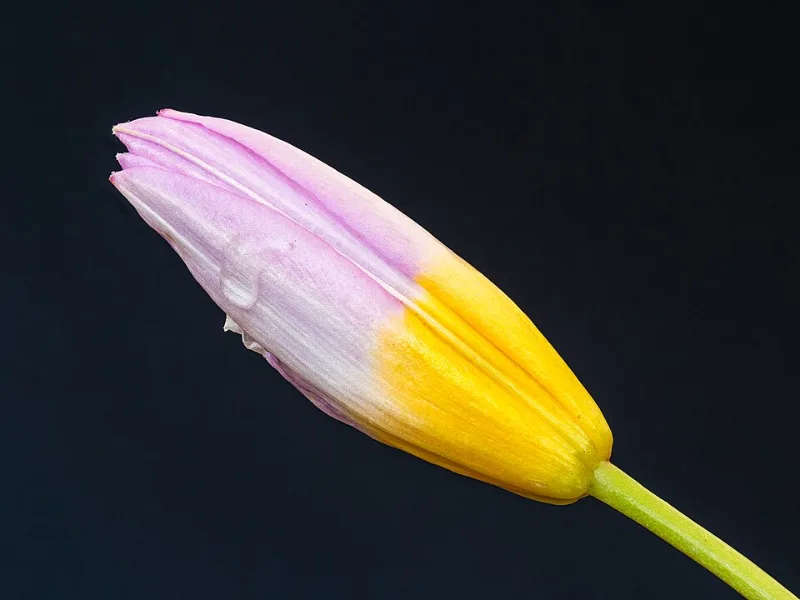
Rosy-lilac flowers open flat in the sun to show a large, bright yellow centre, over glossy green leaves.
- Size
- 7 in tall, 4 in wide
- Zones
- 5 to 9
- Light
- Full sun
- Flowers
- Mid April to early May
- Pets
- Toxic (moderate)
- Job in a bed
- Bulb layer
A bed built around tulip 'Lilac Wonder'
The planner designed this bed around tulip 'Lilac Wonder' when this page was made: a 12 × 6 ft (3.7 × 1.8 m) English border in zone 6, full sun. It chose the other plants from the 715 that suit those conditions and its dry soil, and says below why tulip 'Lilac Wonder' stands where it does.

The plants
- 1 Winter heath × 11, pink
- 2 Carpathian bellflower 'Blue Clips' × 7, blue
- 3 Stiff goldenrod × 3, yellow
- 4 Little bluestem 'The Blues' × 3, tan
- 5 Silver sage × 1, silver leaves
- 6 Spurge 'Ascot Rainbow' × 3, green
- 7 Tulip 'Lilac Wonder' × 12, pink
- 8 Ornamental onion 'Purple Sensation' × 4, purple
Why this plant
- Nothing here is unique to it. Its leaf, flower shape and colour are all on the plan already. Its case rests on where it stands and when it performs.
Why here
- Near the front. At 7 in it stands behind the taller silver sage (12 in).
- 12 plants in 2 handfuls. In the gaps between other plants, which fill the space when the bulb is not in growth.
Why now
- In flower for four weeks. From mid April to early May.
- In company. With winter heath in mid April: 2 kinds at once.
- Leaves gone by midsummer. They die back and leave bare ground. A perennial that comes up late stands beside it, and grows over the gap.
Planned as an English border: 5 of the 6 groups (83%) are drifts, longer along the bed than they are deep. Winter heath is the first into flower, in late January, and little bluestem 'The Blues' the last to finish, in early October. The bed is tied together by its repeats: two kinds come round again along it, winter heath and Carpathian bellflower 'Blue Clips'.
The planner's own design check: 11 Excellent, 6 Good. It flags one thing to watch: Nothing on this plan is highly poisonous or an aggressive spreader.
Open this bed in the planner Change its size, the sun or the style, move plants about, or swap one for another.
Where tulip 'Lilac Wonder' goes in a border
At 7 in it belongs at the front of a bed. In the planner's ten height classes it is low (6 to 12 in).
Its job: bulb layer. Small bulbs planted in handfuls of five or seven in the gaps between other plants, for colour before the perennials wake up.
A species tulip from Crete, and one of the best for warm climates, where most tulips fail. It spreads by runners into a colony in a hot, dry spot.
- Tulips for warm climates
- Rock and gravel gardens
- The front of a sunny border
What to plant with tulip 'Lilac Wonder'
Plants recorded as good partners for it, and what each pairing does:
- Blue fescue: its blue-green leaves are a setting for the flowers, before and after; happy in the same dry soil.
- Rock rose: takes over when it finishes, flowering from late May; happy in the same dry soil.
- English lavender 'Hidcote': takes over when it finishes, flowering from late June; tall enough (18 in) to stand behind it; happy in the same dry soil.
Questions about tulip 'Lilac Wonder'
Does tulip 'Lilac Wonder' need sun or shade?
Tulip 'Lilac Wonder' grows in full sun (6 or more hours of direct sun a day).
It wants dry, sharply drained soil, on the lean side, with no feeding, and little watering once settled.
What zones does tulip 'Lilac Wonder' grow in?
USDA zones 5 to 9. It is hardy to zone 5, which means it survives winter nights down to about −10 °F (−23 °C).
Gardening in Canada? Use the USDA zone for your town: Canada's own zone map uses different numbers.
When does tulip 'Lilac Wonder' flower in my zone?
In zone 5 it flowers mid April to early May. As a spring flower it moves about a week for every zone: earlier where it is warmer, later where it is colder.
| Zone 5 | Mid April to early May |
|---|---|
| Zone 6 | Mid April to early May |
| Zone 7 | Early April to late April |
| Zone 8 | Late March to mid April |
| Zone 9 | Late March to mid April |
Worked out from Hopkins' bioclimatic law: spring arrives about four days later for each degree of latitude north, and one zone is roughly two degrees. A warm spring or a cold one moves any garden two weeks either way.
How far apart should tulip 'Lilac Wonder' be planted?
3 in (8 cm) apart, from the middle of one plant to the middle of the next. That is a little closer than its full width of 4 in (10 cm), so a group knits into one patch.
It grows 7 in (18 cm) tall. Give it the full distance from anything taller, or it will lean out towards the light.
How many tulip 'Lilac Wonder' plants do I need?
At 3 in apart, set out in staggered rows:
- 168 to fill 10 square feet (about 1 m²)
- 39 for a single row 10 ft (3 m) long
- 536 to fill a 4 × 8 ft bed on its own
In a mixed border, plant it as handfuls of five or seven, in the gaps between other plants.
In the bed above, the planner used 12 in two groups.
Is tulip 'Lilac Wonder' poisonous to dogs and cats?
Yes: moderate toxicity to dogs, cats and horses. The bulbs are the most poisonous part and cause vomiting, drooling and diarrhoea in pets. Handling the bulbs can irritate skin.
Rated from the ASPCA. Where references disagree, the more cautious rating is used.
Is there a pet-safe plant like tulip 'Lilac Wonder'?
These come closest to doing what tulip 'Lilac Wonder' does, and no toxicity is recorded for them:
- Grape hyacinth: the same job in a bed, the same size and the same flowering time; blue, not pink, fine leaves, not medium.
- Spring starflower: the same job in a bed, the same size and the same flowering time; blue or white, not pink, fine leaves, not medium.
Matched the way the planner's Swap button matches plants: the same job in a bed, then size, then flowering time.
What can I plant to hide tulip 'Lilac Wonder''s leaves after it flowers?
A bulb's leaves have to be left to yellow for about six weeks after flowering, to feed next year's flowers. Plant it among perennials that come up late and spread wide, and they grow over the leaves as they fade:
- Lady's mantle: 18 in tall and 24 in wide, in flower late May to early July.
- Catmint 'Walker's Low': 24 in tall and 2½ ft wide, in flower mid May to mid September.
- Garden chrysanthemum: 24 in tall and 24 in wide, in flower mid September to late October.
What does tulip 'Lilac Wonder' look like in winter?
Tulip 'Lilac Wonder' is underground: it dies back after flowering and waits as a bulb until spring. Mark where it is, so a fork does not find it first.
More Tulipa
- Darwin hybrid tulip Tulipa (Darwin hybrids)
- Greigii tulip Tulipa greigii
- Lady tulip Tulipa clusiana
- Tarda tulip Tulipa tarda
- Tulip Tulipa
- Tulip 'Angelique' Tulipa 'Angelique'
- Tulip 'Apeldoorn' Tulipa 'Apeldoorn'
- Tulip 'Ballerina' Tulipa 'Ballerina'
- Tulip 'Fusilier' Tulipa praestans 'Fusilier'
- Tulip 'Purissima' Tulipa 'Purissima'
- Tulip 'Queen of Night' Tulipa 'Queen of Night'
- Tulip 'Spring Green' Tulipa 'Spring Green'
- Turkestan tulip Tulipa turkestanica
- Waterlily tulip Tulipa kaufmanniana
In these guides
Every fact on record
- Type
- Bulb
- Size
- 7 in (18 cm) tall, 4 in (10 cm) wide
- Plant
- 3 in (8 cm) apart
- Height class
- Low (6 to 12 in)
- Place in the bed
- Front
- Flowers
- Mid April to early May; open bowls; pink, lavender, yellow
- Leaves
- Medium texture, summer-dormant; green
- Shape
- Upright, clumping
- Hardy in
- USDA zones 5 to 9
- Light
- Full sun
- Soil
- Lean, dry and sharply drained
- Water
- Low
- Feeding
- None needed
- Family
- Liliaceae
Checked against ASPCA poison lists. Flowering times are for zone 5: later in colder zones, earlier in warmer ones. Toxicity and spread information is a general gardening guide, not veterinary or medical advice, and invasive status varies by region. If a person or pet eats a plant, contact poison control or a vet. Check your local invasive species list before planting anything with a spread warning.