Pet-safe plants for shade
Shade plants with no toxicity recorded for dogs, cats or horses, checked against the ASPCA and NC State.
Shade is where the risky plants gather: lily of the valley, foxglove, bleeding heart, hellebore and monkshood are all shade plants, and all poisonous. So it is worth knowing which shade plants are not.
Every plant here has been checked against the ASPCA's lists, NC State's toxicity ratings, or both, and no toxicity is recorded for dogs, cats or horses. Unchecked plants are left out. Not toxic is not edible: if a pet eats something and seems unwell, call your vet.
220 plants: 88 perennials, 42 ferns, 5 bulbs, 24 grasses and 61 shrubs.
The dozen to start with
-
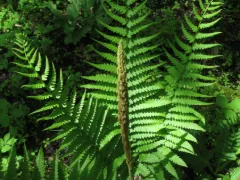
Cinnamon fern
4 ft · grown for its leaves
A tall vase of green fronds surrounds stiff, upright, cinnamon-brown spore stalks in spring.
-
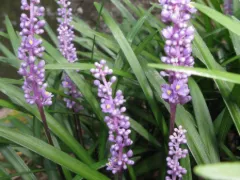
Lilyturf
16 in · early August to mid September
Evergreen clumps of dark, strap-shaped, grassy leaves, with spikes of violet flowers like grape hyacinths in late summer, followed by black berries.
-
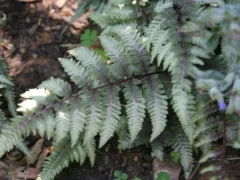
Japanese painted fern
18 in · grown for its leaves
Arching fronds brushed with silver and burgundy brighten dark corners all season.
-
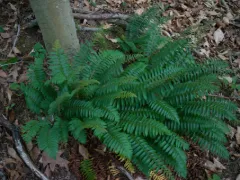
Christmas fern
20 in · grown for its leaves
The most useful native fern: leathery, dark green fronds that stay green through winter, in a tidy clump that never spreads.
-
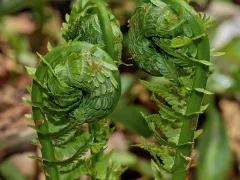
Ostrich fern
4 ft · grown for its leaves
Tall, feathery fronds form an elegant green vase that gives height at the back of a shady bed.
-
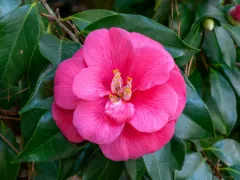
Japanese camellia
10 ft · early February to early April
Polished, dark evergreen leaves and large, formal flowers in red, pink or white from late winter into spring.
-
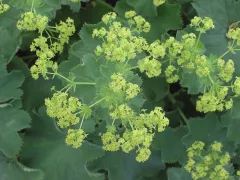
Lady's mantle
18 in · late May to early July
Scalloped, velvety leaves that hold beads of rain like mercury, under a froth of tiny chartreuse flowers in early summer.
-
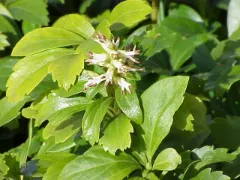
Japanese pachysandra
8 in · grown for its leaves
Whorls of glossy, toothed, evergreen leaves form a uniform carpet under trees.
-
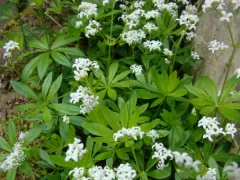
Sweet woodruff
8 in · early May to early June
Whorls of bright green leaves make a soft, even carpet under shrubs and trees.
-
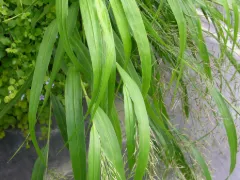
Japanese forest grass
18 in · grown for its leaves
The plain green species: a cascading mound of bright green, bamboo-like leaves that all flow in one direction, like water over a stone.
-

Laceleaf Japanese maple 'Crimson Queen'
8 ft · grown for its leaves · host plant
A low, weeping dome of thread-fine, deep crimson foliage that cascades to the ground and turns scarlet in autumn.
-
Dwarf Hinoki cypress
5 ft · grown for its leaves
A slow, irregular pyramid of dark, glossy, shell-shaped sprays of foliage, each one curved like a cupped hand.
A bed planned only from these plants
The planner was given only the plants on this page that suit zone 6 and part shade, and designed this 16 × 8 ft (4.9 × 2.4 m) bed from them when the page was made.
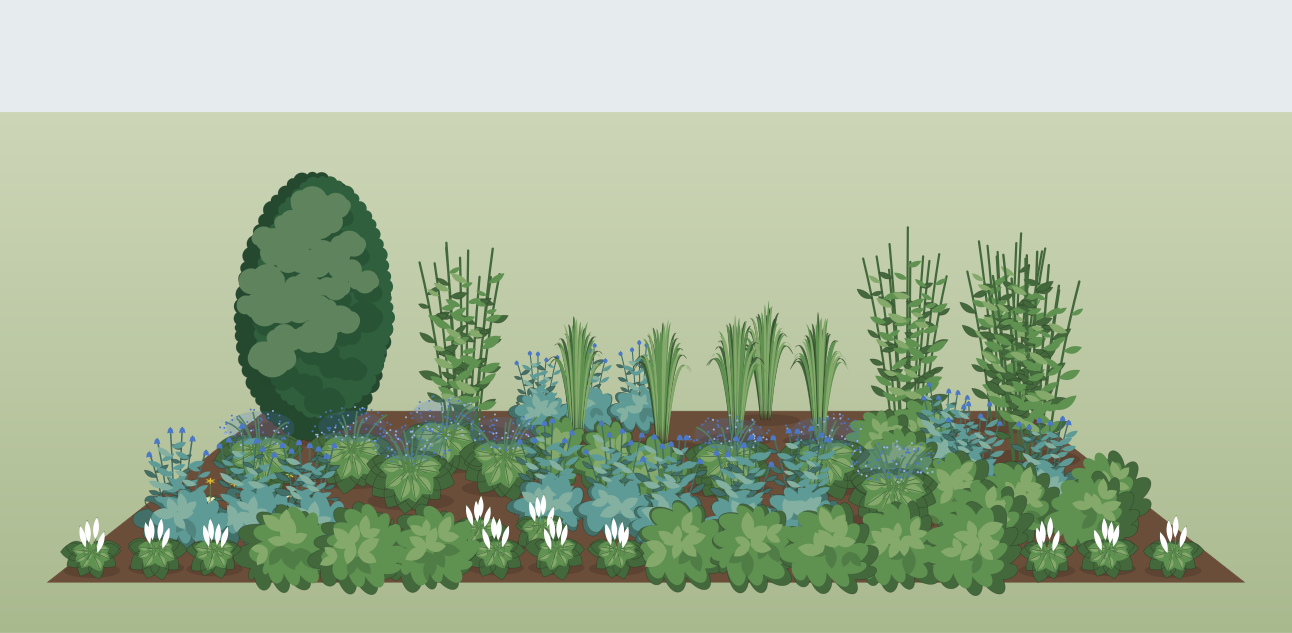
The plants
- 1 Leadwort × 19, blue
- 2 Wherry's foamflower × 11, white
- 3 Dwarf Hinoki cypress × 1, dark green leaves
- 4 Northern sea oats × 5, tan
- 5 Woodland sunflower × 4, yellow
- 6 Virginia bluebells × 14, blue
- 7 Siberian bugloss × 8, blue
- 8 Yellow trout lily × 5, yellow
- 9 Striped squill × 10, blue
Planned as an English border: 11 of the 13 groups (85%) are drifts, longer along the bed than they are deep. The front edge is finished with wherry's foamflower and leadwort. There is more leadwort than anything else, 19 plants in all. The Design check says right plant, right place needs revision.
The planner's own design check: 12 Excellent, 2 Good, 2 Satisfactory, 1 Needs revision. Its weakest point is right plant, right place: Every plant here suits your hardiness zone and light. Most of these plants want moist soil, but woodland sunflower wants dry soil. It flags one thing to watch: Northern sea oats spreads aggressively. Woodland sunflower spreads aggressively.
Open this bed in the planner Change its size, the sun or the style, move plants about, or swap one for another.
All 220 plants
Show all 220, by where they go in a bed
Front of a bed 95
- Allegheny spurge 10 in · early April to early May
- American alumroot 12 in · grown for its leaves
- Autumn moor grass 16 in · mid August to early October
- Barren strawberry 5 in · late April to late May
- Barrenwort 'Frohnleiten' 12 in · mid April to mid May
- Bergenia 16 in · mid April to early May
- Bergenia 'Winter Glow' 14 in · mid April to mid May
- Bigleaf aster 24 in · early August to mid September
- Black mondo grass 8 in · grown for its leaves
- Broad beech fern 18 in · grown for its leaves
- Brunnera 'Alexander's Great' 16 in · late April to late May
- Brunnera 'Looking Glass' 14 in · late April to late May
- Bugleweed 6 in · early May to late May
- Bugleweed 'Black Scallop' 6 in · early May to late May
- Bugleweed 'Burgundy Glow' 6 in · early May to late May
- Bugleweed 'Catlin's Giant' 8 in · early May to late May
- Bugleweed 'Chocolate Chip' 3 in · early May to late May
- Bulblet fern 18 in · grown for its leaves
- Celandine poppy 16 in · mid April to late May
- Checkered lily 12 in · mid April to early May
- Common blue violet 8 in · mid April to late May · host plant
- Common polypody 12 in · grown for its leaves
- Coral bells 12 in · grown for its leaves
- Coral bells 'Berry Smoothie' 18 in · grown for its leaves
- Coral bells 'Green Spice' 10 in · grown for its leaves
- Coral bells 'Palace Purple' 12 in · grown for its leaves
- Cranesbill 'Rozanne' 18 in · early June to early October
- Creeping Jacob's ladder 14 in · late April to late May
- Creeping lilyturf 12 in · grown for its leaves
- Creeping phlox 'Sherwood Purple' 8 in · early May to late May
- Creeping woodland phlox 8 in · late April to late May
- Deer fern 16 in · grown for its leaves
- Foamflower 10 in · late April to late May
- Foamy bells 12 in · grown for its leaves
- Green-and-gold 6 in · late April to mid June
- Hardy orchid 16 in · mid May to mid June
- Jacob's ladder 'Stairway to Heaven' 12 in · early May to early June
- Japanese beech fern 18 in · grown for its leaves
- Japanese forest grass 18 in · grown for its leaves
- Japanese forest grass 'All Gold' 14 in · grown for its leaves
- Japanese forest grass 'Aureola' 16 in · grown for its leaves
- Japanese forest grass 'Beni-kaze' 24 in · grown for its leaves
- Japanese pachysandra 8 in · grown for its leaves
- Japanese painted fern 18 in · grown for its leaves
- Japanese sedge 'Ice Dance' 14 in · grown for its leaves
- Korean rock fern 14 in · grown for its leaves
- Lady's mantle 18 in · late May to early July
- Leadwort 10 in · early August to early October
- Lilyturf 16 in · early August to mid September
- Liverleaf 6 in · late March to late April
- Lowbush blueberry 16 in · early May to late May
- Lungwort 12 in · early April to early May
- Lungwort 'Raspberry Splash' 12 in · early April to mid May
- Maidenhair spleenwort 6 in · grown for its leaves
- Mazus 2 in · early May to mid June
- Mondo grass 8 in · grown for its leaves
- New York fern 18 in · grown for its leaves
- Pennsylvania sedge 8 in · grown for its leaves
- Red barrenwort 12 in · late April to mid May
- Rock polypody 8 in · grown for its leaves
- Rue anemone 6 in · mid April to mid May
- Scarlet coral bells 18 in · late May to late July
- Sedge 'Bunny Blue' 10 in · grown for its leaves
- Sedge 'Everest' 12 in · grown for its leaves
- Sedge 'Evergold' 12 in · grown for its leaves
- Sedge 'Everillo' 14 in · grown for its leaves
- Seersucker sedge 12 in · grown for its leaves
- Shooting star 16 in · early May to late May
- Siberian bugloss 16 in · late April to late May
- Siberian bugloss 'Jack Frost' 16 in · late April to late May
- Siberian cypress 12 in · grown for its leaves
- Southern maidenhair fern 14 in · grown for its leaves
- Spotted dead nettle 8 in · early May to mid July
- Spotted dead nettle 'Beacon Silver' 6 in · early May to late July
- Spotted dead nettle 'White Nancy' 6 in · early May to late July
- Strawberry begonia 8 in · mid May to late June
- Striped squill 5 in · late March to mid April
- Sweet box 18 in · early February to late March
- Sweet flag 'Ogon' 10 in · grown for its leaves
- Sweet violet 6 in · late March to early May · host plant
- Sweet woodruff 8 in · early May to early June
- Trout lily 'Pagoda' 12 in · mid April to early May
- Variegated Japanese sedge 12 in · grown for its leaves
- Variegated lilyturf 14 in · early August to mid September
- Variegated shield fern 18 in · grown for its leaves
- Wherry's foamflower 10 in · early May to late June
- White barrenwort 'Niveum' 8 in · late April to mid May
- Wild geranium 'Espresso' 16 in · early May to early June
- Wintergreen 5 in · late June to late July
- Woodland phlox 12 in · late April to late May
- Woodland phlox 'Blue Moon' 12 in · late April to late May
- Woodland stonecrop 4 in · late April to late May
- Woodland strawberry 8 in · early May to late August
- Yellow barrenwort 'Sulphureum' 12 in · late April to mid May
- Yellow trout lily 6 in · mid April to early May
Middle of a bed 57
- Astilbe 24 in · late June to mid July
- Astilbe 'Bridal Veil' 2½ ft · late June to mid July
- Astilbe 'Deutschland' 20 in · late May to late June
- Astilbe 'Fanal' 24 in · mid June to mid July
- Autumn fern 22 in · grown for its leaves
- Autumn fern 'Brilliance' 22 in · grown for its leaves
- Blue wood aster 3 ft · mid September to mid October · host plant
- Blue-stemmed goldenrod 2½ ft · early September to mid October · host plant
- Bottlebrush grass 3 ft · late June to late August · host plant
- Bowles' golden sedge 2½ ft · grown for its leaves
- Bowman's root 3 ft · late May to late June
- Braun's holly fern 24 in · grown for its leaves
- Cast iron plant 24 in · grown for its leaves
- Christmas fern 20 in · grown for its leaves
- Columbine meadow rue 3 ft · late May to late June
- David viburnum 3½ ft · mid May to late May
- Dwarf fothergilla 3 ft · late April to mid May
- Dwarf hemlock 'Jeddeloh' 3 ft · grown for its leaves
- Evergreen wood fern 2½ ft · grown for its leaves
- False Solomon's seal 2½ ft · early May to early June
- Formosa toad lily 2½ ft · late August to mid October
- Fortune's holly fern 20 in · grown for its leaves
- Fragrant sumac 'Gro-Low' 24 in · mid April to early May
- Fringed loosestrife 'Firecracker' 2½ ft · grown for its leaves
- Gray's sedge 2½ ft · late May to early September
- Hairy alumroot 'Autumn Bride' 24 in · late August to early October
- Hay-scented fern 24 in · grown for its leaves
- Japanese holly fern 24 in · grown for its leaves
- Lady fern 2½ ft · grown for its leaves
- Lady fern 'Lady in Red' 2½ ft · grown for its leaves
- Large-flowered bellwort 20 in · late April to mid May
- Leopard plant 24 in · early October to early November
- Marginal wood fern 24 in · grown for its leaves
- Marsh fern 24 in · grown for its leaves · host plant
- Netted chain fern 20 in · grown for its leaves
- Northern maidenhair fern 20 in · grown for its leaves
- Northern sea oats 'River Mist' 2½ ft · late July to mid September · host plant
- Palm sedge 2½ ft · grown for its leaves
- Rose turtlehead 2½ ft · mid August to late September · host plant
- Silvery glade fern 3 ft · grown for its leaves
- Soft shield fern 2½ ft · grown for its leaves
- Southern shield fern 3 ft · grown for its leaves
- Southern wood fern 3½ ft · grown for its leaves
- Summersweet 'Hummingbird' 3 ft · mid July to mid August
- Sweetspire 'Little Henry' 2½ ft · early June to early July
- Tassel fern 20 in · grown for its leaves
- Toad lily 2½ ft · mid September to mid October
- Tufted hair grass 3 ft · late June to late August
- Tufted hair grass 'Goldtau' 24 in · mid June to late August
- Turtlehead 'Hot Lips' 3 ft · mid August to late September
- Victorian lady fern 2½ ft · grown for its leaves
- Virginia bluebells 20 in · mid April to early May
- White turtlehead 3 ft · early August to mid September
- White wood aster 24 in · late August to early October · host plant
- Wild geranium 20 in · early May to late May
- Yellow loosestrife 3 ft · mid June to late July
- Yellowroot 2½ ft · grown for its leaves
Back of a bed 68
- Alpine currant 5 ft · grown for its leaves
- Arrowwood viburnum 8 ft · late May to late June
- Arrowwood viburnum 'Blue Muffin' 6 ft · late May to mid June · host plant
- Bear's breeches 4 ft · mid June to late July
- Burkwood osmanthus 8 ft · mid April to early May
- Buttercup winter hazel 5 ft · late March to mid April
- Camellia 'April Blush' 5 ft · late March to early May
- Chinese fringe flower 6½ ft · late March to early May
- Christmas box 4 ft · early January to early March
- Cinnamon fern 4 ft · grown for its leaves
- Clumping bamboo 'Rufa' 8 ft · grown for its leaves
- Common witch hazel 15 ft · mid October to late November · host plant
- Coral bark maple 16½ ft · grown for its leaves · host plant
- Corkscrew hazel 8 ft · late February to late March
- Cornelian cherry 16½ ft · early March to late March
- Dixie wood fern 4½ ft · grown for its leaves
- Double Japanese kerria 6½ ft · mid April to mid May
- Dwarf Hinoki cypress 5 ft · grown for its leaves
- Fothergilla 'Mount Airy' 5 ft · late April to mid May
- Fragrant sumac 5 ft · mid April to late April
- Fringe flower 'Purple Diamond' 5 ft · late March to early May
- Goat's beard 5 ft · early June to late June · host plant
- Golden fullmoon maple 13 ft · grown for its leaves · host plant
- Golden-scaled male fern 3½ ft · grown for its leaves
- Hardy fuchsia 4 ft · late June to mid October
- Holly osmanthus 'Goshiki' 5 ft · grown for its leaves
- Interrupted fern 3½ ft · grown for its leaves
- Japanese camellia 10 ft · early February to early April
- Japanese fatsia 6½ ft · mid October to late November
- Japanese kerria 5 ft · mid April to mid May
- Japanese maple 'Bloodgood' 15 ft · grown for its leaves · host plant
- Japanese pittosporum 10 ft · mid April to mid May
- Korean feather reed grass 4 ft · late August to mid October
- Laceleaf Japanese maple 'Crimson Queen' 8 ft · grown for its leaves · host plant
- Laceleaf Japanese maple 'Viridis' 8 ft · grown for its leaves · host plant
- Large fothergilla 8 ft · late April to mid May
- Laurustinus 8 ft · early January to early April
- Ligularia 'The Rocket' 5 ft · early July to early August
- Log fern 3½ ft · grown for its leaves
- Mapleleaf viburnum 5 ft · late May to mid June · host plant
- Mexican orange blossom 6 ft · early May to late May
- Northern sea oats 3½ ft · late July to mid September · host plant
- Ostrich fern 4 ft · grown for its leaves
- Purple-stemmed royal fern 4 ft · grown for its leaves
- Red osier dogwood 8 ft · late May to mid June · host plant
- Redvein enkianthus 10 ft · mid May to early June
- Royal fern 5 ft · grown for its leaves
- Salal 4 ft · late May to late June · host plant
- Sasanqua camellia 8 ft · early October to mid December
- Shadblow serviceberry 16½ ft · mid April to early May · host plant
- Siberian dogwood 6½ ft · late May to early June
- Spicebush 10 ft · late March to mid April · host plant
- Spiny bear's breeches 4 ft · mid June to late July
- Summersweet 6½ ft · mid July to mid August
- Summersweet 'Ruby Spice' 6 ft · mid July to mid August
- Vernal witch hazel 8 ft · mid January to early March
- Virginia sweetspire 5 ft · early June to early July
- Virginia sweetspire 'Henry's Garnet' 4 ft · early June to early July
- Wallich's wood fern 3½ ft · grown for its leaves
- Weeping Canadian hemlock 5 ft · grown for its leaves
- Western sword fern 3½ ft · grown for its leaves
- White fringe tree 15 ft · late May to early June
- Winter jasmine 4 ft · early January to late March
- Witch hazel 'Arnold Promise' 13 ft · early February to mid March
- Witch hazel 'Diane' 10 ft · early February to mid March
- Witch hazel 'Jelena' 11½ ft · late January to mid March
- Witherod viburnum 'Winterthur' 6½ ft · early June to late June · host plant
- Woodland sunflower 4 ft · mid July to early September · host plant