Garden plants native to Canada
Garden plants that grow wild in Canada, by province where VASCAN records it, with a sample bed planned from them.
These are the garden plants in the planner that grow wild somewhere in Canada, from the records of VASCAN (the database of Canadian plants) and USDA PLANTS. Where VASCAN records which provinces a plant grows in, the planner can narrow "native" to yours: choose your province on its setup screen.
Hardiness is the other half of the story. A plant native to southern Ontario may not be native to, or hardy in, the prairies: check each plant's zones against yours, using the USDA zone for your town (Canada's own zone map has different numbers).
219 plants: 110 perennials, 20 ferns, 1 bulb, 23 grasses and 65 shrubs.
The dozen to start with
-

Christmas fern
20 in · grown for its leaves
The most useful native fern: leathery, dark green fronds that stay green through winter, in a tidy clump that never spreads.
-
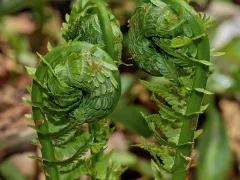
Ostrich fern
4 ft · grown for its leaves
Tall, feathery fronds form an elegant green vase that gives height at the back of a shady bed.
-

Bee balm
3 ft · early July to early August · host plant
Shaggy, colourful flower heads that draw hummingbirds, bees and butterflies.
-
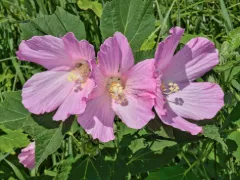
Hardy hibiscus
5 ft · late July to mid September
Flowers the size of dinner plates in red, pink or white from late summer, on a shrub-sized perennial that dies to the ground each winter and reappears very late in spring.
-
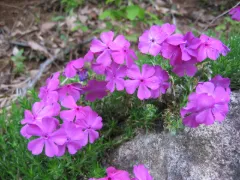
Creeping phlox
6 in · mid April to mid May
A low, spreading mat that turns into a sheet of colour in spring.
-
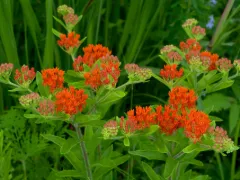
Butterfly weed
24 in · late June to early August · host plant
Flat clusters of vivid orange flowers in midsummer, covered in butterflies, on a low, bushy plant with a deep taproot.
-
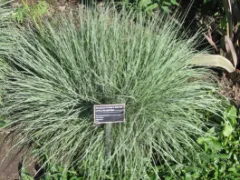
Little bluestem
3 ft · grown for its leaves · host plant
Blue-green summer blades turn copper and bronze in autumn and hold their colour through winter.
-
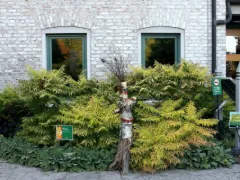
Staghorn sumac 'Tiger Eyes'
6 ft · late June to mid July · host plant
Deeply cut, ferny leaves that open chartreuse, turn bright yellow on fuzzy, rose-pink stems, and end the year in orange and scarlet.
-
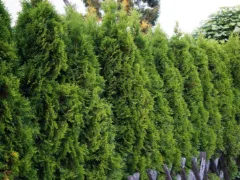
Arborvitae 'Emerald Green'
13 ft · grown for its leaves
A narrow, dense pyramid of bright emerald-green foliage that keeps its colour through winter.
-

Switchgrass 'Shenandoah'
4 ft · grown for its leaves · host plant
Green blades turn wine-red from midsummer, topped by a cloud of fine, pink-tinged seed heads.
-
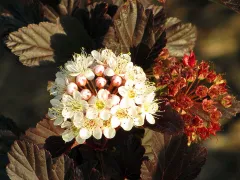
Ninebark 'Summer Wine'
6 ft · late May to late June
Deeply cut, wine-purple leaves on gracefully arching branches, studded in early summer with buttons of pinkish-white flowers.
-
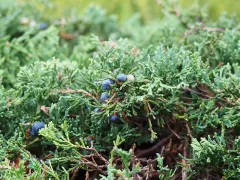
Creeping juniper 'Blue Rug'
6 in · grown for its leaves
The flattest juniper: a silver-blue carpet only a hand high that spreads two metres wide and turns plum-purple in winter.
A bed planned only from these plants
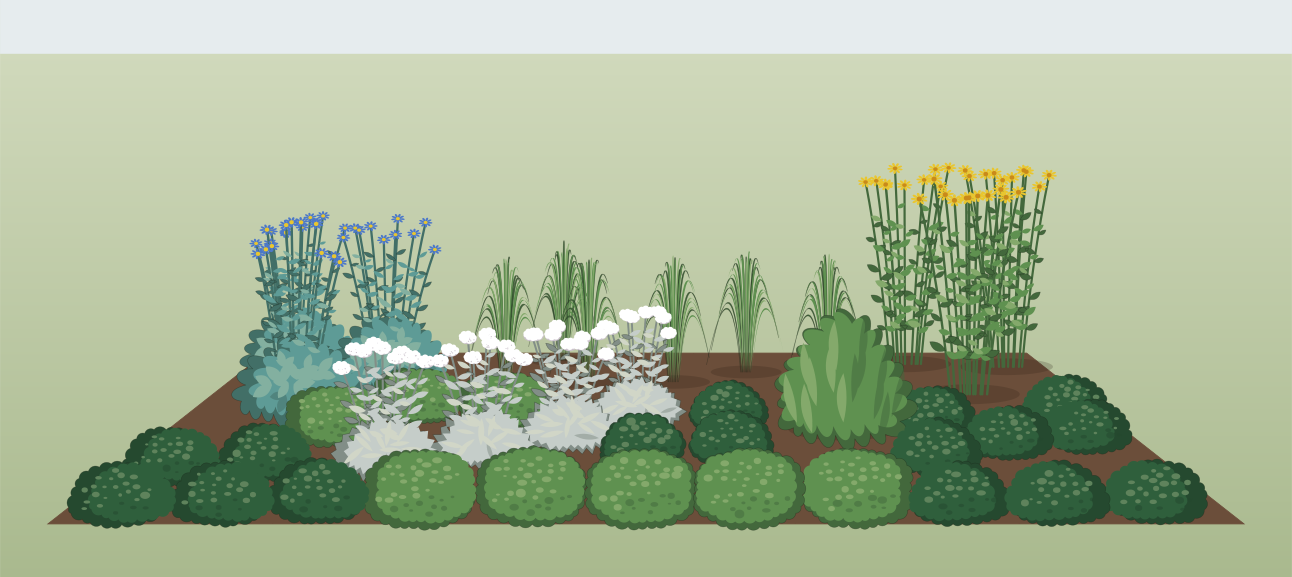
The planner was given only the plants on this page that suit zone 5 and full sun, and designed this 16 × 8 ft (4.9 × 2.4 m) bed from them when the page was made.
The plants
- 1 Lingonberry × 16, pink
- 2 Creeping phlox 'Emerald Blue' × 8, blue
- 3 False sunflower × 3, yellow
- 4 Smooth aster 'Bluebird' × 3, blue
- 5 Globe arborvitae 'Danica' × 1, green leaves
- 6 Gray's sedge × 6, green
- 7 Pearly everlasting × 4, white
Planned as a naturalistic planting: low grasses and groundcovers, the matrix, make up 62% of the planted ground. The back corners are held by smooth aster 'Bluebird' and false sunflower, the tallest plants on the plan. Lingonberry repeats along the bed to tie it together.
The planner's own design check: 9 Excellent, 6 Good, 1 Satisfactory. It flags one thing to watch: Nothing on this plan is highly poisonous or an aggressive spreader.
Open this bed in the planner Change its size, the sun or the style, move plants about, or swap one for another.
All 219 plants
Show all 219, by where they go in a bed
Front of a bed 58
- Bearberry 8 in · early May to late May · host plant
- Bigleaf aster 24 in · early August to mid September
- Blue-eyed grass 14 in · mid May to late June
- Bristleleaf sedge 8 in · grown for its leaves
- Broad beech fern 18 in · grown for its leaves
- Bulblet fern 18 in · grown for its leaves
- Burnet 'Tanna' 18 in · early July to early September
- Celandine poppy 16 in · mid April to late May
- Chives 14 in · mid May to mid June
- Common blue violet 8 in · mid April to late May · host plant
- Common polypody 12 in · grown for its leaves
- Corkscrew rush 16 in · grown for its leaves
- Creeping Jacob's ladder 14 in · late April to late May
- Creeping juniper 'Blue Chip' 10 in · grown for its leaves
- Creeping juniper 'Blue Rug' 6 in · grown for its leaves
- Creeping juniper 'Mother Lode' 4 in · grown for its leaves
- Creeping mahonia 12 in · mid April to early May
- Creeping phlox 6 in · mid April to mid May
- Creeping phlox 'Candy Stripe' 5 in · mid April to mid May
- Creeping phlox 'Emerald Blue' 5 in · mid April to mid May
- Dutchman's breeches 8 in · mid April to early May
- Foamflower 10 in · late April to late May
- Hairy beardtongue 18 in · late May to late June
- Harebell 12 in · late June to late August
- Jack-in-the-pulpit 18 in · early May to late May
- Lingonberry 8 in · late May to mid June
- Liverleaf 6 in · late March to late April
- Lowbush blueberry 16 in · early May to late May
- Maidenhair spleenwort 6 in · grown for its leaves
- Marsh marigold 16 in · mid April to early May
- Mayapple 16 in · grown for its leaves
- New York fern 18 in · grown for its leaves
- Nodding onion 18 in · early July to early August
- Pennsylvania sedge 8 in · grown for its leaves
- Pink tickseed 16 in · late June to early September
- Prairie alumroot 12 in · grown for its leaves
- Prairie dropseed 'Tara' 24 in · early August to mid September
- Prairie smoke 12 in · late April to late May
- Purple love grass 16 in · early August to mid September
- Red trillium 16 in · mid April to mid May · host plant
- Robin's plantain 'Lynnhaven Carpet' 6 in · early May to late May
- Rock polypody 8 in · grown for its leaves
- Rue anemone 6 in · mid April to mid May
- Sea thrift 8 in · early May to mid June
- Seersucker sedge 12 in · grown for its leaves
- Shooting star 16 in · early May to late May
- Squirrel corn 8 in · mid April to early May
- Sundrops 18 in · late May to mid July
- Verbena 'Homestead Purple' 10 in · mid May to early October
- Water avens 16 in · early May to late June
- White trillium 16 in · mid April to mid May · host plant
- Wild geranium 'Espresso' 16 in · early May to early June
- Wild ginger 6 in · grown for its leaves · host plant
- Wintergreen 5 in · late June to late July
- Woodland phlox 12 in · late April to late May
- Woodland phlox 'Blue Moon' 12 in · late April to late May
- Woodland stonecrop 4 in · late April to late May
- Yellow trout lily 6 in · mid April to early May
Middle of a bed 74
- Anise hyssop 3 ft · early July to early September
- Arborvitae 'Hetz Midget' 3 ft · grown for its leaves
- Arborvitae 'Mr. Bowling Ball' 2½ ft · grown for its leaves
- Bee balm 3 ft · early July to early August · host plant
- Bee balm 'Purple Rooster' 3 ft · late June to mid August · host plant
- Black chokeberry 'Low Scape Mound' 20 in · early May to late May
- Blazing star 3 ft · mid July to mid August · host plant
- Blazing star 'Kobold' 24 in · early July to early August · host plant
- Blue flag iris 2½ ft · late May to late June
- Blue grama 'Blonde Ambition' 2½ ft · mid July to mid October
- Blue wood aster 3 ft · mid September to mid October · host plant
- Blue-stemmed goldenrod 2½ ft · early September to mid October · host plant
- Bottle gentian 20 in · late August to early October
- Braun's holly fern 24 in · grown for its leaves
- Butterfly weed 24 in · late June to early August · host plant
- Cardinal flower 'Queen Victoria' 3½ ft · late July to mid September
- Christmas fern 20 in · grown for its leaves
- Common blanket flower 24 in · mid June to early September
- Doll's eyes 2½ ft · early May to late May
- Dwarf balsam fir 24 in · grown for its leaves
- Dwarf hemlock 'Jeddeloh' 3 ft · grown for its leaves
- Evergreen wood fern 2½ ft · grown for its leaves
- False Solomon's seal 2½ ft · early May to early June
- Flowering spurge 2½ ft · early July to late August
- Fragrant sumac 'Gro-Low' 24 in · mid April to early May
- Fringed loosestrife 'Firecracker' 2½ ft · grown for its leaves
- Globe arborvitae 'Danica' 24 in · grown for its leaves
- Golden Alexanders 2½ ft · early May to mid June · host plant
- Golden ragwort 20 in · mid April to late May · host plant
- Gray's sedge 2½ ft · late May to early September
- Great blue lobelia 2½ ft · early August to mid September
- Hay-scented fern 24 in · grown for its leaves
- Inkberry 'Gem Box' 2½ ft · grown for its leaves · host plant
- Joe-Pye weed 'Baby Joe' 2½ ft · late July to mid September
- Kalm's St John's wort 3 ft · early July to early August
- Lanceleaf coreopsis 20 in · late May to mid July
- Large-flowered bellwort 20 in · late April to mid May
- Leadplant 2½ ft · late June to early August
- Little bluestem 3 ft · grown for its leaves · host plant
- Male fern 3 ft · grown for its leaves
- Marginal wood fern 24 in · grown for its leaves
- Mexican hat 24 in · late June to early September
- Netted chain fern 20 in · grown for its leaves
- New England aster 'Purple Dome' 20 in · early September to mid October · host plant
- New Jersey tea 3 ft · mid June to mid July · host plant
- New York aster 3 ft · late August to mid October · host plant
- Northern maidenhair fern 20 in · grown for its leaves
- Obedient plant 'Miss Manners' 2 ft · mid July to early September
- Ohio spiderwort 2½ ft · late May to mid July
- Palm sedge 2½ ft · grown for its leaves
- Pearly everlasting 24 in · late July to early September
- Prairie dropseed 2½ ft · mid August to mid September
- Purple milkweed 3 ft · early June to mid July · host plant
- Showy milkweed 3½ ft · mid June to late July
- Shrubby cinquefoil 3 ft · early June to mid September
- Silvery glade fern 3 ft · grown for its leaves
- Slender mountain mint 2½ ft · early July to late August · host plant
- Soapweed yucca 2½ ft · mid June to mid July · host plant
- Solomon's seal 3 ft · early May to late May
- Spotted bee balm 24 in · mid July to early September · host plant
- Summersweet 'Hummingbird' 3 ft · mid July to mid August
- Sweetfern 3 ft · grown for its leaves
- Switchgrass 'Cheyenne Sky' 3 ft · late July to mid September · host plant
- Tufted hair grass 3 ft · late June to late August
- Tussock sedge 2½ ft · grown for its leaves
- Victorian lady fern 2½ ft · grown for its leaves
- Virginia bluebells 20 in · mid April to early May
- White sage 'Valerie Finnis' 24 in · grown for its leaves
- White turtlehead 3 ft · early August to mid September
- White wood aster 24 in · late August to early October · host plant
- Whorled milkweed 24 in · late June to late August · host plant
- Wild columbine 24 in · early May to early June
- Wild geranium 20 in · early May to late May
- Wild lupine 20 in · mid May to late June · host plant
Back of a bed 87
- American cranberrybush 10 ft · late May to mid June
- American elderberry 10 ft · mid June to mid July
- Arborvitae 'Degroot's Spire' 11½ ft · grown for its leaves
- Arborvitae 'Emerald Green' 13 ft · grown for its leaves
- Arborvitae 'Rheingold' 5 ft · grown for its leaves
- Bee balm 'Jacob Cline' 4 ft · late June to mid August · host plant
- Bitter switchgrass 'Dewey Blue' 4 ft · early August to early October · host plant
- Black chokeberry 5 ft · early May to late May
- Black chokeberry 'Viking' 6 ft · early May to late May
- Black cohosh 5 ft · early July to early August · host plant
- Blue vervain 4 ft · mid July to early September · host plant
- Boltonia 'Snowbank' 4 ft · early September to mid October
- Boneset 4 ft · early August to mid September
- Buttonbush 6½ ft · late June to early August
- Canadian burnet 5 ft · mid August to early October
- Cardinal flower 3½ ft · late July to mid September
- Common milkweed 4 ft · late June to early August · host plant
- Common ninebark 8 ft · late May to late June
- Common witch hazel 15 ft · mid October to late November · host plant
- Culver's root 5 ft · early July to mid August
- Culver's root 'Fascination' 5 ft · mid July to late August
- Dwarf Alberta spruce 8 ft · grown for its leaves
- Dwarf white pine 5 ft · grown for its leaves · host plant
- False sunflower 4 ft · late June to early September
- Globe arborvitae 'Little Giant' 4 ft · grown for its leaves
- Goat's beard 5 ft · early June to late June · host plant
- Goldenrod 'Fireworks' 3½ ft · late August to mid October · host plant
- Grey-headed coneflower 4 ft · early July to late August · host plant
- Hardy hibiscus 5 ft · late July to mid September
- Highbush blueberry 6½ ft · early May to late May · host plant
- Indian grass 'Sioux Blue' 6 ft · late August to mid October
- Interrupted fern 3½ ft · grown for its leaves
- Joe Pye weed 'Gateway' 6 ft · late July to mid September
- Joe Pye weed 'Little Joe' 4 ft · late July to early September
- Juniper 'Blue Arrow' 13 ft · grown for its leaves
- Juniper 'Skyrocket' 15 ft · grown for its leaves
- Korean rhododendron 'Cornell Pink' 6½ ft · late March to mid April
- Lewis's mock orange 8 ft · early June to late June
- Little bluestem 'Standing Ovation' 3½ ft · early August to mid September · host plant
- Lupine 3½ ft · late May to early July
- Mapleleaf viburnum 5 ft · late May to mid June · host plant
- Maximilian sunflower 8 ft · early September to mid October · host plant
- Meadow blazing star 4 ft · late July to mid September
- New England aster 4 ft · early September to mid October · host plant
- New England aster 'Alma Pötschke' 3½ ft · late August to mid October · host plant
- Ninebark 'Dart's Gold' 5 ft · late May to late June
- Ninebark 'Diabolo' 8 ft · late May to late June
- Ninebark 'Little Devil' 3½ ft · late May to late June
- Ninebark 'Summer Wine' 6 ft · late May to late June
- Ninebark 'Tiny Wine' 4 ft · late May to late June
- Northern bayberry 6½ ft · grown for its leaves · host plant
- Northern sea oats 3½ ft · late July to mid September · host plant
- Obedient plant 3½ ft · early August to mid September
- Oregon grape 5 ft · early April to early May
- Ostrich fern 4 ft · grown for its leaves
- Purple-stemmed royal fern 4 ft · grown for its leaves
- Red chokeberry 'Brilliantissima' 7 ft · early May to late May
- Red osier dogwood 8 ft · late May to mid June · host plant
- Red twig dogwood 'Arctic Fire' 4 ft · grown for its leaves · host plant
- Rosebay rhododendron 15 ft · late June to mid July
- Rough blazing star 3½ ft · mid August to late September
- Salal 4 ft · late May to late June · host plant
- Siberian dogwood 6½ ft · late May to early June
- Smooth aster 'Bluebird' 3½ ft · early September to mid October · host plant
- Sneezeweed 4 ft · early August to late September
- Snowberry 4 ft · mid June to mid July · host plant
- Spicebush 10 ft · late March to mid April · host plant
- Staghorn sumac 'Tiger Eyes' 6 ft · late June to mid July · host plant
- Summersweet 6½ ft · mid July to mid August
- Summersweet 'Ruby Spice' 6 ft · mid July to mid August
- Swamp milkweed 4 ft · early July to early August · host plant
- Sweet Joe Pye weed 6 ft · late July to early September
- Switchgrass 'Cloud Nine' 7 ft · early August to early October · host plant
- Switchgrass 'Heavy Metal' 4½ ft · late July to mid September · host plant
- Switchgrass 'Northwind' 5½ ft · early August to early October · host plant
- Switchgrass 'Prairie Sky' 5 ft · early August to early October · host plant
- Switchgrass 'Shenandoah' 4 ft · grown for its leaves · host plant
- Tall coreopsis 6 ft · early August to mid September
- Tatarian dogwood 'Ivory Halo' 6 ft · grown for its leaves
- Weeping Canadian hemlock 5 ft · grown for its leaves
- Western sword fern 3½ ft · grown for its leaves
- White snakeroot 'Chocolate' 3½ ft · mid September to mid October
- Wild bergamot 3½ ft · early July to late August
- Winterberry 'Berry Poppins' 3½ ft · early June to late June · host plant
- Winterberry 'Winter Red' 8 ft · early June to late June · host plant
- Woodland sunflower 4 ft · mid July to early September · host plant
- Yellow twig dogwood 6½ ft · grown for its leaves · host plant