Plants for hummingbirds
Plants hummingbirds visit, for a garden that feeds them from spring to fall.
Hummingbirds feed on nectar from tubular flowers, and red ones above all, though they visit orange, pink and purple too. What matters most is succession. Ruby-throated hummingbirds arrive in spring and leave in early autumn, and a garden that is in flower only in June feeds them for a few weeks; one that runs from columbines in May to salvias in September keeps them all summer.
Every plant here is recorded by NC State as visited by hummingbirds. The lists are by bed position; the flowering time is after each plant, so a run from spring to fall can be chosen from them.
159 plants: 106 perennials, 6 bulbs and 47 shrubs.
The dozen to start with
-

Delphinium
5 ft · late June to mid July
The great blue spire of the English border: dense columns of flowers up to head height in early summer.
-
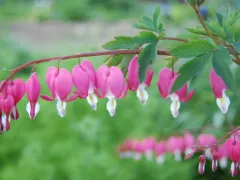
Bleeding heart
2½ ft · early May to early June
An old-fashioned favourite with arching stems of heart-shaped flowers in late spring.
-
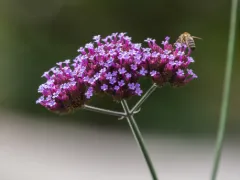
Tall verbena
5 ft · late June to mid October
Small clusters of lavender-purple flowers on tall, wiry, almost leafless stems, from midsummer to frost.
-
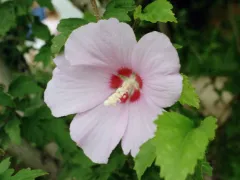
Rose of Sharon
10 ft · mid July to mid September
An upright shrub with hollyhock-like flowers in pink, purple, white or violet-blue from midsummer to autumn, when few shrubs flower.
-
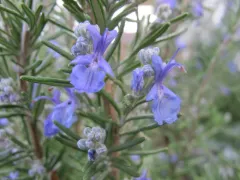
Rosemary
4 ft · early March to early May
The kitchen herb: a dense, aromatic, evergreen shrub with needle-like leaves and small, pale blue flowers from late winter into spring.
-
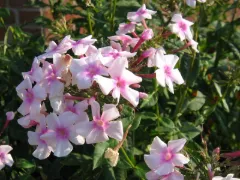
Garden phlox
3½ ft · mid July to early September
Tall, often fragrant clusters of flowers that carry colour through the height of summer.
-
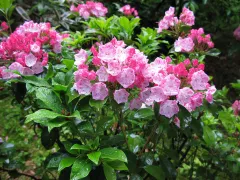
Mountain laurel
8 ft · late May to late June
A native evergreen with crimped, sugar-icing buds that open into cup-shaped flowers of white, pink or red in late spring, in clusters that cover the plant.
-
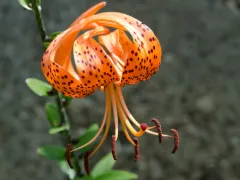
Tiger lily
4 ft · late July to late August
Orange, black-spotted flowers with petals curled right back, up to twenty on a stem, in late summer.
-

Common lilac
11½ ft · early May to late May · host plant
The lilac of old farmyards: large, heavily scented flower trusses in lilac, purple, white or pink in mid-spring, on a tall, suckering shrub that can live for a century.
-
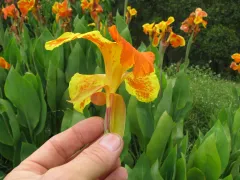
Canna
5 ft · early July to early October · host plant
Huge, paddle-shaped leaves, green, bronze or striped, topped with bright flowers in red, orange, yellow or pink from midsummer to frost.
-
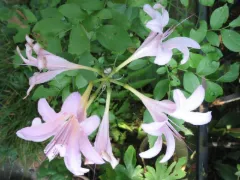
Surprise lily
24 in · early August to late August
Clusters of fragrant, rose-pink trumpets, tinged with lilac, on bare stems in August.
-
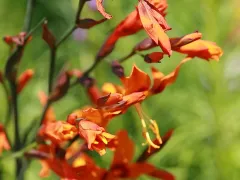
Crocosmia 'Emily McKenzie'
24 in · early August to mid September
Large, wide-open flowers of bright orange, each with a mahogany-red blotch in the throat, on arching sprays in late summer.
A bed planned only from these plants
The planner was given only the plants on this page that suit zone 6 and full sun, and designed this 16 × 8 ft (4.9 × 2.4 m) bed from them when the page was made.
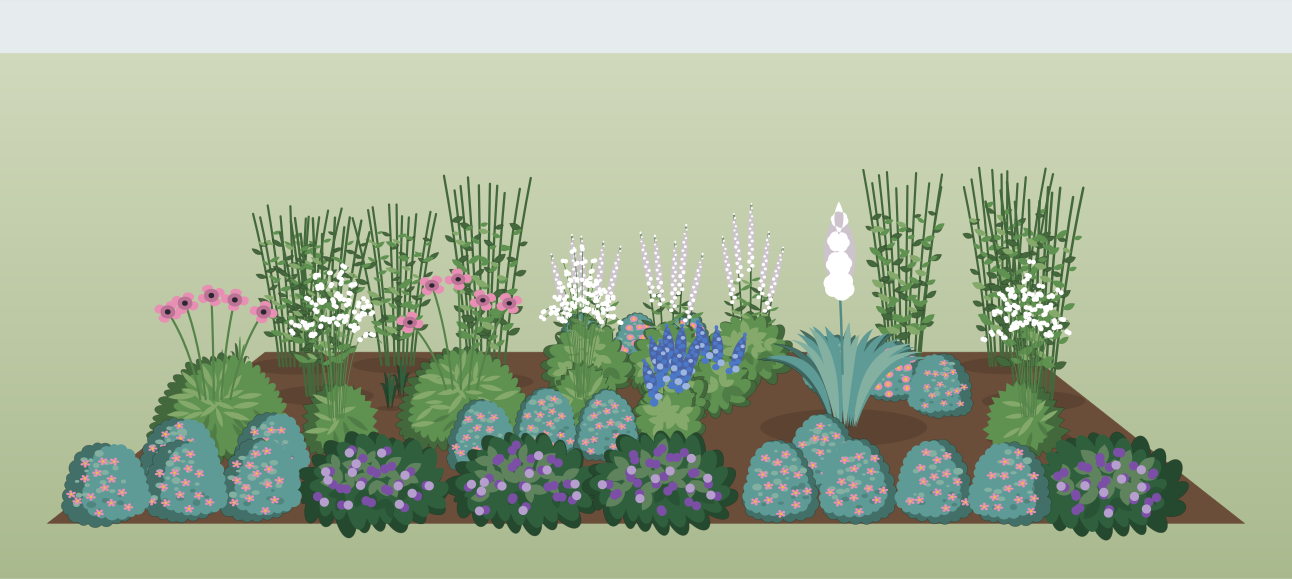
The plants
- 1 Verbena 'Homestead Purple' × 4, purple
- 2 Cottage pinks × 19, pink
- 3 Foxglove beardtongue × 3, white
- 4 False sunflower × 4, yellow
- 5 Adam's needle × 1, white
- 6 Wild bergamot × 3, lavender
- 7 Wild lupine × 3, blue
- 8 Oriental poppy × 2, pink
- 9 Gaura 'Whirling Butterflies' × 3, white
- 10 Red spider lily × 3, red
- 11 Surprise lily × 3, pink
Planned as a cottage garden: 42 of the 42 plants (100%), bulbs aside, stand alone or in groups of no more than five, small enough for the kinds to mingle. The bed is balanced: the left half carries 50% of the visual weight and the right half 50%. The scheme leans cool (purple, pink, lavender and blue) and uses yellow and red for warmth, with white to calm things between them.
The planner's own design check: 11 Excellent, 6 Good. It flags one thing to watch: Nothing on this plan is highly poisonous or an aggressive spreader.
Open this bed in the planner Change its size, the sun or the style, move plants about, or swap one for another.
All 159 plants
Show all 159, by where they go in a bed
Front of a bed 33
- Bearberry 8 in · early May to late May · host plant
- Bugleweed 6 in · early May to late May
- Bugleweed 'Black Scallop' 6 in · early May to late May
- Bugleweed 'Burgundy Glow' 6 in · early May to late May
- Bugleweed 'Catlin's Giant' 8 in · early May to late May
- Carpathian bellflower 10 in · late June to late August
- Carpathian bellflower 'Blue Clips' 8 in · late June to late August
- Chinese delphinium 'Blue Butterfly' 16 in · late June to late August
- Clustered bellflower 18 in · early June to early July
- Coral bells 'Firefly' 10 in · late May to late July
- Cottage pinks 12 in · late May to late June
- Cottage pinks 'Mrs Sinkins' 12 in · early June to early July
- Creeping phlox 6 in · mid April to mid May
- Creeping phlox 'Candy Stripe' 5 in · mid April to mid May
- Creeping phlox 'Emerald Blue' 5 in · mid April to mid May
- Creeping phlox 'Sherwood Purple' 8 in · early May to late May
- Creeping woodland phlox 8 in · late April to late May
- Dwarf crested iris 6 in · late April to mid May
- Dwarf weigela 'My Monet' 18 in · late May to mid June
- Fringed bleeding heart 16 in · early May to late August
- Leadwort 10 in · early August to early October
- Nodding onion 18 in · early July to early August
- Red spider lily 18 in · mid September to early October
- Scarlet coral bells 18 in · late May to late July
- Sundrops 18 in · late May to mid July
- Sundrops 'Fireworks' 18 in · early June to mid July
- Sweet William 18 in · late May to late June
- Verbena 'Homestead Purple' 10 in · mid May to early October
- Willowleaf cotoneaster 'Scarlet Leader' 24 in · late May to mid June
- Wood sage 'Blue Hill' 20 in · late May to late July
- Wood sage 'East Friesland' 18 in · late May to late July
- Woodland phlox 12 in · late April to late May
- Woodland phlox 'Blue Moon' 12 in · late April to late May
Middle of a bed 58
- Abelia 'Kaleidoscope' 2½ ft · mid June to early October
- Adam's needle 3 ft · late June to mid July · host plant
- Anise hyssop 3 ft · early July to early September
- August lily 24 in · mid August to mid September
- Autumn sage 2½ ft · mid May to mid October
- Beardtongue 'Husker Red' 2½ ft · late May to late June
- Bee balm 3 ft · early July to early August · host plant
- Bee balm 'Purple Rooster' 3 ft · late June to mid August · host plant
- Blazing star 3 ft · mid July to mid August · host plant
- Blazing star 'Kobold' 24 in · early July to early August · host plant
- Bleeding heart 2½ ft · early May to early June
- Bleeding heart 'Gold Heart' 2½ ft · early May to early June
- Butterfly weed 24 in · late June to early August · host plant
- Cardinal flower 'Queen Victoria' 3½ ft · late July to mid September
- Crocosmia 'Emily McKenzie' 24 in · early August to mid September
- Deutzia 'Chardonnay Pearls' 2½ ft · early May to late May
- Eastern bee balm 20 in · early May to mid June
- False sunflower 'Summer Sun' 3½ ft · late June to early September
- Feverfew 20 in · late June to mid August
- Formosa toad lily 2½ ft · late August to mid October
- Garden phlox 'Bright Eyes' 2½ ft · mid July to late August
- Garden phlox 'Laura' 2½ ft · mid July to early September
- Gaura 'Siskiyou Pink' 2½ ft · mid June to early October · host plant
- Gaura 'Whirling Butterflies' 3 ft · mid June to mid September · host plant
- Golden columbine 3 ft · late May to mid July
- Great blue lobelia 2½ ft · early August to mid September
- Hyssop 20 in · early July to late August
- Indian pink 20 in · early June to early July
- Ironweed 'Iron Butterfly' 2½ ft · late August to early October
- Meadow sage 24 in · late May to mid July
- Meadow sage 'Caradonna' 24 in · late May to mid July
- Mountain laurel 'Elf' 3 ft · late May to late June
- Obedient plant 'Miss Manners' 2 ft · mid July to early September
- Oriental poppy 2½ ft · late May to late June
- Oriental poppy 'Patty's Plum' 2½ ft · late May to late June
- Pale purple coneflower 3 ft · mid June to mid July · host plant
- Peach-leaved bellflower 2½ ft · mid June to mid July
- Purple milkweed 3 ft · early June to mid July · host plant
- Rose turtlehead 2½ ft · mid August to late September · host plant
- Russian sage 'Little Spire' 2½ ft · mid July to mid September
- Salvia 'Hot Lips' 3 ft · late May to mid October
- Salvia 'May Night' 24 in · late May to mid July
- Slender deutzia 'Nikko' 24 in · early May to late May
- Solitary clematis 24 in · mid June to early August
- Spotted bee balm 24 in · mid July to early September · host plant
- Summersweet 'Hummingbird' 3 ft · mid July to mid August
- Sunset hyssop 24 in · mid July to mid September
- Surprise lily 24 in · early August to late August
- Sweetspire 'Little Henry' 2½ ft · early June to early July
- Toad lily 2½ ft · mid September to mid October
- Turtlehead 'Hot Lips' 3 ft · mid August to late September
- Virginia bluebells 20 in · mid April to early May
- Weigela 'Spilled Wine' 2½ ft · late May to mid June
- White bleeding heart 2½ ft · early May to early June
- White turtlehead 3 ft · early August to mid September
- Wild columbine 24 in · early May to early June
- Wild lupine 20 in · mid May to late June · host plant
- Yucca 'Color Guard' 2½ ft · late June to mid July · host plant
Back of a bed 68
- American elderberry 10 ft · mid June to mid July
- Anise sage 'Black and Blue' 4 ft · late June to mid October
- Beauty bush 8 ft · late May to mid June
- Bee balm 'Jacob Cline' 4 ft · late June to mid August · host plant
- Black cohosh 5 ft · early July to early August · host plant
- Black hollyhock 6 ft · late June to late August
- Blue false indigo 4 ft · late May to mid June · host plant
- Bog sage 5½ ft · late July to mid October
- Bottlebrush buckeye 10 ft · late June to late July
- Bush clover 5 ft · late August to early October
- Buttercup winter hazel 5 ft · late March to mid April
- Buttonbush 6½ ft · late June to early August
- Canna 5 ft · early July to early October · host plant
- Cardinal flower 3½ ft · late July to mid September
- Catawba rhododendron 8 ft · late May to mid June
- Common lilac 11½ ft · early May to late May · host plant
- Delphinium 5 ft · late June to mid July
- Double Japanese kerria 6½ ft · mid April to mid May
- Dwarf Korean lilac 'Palibin' 5 ft · late May to early June
- False sunflower 4 ft · late June to early September
- False sunflower 'Summer Nights' 3½ ft · late June to early September
- Flame azalea 8 ft · mid May to mid June
- Flowering currant 7 ft · late March to late April · host plant
- Flowering quince 6 ft · late March to late April
- Flowering quince 'Double Take Scarlet' 5 ft · late March to late April
- Foxglove beardtongue 3½ ft · late May to late June
- Garden phlox 3½ ft · mid July to early September
- Garden phlox 'David' 3½ ft · mid July to early September
- Garden phlox 'Jeana' 4 ft · mid July to mid September
- Glossy abelia 5 ft · mid June to early October
- Hardy hibiscus 5 ft · late July to mid September
- Hollyhock 6 ft · early July to late August
- Japanese kerria 5 ft · mid April to mid May
- Lilac 'Beauty of Moscow' 11½ ft · mid May to late May · host plant
- Lilac 'Miss Kim' 6 ft · late May to mid June
- Lilac 'Sensation' 10 ft · mid May to late May · host plant
- Maltese cross 3½ ft · mid June to mid July
- Meadow blazing star 4 ft · late July to mid September
- Mediterranean spurge 4 ft · late March to late May
- Mexican bush sage 4 ft · early September to early November
- Mountain laurel 8 ft · late May to late June
- Mountain laurel 'Olympic Fire' 6½ ft · late May to late June
- Obedient plant 3½ ft · early August to mid September
- Oriental poppy 'Beauty of Livermere' 3½ ft · late May to late June
- Pinxterbloom azalea 6 ft · early May to late May
- Prairie blazing star 4 ft · mid July to late August
- Red hot poker 3½ ft · late June to early August
- Rose of Sharon 10 ft · mid July to mid September
- Rose of Sharon 'Blue Chiffon' 10 ft · mid July to mid September
- Rose of Sharon 'Diana' 8 ft · mid July to mid September
- Rose of Sharon 'Sugar Tip' 8 ft · mid July to mid September
- Rosebay rhododendron 15 ft · late June to mid July
- Rosemary 4 ft · early March to early May
- Rough blazing star 3½ ft · mid August to late September
- Russian sage 4 ft · mid July to mid September
- Scarlet rose mallow 6½ ft · mid July to early September
- Seven-son flower 16½ ft · late August to mid September
- Summersweet 6½ ft · mid July to mid August
- Summersweet 'Ruby Spice' 6 ft · mid July to mid August
- Tall larkspur 5 ft · mid July to late August
- Tall verbena 5 ft · late June to mid October
- Tiger lily 4 ft · late July to late August
- Turk's cap lily 6 ft · mid July to early August
- Virginia sweetspire 5 ft · early June to early July
- Virginia sweetspire 'Henry's Garnet' 4 ft · early June to early July
- Weigela 'Sonic Bloom Pink' 4½ ft · late May to mid September
- Weigela 'Wine & Roses' 4½ ft · late May to late June
- Wild bergamot 3½ ft · early July to late August