Plants for butterflies
Nectar plants butterflies visit and the host plants their caterpillars eat, with a sample bed planned from them.
A butterfly garden needs two kinds of plant. Nectar plants feed the butterflies: flat or clustered flowers they can stand on, in sun, out of the wind. Host plants feed their caterpillars, and a butterfly can lay its eggs only on its own host plants: milkweeds for the monarch, for instance. Without host plants a garden is a café the butterflies pass through; with them, it is where they are born.
Every plant here is recorded by NC State as visited by butterflies or as a host plant. The host plants are marked, and the host plant guide lists them by butterfly.
483 plants: 285 perennials, 1 fern, 12 bulbs, 28 grasses and 157 shrubs.
The dozen to start with
-
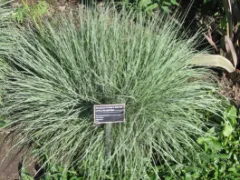
Little bluestem
3 ft · grown for its leaves · host plant for common wood-nymph
Blue-green summer blades turn copper and bronze in autumn and hold their colour through winter.
-
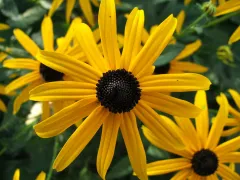
Black-eyed Susan
24 in · mid July to mid September · host plant for 2 species
Masses of golden, dark-centred flowers from midsummer into fall.
-
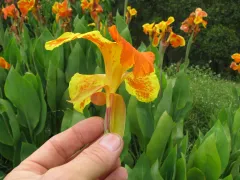
Canna
5 ft · early July to early October · host plant for brazilian skipper
Huge, paddle-shaped leaves, green, bronze or striped, topped with bright flowers in red, orange, yellow or pink from midsummer to frost.
-
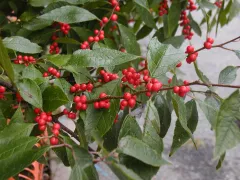
Winterberry
8 ft · grown for its leaves · host plant for henry's elfin
A native holly that drops its leaves in autumn to show branches packed with bright red berries, which last into winter until the birds take them.
-

Common lilac
11½ ft · early May to late May · host plant for 2 species
The lilac of old farmyards: large, heavily scented flower trusses in lilac, purple, white or pink in mid-spring, on a tall, suckering shrub that can live for a century.
-
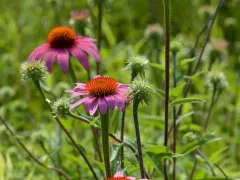
Purple coneflower
3 ft · late June to early September · host plant for 2 species
A tough native with purple-pink petals around a bronze cone, blooming for weeks in midsummer.
-

Blue false indigo
4 ft · late May to mid June · host plant for 6 species
Spikes of indigo-blue pea flowers in late spring on a plant that grows as big as a shrub, with blue-green leaves and black seed pods that rattle in winter.
-

Bee balm
3 ft · early July to early August · host plant for 3 species
Shaggy, colourful flower heads that draw hummingbirds, bees and butterflies.
-
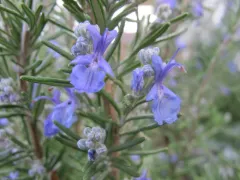
Rosemary
4 ft · early March to early May
The kitchen herb: a dense, aromatic, evergreen shrub with needle-like leaves and small, pale blue flowers from late winter into spring.
-

Blue fescue
10 in · grown for its leaves
A compact ornamental grass that forms neat tufts of striking blue-silver blades.
-
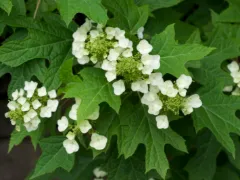
Oakleaf hydrangea
6½ ft · mid June to early August
A native shrub for every season: cone-shaped white flowers that age to pink, huge oak-shaped leaves that turn wine red and purple in autumn, and peeling, cinnamon-coloured bark in winter.
-
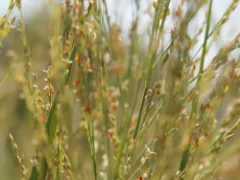
Switchgrass 'Northwind'
5½ ft · early August to early October · host plant for common wood-nymph
The most upright switchgrass: a narrow, rigid column of olive-blue leaves that never flops, turning gold in autumn and standing through winter.
A bed planned only from these plants
The planner was given only the plants on this page that suit zone 6 and full sun, and designed this 16 × 8 ft (4.9 × 2.4 m) bed from them when the page was made.
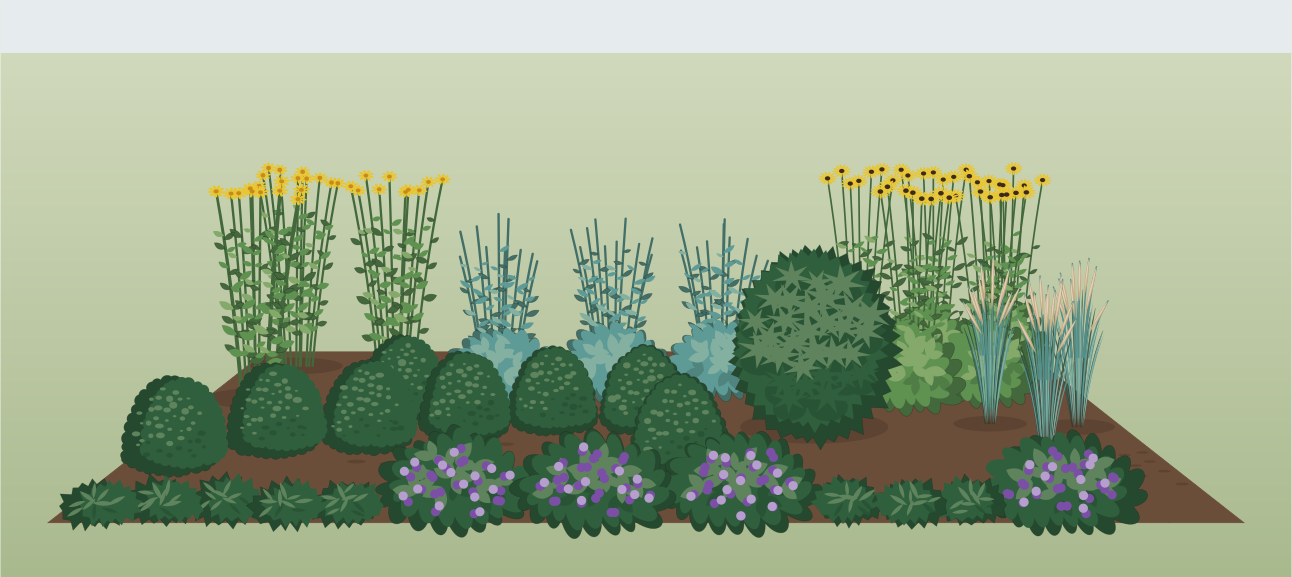
The plants
- 1 Verbena 'Homestead Purple' × 4, purple
- 2 Sea thrift × 8, pink
- 3 Brown-eyed Susan × 5, yellow
- 4 Smooth aster 'Bluebird' × 3, blue
- 5 Mugo pine 'Mops' × 1, dark green leaves
- 6 False sunflower × 3, yellow
- 7 Little bluestem 'The Blues' × 3, tan
- 8 Lowbush blueberry × 8, white
- 9 Surprise lily × 10, pink
- 10 Grecian windflower × 12, blue
- 11 Red spider lily × 3, red
Planned as a naturalistic planting: low grasses and groundcovers, the matrix, make up 45% of the planted ground. Cool colours (purple, pink and blue) with yellow and red as the warm notes, and tan and white to calm things between them. The flowering is at its height from early August, with 5 kinds out together.
The planner's own design check: 11 Excellent, 6 Good. It flags one thing to watch: Nothing on this plan is highly poisonous or an aggressive spreader.
Open this bed in the planner Change its size, the sun or the style, move plants about, or swap one for another.
All 483 plants
Show all 483, by where they go in a bed
Front of a bed 117
- Aaron's beard 14 in · late June to late August
- Beach wormwood 'Silver Brocade' 8 in · grown for its leaves
- Bearberry 8 in · early May to late May · host plant for brown elfin
- Bearberry cotoneaster 12 in · late May to mid June
- Bigleaf aster 24 in · early August to mid September
- Bird's-foot violet 5 in · late April to late May · host plant for fritillary butterflies
- Black-eyed Susan 'Little Goldstar' 16 in · mid July to mid September
- Blanket flower 'Arizona Sun' 12 in · mid June to early October
- Blanket flower 'Goblin' 14 in · mid June to early October
- Blanket flower 'Mesa Yellow' 18 in · mid June to early October
- Bloody cranesbill 12 in · late May to late July
- Bloody cranesbill 'Max Frei' 8 in · late May to early August
- Blue fescue 10 in · grown for its leaves
- Blue fescue 'Elijah Blue' 10 in · grown for its leaves
- Calamint 16 in · mid July to early October
- Calamint 'Montrose White' 16 in · late June to mid October
- Candytuft 10 in · mid April to late May
- Carpathian bellflower 10 in · late June to late August
- Carpathian bellflower 'Blue Clips' 8 in · late June to late August
- Cheddar pinks 'Bath's Pink' 10 in · mid May to late June
- Cheddar pinks 'Firewitch' 8 in · mid May to late June
- Cheddar pinks 'Tiny Rubies' 4 in · late May to late June
- Chinese delphinium 'Blue Butterfly' 16 in · late June to late August
- Clustered bellflower 18 in · early June to early July
- Common blue violet 8 in · mid April to late May · host plant for fritillary butterflies
- Common thyme 10 in · late May to late June
- Cotoneaster 'Coral Beauty' 18 in · late May to early June
- Cottage pinks 12 in · late May to late June
- Cottage pinks 'Mrs Sinkins' 12 in · early June to early July
- Creeping mahonia 12 in · mid April to early May
- Creeping phlox 6 in · mid April to mid May
- Creeping phlox 'Candy Stripe' 5 in · mid April to mid May
- Creeping phlox 'Emerald Blue' 5 in · mid April to mid May
- Creeping phlox 'Sherwood Purple' 8 in · early May to late May
- Creeping thyme 3 in · early June to mid July
- Creeping woodland phlox 8 in · late April to late May
- Dutchman's breeches 8 in · mid April to early May
- Dwarf crested iris 6 in · late April to mid May
- Dwarf weigela 'My Monet' 18 in · late May to mid June
- English daisy 6 in · mid April to mid June
- English lavender 'Hidcote' 18 in · late June to late July
- English lavender 'Munstead' 16 in · late June to late July
- Foamflower 10 in · late April to late May
- Fringed bleeding heart 16 in · early May to late August
- Golden oregano 12 in · grown for its leaves
- Goldenrod 'Golden Fleece' 18 in · late August to early October · host plant for wavy-lined emerald
- Goldmoss stonecrop 3 in · late May to late June
- Grecian windflower 5 in · early April to early May
- Green-and-gold 6 in · late April to mid June
- Hairy beardtongue 18 in · late May to late June
- Heath aster 'Snow Flurry' 6 in · mid September to mid October
- Horned violet 6 in · mid April to late June · host plant for fritillary butterflies
- Japanese aster 'Blue Star' 18 in · late June to mid September
- Lady's mantle 18 in · late May to early July
- Lamb's ear 12 in · grown for its leaves
- Lamb's ear 'Big Ears' 12 in · grown for its leaves
- Lamb's ear 'Silver Carpet' 6 in · grown for its leaves
- Leadwort 10 in · early August to early October
- Lemon thyme 10 in · mid June to mid July
- Lowbush blueberry 16 in · early May to late May
- Maiden pinks 8 in · early June to mid July
- Meadow saffron 6 in · mid September to mid October
- Mountain bluet 'Amethyst in Snow' 18 in · late May to late June
- Mouse-ear coreopsis 'Nana' 8 in · early May to mid June
- Nodding onion 18 in · early July to early August
- October daphne 8 in · mid September to late October
- Ornamental oregano 'Herrenhausen' 20 in · mid July to mid September
- Pennsylvania sedge 8 in · grown for its leaves
- Pink English lavender 18 in · late June to late July
- Pink evening primrose 16 in · late May to late July
- Plantain-leaved pussytoes 6 in · grown for its leaves · host plant for american lady
- Polyanthus primrose 8 in · late March to mid May
- Red creeping thyme 2 in · early June to mid July
- Red spider lily 18 in · mid September to early October
- Red trillium 16 in · mid April to mid May · host plant for 2 species
- Robin's plantain 'Lynnhaven Carpet' 6 in · early May to late May
- Rock cress 8 in · mid April to early May
- Sea holly 'Blue Hobbit' 12 in · late June to late August
- Sea thrift 8 in · early May to mid June
- Sedge 'Bunny Blue' 10 in · grown for its leaves
- Sedge 'Frosted Curls' 12 in · grown for its leaves
- Sedum 'Dragon's Blood' 4 in · late June to early August
- Sedum 'John Creech' 2 in · grown for its leaves
- Sedum 'Lidakense' 4 in · late August to early October
- Sedum 'Purple Emperor' 18 in · early August to mid September
- Sedum 'Tricolor' 4 in · late June to late July
- Seersucker sedge 12 in · grown for its leaves
- Shasta daisy 'Banana Cream' 18 in · late June to late August
- Showy stonecrop 'Brilliant' 18 in · mid August to late September
- Showy stonecrop 'Neon' 20 in · late August to early October
- Speedwell 'Red Fox' 14 in · late June to mid August
- Speedwell 'Royal Candles' 16 in · late June to late August
- Spike speedwell 18 in · late June to early August
- Squirrel corn 8 in · mid April to early May
- Stokes' aster 18 in · late June to mid August
- Striped bloody cranesbill 6 in · late May to late August
- Sweet violet 6 in · late March to early May · host plant for fritillary butterflies
- Sweet William 18 in · late May to late June
- Threadleaf coreopsis 'Moonbeam' 18 in · late June to early September
- Threadleaf coreopsis 'Zagreb' 16 in · late June to late August
- Tickseed 'Early Sunrise' 18 in · early June to late August
- Verbena 'Homestead Purple' 10 in · mid May to early October
- Wall germander 12 in · late June to early August
- Wherry's foamflower 10 in · early May to late June
- White stonecrop 'Coral Carpet' 3 in · mid June to mid July
- White trillium 16 in · mid April to mid May · host plant for 2 species
- Wild geranium 'Espresso' 16 in · early May to early June
- Wild ginger 6 in · grown for its leaves · host plant for pipevine swallowtail
- Wood sage 'Blue Hill' 20 in · late May to late July
- Wood sage 'East Friesland' 18 in · late May to late July
- Woodland phlox 12 in · late April to late May
- Woodland phlox 'Blue Moon' 12 in · late April to late May
- Woodland stonecrop 4 in · late April to late May
- Woolly thyme 2 in · grown for its leaves
- Woolly yarrow 8 in · late May to early July
- Yellow ice plant 2 in · mid May to late June
- Yellow trout lily 6 in · mid April to early May
Middle of a bed 152
- Abelia 'Kaleidoscope' 2½ ft · mid June to early October
- Adam's needle 3 ft · late June to mid July · host plant for 2 species
- Anise hyssop 3 ft · early July to early September
- Arkansas bluestar 3 ft · mid May to early June
- Aromatic aster 'October Skies' 20 in · mid September to late October
- Aromatic aster 'Raydon's Favorite' 3 ft · mid September to early November
- Astilbe 'Bridal Veil' 2½ ft · late June to mid July
- Astilbe 'Fanal' 24 in · mid June to mid July
- August lily 24 in · mid August to mid September
- Autumn sage 2½ ft · mid May to mid October
- Beardtongue 'Husker Red' 2½ ft · late May to late June
- Bee balm 3 ft · early July to early August · host plant for 3 species
- Bee balm 'Purple Rooster' 3 ft · late June to mid August · host plant for 3 species
- Betony 'Hummelo' 20 in · late June to early August
- Black chokeberry 'Low Scape Mound' 20 in · early May to late May
- Black-eyed Susan 24 in · mid July to mid September · host plant for 2 species
- Black-eyed Susan 'Goldsturm' 2 ft · late July to late September
- Blackberry lily 3 ft · mid July to mid August
- Blanket flower 'Burgundy' 24 in · mid June to mid September
- Blazing star 3 ft · mid July to mid August · host plant for 2 species
- Blazing star 'Kobold' 24 in · early July to early August · host plant for 2 species
- Bleeding heart 2½ ft · early May to early June
- Bleeding heart 'Gold Heart' 2½ ft · early May to early June
- Blue allium 20 in · early June to late June
- Blue mistflower 2½ ft · late August to mid October
- Blue wood aster 3 ft · mid September to mid October · host plant for pearl crescent
- Blue-stemmed goldenrod 2½ ft · early September to mid October · host plant for wavy-lined emerald
- Bluebeard 'Dark Knight' 3 ft · early August to mid September
- Bluestar 3 ft · mid May to mid June
- Bluestar 'Storm Cloud' 2½ ft · mid May to mid June
- Bottlebrush grass 3 ft · late June to late August · host plant for northern pearly-eye
- Bowles' golden sedge 2½ ft · grown for its leaves
- Butterfly weed 24 in · late June to early August · host plant for 4 species
- Calico aster 'Lady in Black' 3½ ft · mid September to mid October
- Cardinal flower 'Queen Victoria' 3½ ft · late July to mid September
- Catnip 2½ ft · grown for its leaves · host plant for 2 species
- Caucasian scabious 'Fama' 24 in · late June to early September
- Columbine meadow rue 3 ft · late May to late June
- Common blanket flower 24 in · mid June to early September
- Coneflower 'Green Jewel' 24 in · early July to early September · host plant for 2 species
- Coneflower 'Kim's Knee High' 20 in · early July to late August · host plant for 2 species
- Coneflower 'Magnus' 3 ft · early July to early September · host plant for 2 species
- Coneflower 'PowWow Wild Berry' 22 in · late June to mid September · host plant for 2 species
- Coneflower 'White Swan' 2½ ft · early July to early September · host plant for 2 species
- Culinary sage 24 in · early June to early July
- David viburnum 3½ ft · mid May to late May
- Dwarf crape myrtle 'Pocomoke' 2½ ft · mid July to mid September
- Eastern bee balm 20 in · early May to mid June
- False sunflower 'Summer Sun' 3½ ft · late June to early September
- Feverfew 20 in · late June to mid August
- Foxglove 'Dalmatian Purple' 3½ ft · late May to mid July
- Fragrant sumac 'Gro-Low' 24 in · mid April to early May
- Garden phlox 'Bright Eyes' 2½ ft · mid July to late August
- Garden phlox 'Laura' 2½ ft · mid July to early September
- Gas plant 3 ft · late May to late June
- Gaura 'Siskiyou Pink' 2½ ft · mid June to early October · host plant for white-lined sphinx
- Gaura 'Whirling Butterflies' 3 ft · mid June to mid September · host plant for white-lined sphinx
- Globe thistle 'Veitch's Blue' 3 ft · early July to late August
- Gloriosa daisy 2½ ft · late June to mid September · host plant for 2 species
- Gloriosa daisy 'Indian Summer' 3 ft · early July to early October · host plant for 2 species
- Golden Alexanders 2½ ft · early May to mid June · host plant for black swallowtail
- Golden ragwort 20 in · mid April to late May · host plant for northern metalmark
- Golden St John's wort 'Sunburst' 3 ft · late June to late July
- Gray's sedge 2½ ft · late May to early September
- Great blue lobelia 2½ ft · early August to mid September
- Hyssop 20 in · early July to late August
- Inkberry 'Gem Box' 2½ ft · grown for its leaves · host plant for henry's elfin
- Ironweed 'Iron Butterfly' 2½ ft · late August to early October
- Joe-Pye weed 'Baby Joe' 2½ ft · late July to mid September
- Juniper 'Grey Owl' 3 ft · grown for its leaves · host plant for 2 species
- Kalm's St John's wort 3 ft · early July to early August
- Lanceleaf coreopsis 20 in · late May to mid July
- Leadplant 2½ ft · late June to early August
- Leatherleaf sedge 24 in · grown for its leaves
- Little bluestem 3 ft · grown for its leaves · host plant for common wood-nymph
- Little bluestem 'The Blues' 3 ft · early August to early October · host plant for common wood-nymph
- Marsh fern 24 in · grown for its leaves · host plant for marsh fern moth
- Meadow sage 24 in · late May to mid July
- Meadow sage 'Caradonna' 24 in · late May to mid July
- Mexican hat 24 in · late June to early September
- Montauk daisy 3 ft · mid September to late October
- Mountain bluet 20 in · late May to late June
- Mountain fleece 'Golden Arrow' 2½ ft · mid July to early October
- Mountain laurel 'Elf' 3 ft · late May to late June
- Mountain mint 3 ft · early July to early September · host plant for wavy-lined emerald
- Mugo pine 'Mops' 3 ft · grown for its leaves · host plant for imperial moth
- Musk mallow 2½ ft · late June to late August
- New England aster 'Purple Dome' 20 in · early September to mid October · host plant for pearl crescent
- New Jersey tea 3 ft · mid June to mid July · host plant for 3 species
- New York aster 3 ft · late August to mid October · host plant for pearl crescent
- Northern sea oats 'River Mist' 2½ ft · late July to mid September · host plant for northern pearly-eye
- Oakleaf hydrangea 'Munchkin' 3½ ft · late June to late August
- Obedient plant 'Miss Manners' 2 ft · mid July to early September
- Ohio spiderwort 2½ ft · late May to mid July
- Oregano 20 in · early July to late August
- Oriental poppy 2½ ft · late May to late June
- Oriental poppy 'Patty's Plum' 2½ ft · late May to late June
- Ornamental onion 'Purple Sensation' 2½ ft · late May to early June
- Pale purple coneflower 3 ft · mid June to mid July · host plant for silvery checkerspot
- Palm sedge 2½ ft · grown for its leaves
- Peach-leaved bellflower 2½ ft · mid June to mid July
- Pearly everlasting 24 in · late July to early September
- Pink muhly grass 3 ft · mid September to early November
- Purple coneflower 3 ft · late June to early September · host plant for 2 species
- Purple gas plant 3 ft · early June to late June
- Purple milkweed 3 ft · early June to mid July · host plant for 2 species
- Red valerian 2½ ft · late May to early September
- Rose turtlehead 2½ ft · mid August to late September · host plant for baltimore checkerspot
- Russian sage 'Little Spire' 2½ ft · mid July to mid September
- Salvia 'Hot Lips' 3 ft · late May to mid October
- Salvia 'May Night' 24 in · late May to mid July
- Sea holly 3 ft · early July to mid August
- Sea lavender 24 in · mid July to late August
- Shasta daisy 'Crazy Daisy' 2 ft · late June to late August
- Shrubby cinquefoil 3 ft · early June to mid September
- Shrubby cinquefoil 'Abbotswood' 2½ ft · early June to mid September
- Shrubby cinquefoil 'Goldfinger' 3 ft · early June to mid September
- Siberian iris 2½ ft · late May to late June
- Siberian iris 'Caesar's Brother' 3½ ft · late May to late June
- Slender mountain mint 2½ ft · early July to late August · host plant for wavy-lined emerald
- Soapweed yucca 2½ ft · mid June to mid July · host plant for yucca moth
- Solitary clematis 24 in · mid June to early August
- Solomon's seal 3 ft · early May to late May
- Spanish lavender 24 in · early May to late June
- Spotted bee balm 24 in · mid July to early September · host plant for gray marvel
- Summersweet 'Hummingbird' 3 ft · mid July to mid August
- Sunset hyssop 24 in · mid July to mid September
- Surprise lily 24 in · early August to late August
- Sweetfern 3 ft · grown for its leaves
- Sweetspire 'Little Henry' 2½ ft · early June to early July
- Switchgrass 'Cheyenne Sky' 3 ft · late July to mid September · host plant for common wood-nymph
- Tennessee coneflower 24 in · mid June to late August · host plant for wavy-lined emerald
- Tickseed 'Sunray' 20 in · early June to late August
- Toad lily 2½ ft · mid September to mid October
- Turtlehead 'Hot Lips' 3 ft · mid August to late September
- Weigela 'Spilled Wine' 2½ ft · late May to mid June
- White bleeding heart 2½ ft · early May to early June
- White snakeroot 3½ ft · late August to mid October
- White turtlehead 3 ft · early August to mid September
- White valerian 2½ ft · early June to early September
- White wood aster 24 in · late August to early October · host plant for pearl crescent
- Whorled milkweed 24 in · late June to late August · host plant for monarch
- Wild columbine 24 in · early May to early June
- Wild geranium 20 in · early May to late May
- Wild lupine 20 in · mid May to late June · host plant for karner blue
- Yarrow 24 in · mid June to late August
- Yarrow 'Cerise Queen' 24 in · mid June to late August
- Yarrow 'Paprika' 24 in · mid June to late August
- Yellow coneflower 3 ft · mid June to mid July · host plant for wavy-lined emerald
- Yellow loosestrife 3 ft · mid June to late July
- Yucca 'Color Guard' 2½ ft · late June to mid July · host plant for 2 species
- Yucca 'Golden Sword' 2½ ft · late June to mid July
Back of a bed 214
- Alpine currant 5 ft · grown for its leaves
- American beautyberry 6 ft · late June to late July
- American elderberry 10 ft · mid June to mid July
- Anise sage 'Black and Blue' 4 ft · late June to mid October
- Arrowwood viburnum 8 ft · late May to late June
- Arrowwood viburnum 'Blue Muffin' 6 ft · late May to mid June · host plant for spring azure
- Beautyberry 'Early Amethyst' 4 ft · mid July to early August
- Bee balm 'Jacob Cline' 4 ft · late June to mid August · host plant for 3 species
- Bitter switchgrass 'Dewey Blue' 4 ft · early August to early October · host plant for common wood-nymph
- Black chokeberry 5 ft · early May to late May
- Black chokeberry 'Viking' 6 ft · early May to late May
- Black cohosh 5 ft · early July to early August · host plant for 2 species
- Black hollyhock 6 ft · late June to late August
- Blue false indigo 4 ft · late May to mid June · host plant for 6 species
- Blue sage 4 ft · late August to mid October
- Blue vervain 4 ft · mid July to early September · host plant for common buckeye
- Bodinier's beautyberry 'Profusion' 8 ft · mid July to early August
- Bodnant viburnum 'Dawn' 10 ft · early November to late December
- Bog sage 5½ ft · late July to mid October
- Boltonia 'Snowbank' 4 ft · early September to mid October
- Boneset 4 ft · early August to mid September
- Bottlebrush buckeye 10 ft · late June to late July
- Bronze fennel 5 ft · grown for its leaves
- Brown-eyed Susan 4 ft · late July to early October · host plant for 2 species
- Bush clover 5 ft · late August to early October
- Buttercup winter hazel 5 ft · late March to mid April
- Buttonbush 6½ ft · late June to early August
- Canna 5 ft · early July to early October · host plant for brazilian skipper
- Cardinal flower 3½ ft · late July to mid September
- Carolina allspice 8 ft · early May to late June
- Carolina rose 3½ ft · early June to early July · host plant for polyphemus moth
- Catawba rhododendron 8 ft · late May to mid June
- Chaste tree 11½ ft · early July to early September
- Cherry laurel 'Otto Luyken' 3½ ft · late April to mid May · host plant for eastern tiger swallowtail
- Clary sage 3½ ft · late June to early August
- Common lilac 11½ ft · early May to late May · host plant for 2 species
- Common milkweed 4 ft · late June to early August · host plant for 2 species
- Common ninebark 8 ft · late May to late June
- Common witch hazel 15 ft · mid October to late November · host plant for witch hazel dagger moth
- Coral bark maple 16½ ft · grown for its leaves · host plant for imperial moth
- Culver's root 5 ft · early July to mid August
- Culver's root 'Fascination' 5 ft · mid July to late August
- Cutleaf coneflower 6½ ft · late July to mid September · host plant for wavy-lined emerald
- Delphinium 5 ft · late June to mid July
- Double Japanese kerria 6½ ft · mid April to mid May
- Doublefile viburnum 8 ft · early May to late May
- Doublefile viburnum 'Mariesii' 10 ft · mid May to late May
- Drooping leucothoe 4 ft · early May to late May
- Drooping leucothoe 'Rainbow' 4 ft · early May to late May
- Dwarf Alberta spruce 8 ft · grown for its leaves
- Dwarf arctic willow 4 ft · grown for its leaves · host plant for viceroy
- Dwarf flowering almond 4½ ft · late April to early May · host plant for eastern tiger swallowtail
- Dwarf Korean lilac 'Palibin' 5 ft · late May to early June
- Dwarf white pine 5 ft · grown for its leaves · host plant for imperial moth
- Dwarf yaupon holly 4 ft · grown for its leaves · host plant for henry's elfin
- Elderberry 'Black Beauty' 8 ft · early June to late June
- Elderberry 'Black Lace' 6½ ft · early June to late June
- False sunflower 4 ft · late June to early September
- False sunflower 'Summer Nights' 3½ ft · late June to early September
- Feather reed grass 'Avalanche' 5 ft · mid June to early October
- Fernleaf yarrow 'Cloth of Gold' 4½ ft · late June to late August
- Flame azalea 8 ft · mid May to mid June
- Flat-topped aster 5 ft · early August to mid September · host plant for pearl crescent
- Flowering currant 7 ft · late March to late April · host plant for ceanothus silkmoth
- Flowering quince 6 ft · late March to late April
- Flowering quince 'Double Take Scarlet' 5 ft · late March to late April
- Foxglove 4 ft · early June to mid July
- Foxglove beardtongue 3½ ft · late May to late June
- Fragrant sumac 5 ft · mid April to late April
- Garden phlox 3½ ft · mid July to early September
- Garden phlox 'David' 3½ ft · mid July to early September
- Garden phlox 'Jeana' 4 ft · mid July to mid September
- Giant allium 5 ft · early June to late June
- Giant coneflower 6 ft · late June to early August · host plant for wavy-lined emerald
- Globe thistle 3½ ft · mid July to mid August
- Glossy abelia 5 ft · mid June to early October
- Goat's beard 5 ft · early June to late June · host plant for dusky azure
- Golden fullmoon maple 13 ft · grown for its leaves · host plant for imperial moth
- Golden lace 5 ft · late July to mid September
- Goldenrod 'Fireworks' 3½ ft · late August to mid October · host plant for wavy-lined emerald
- Grey-headed coneflower 4 ft · early July to late August · host plant for silvery checkerspot
- Ground clematis 'Purpurea' 5 ft · early June to mid July
- Hardy hibiscus 5 ft · late July to mid September
- Highbush blueberry 6½ ft · early May to late May · host plant for brown elfin
- Hollow Joe-Pye weed 7 ft · late July to mid September · host plant for pearl crescent
- Hollyhock 6 ft · early July to late August
- Indian grass 6 ft · late August to early October
- Indian grass 'Sioux Blue' 6 ft · late August to mid October
- Inkberry 6½ ft · grown for its leaves · host plant for henry's elfin
- Inkberry 'Shamrock' 4 ft · grown for its leaves · host plant for henry's elfin
- Japanese kerria 5 ft · mid April to mid May
- Japanese maple 'Bloodgood' 15 ft · grown for its leaves · host plant for imperial moth
- Joe Pye weed 'Gateway' 6 ft · late July to mid September
- Joe Pye weed 'Little Joe' 4 ft · late July to early September
- Judd viburnum 6½ ft · early May to mid May
- Juniper 'Blue Arrow' 13 ft · grown for its leaves
- Juniper 'Skyrocket' 15 ft · grown for its leaves
- Laceleaf Japanese maple 'Crimson Queen' 8 ft · grown for its leaves · host plant for imperial moth
- Laceleaf Japanese maple 'Viridis' 8 ft · grown for its leaves · host plant for imperial moth
- Large fothergilla 8 ft · late April to mid May
- Laurustinus 8 ft · early January to early April
- Lilac 'Beauty of Moscow' 11½ ft · mid May to late May · host plant for 2 species
- Lilac 'Miss Kim' 6 ft · late May to mid June
- Lilac 'Sensation' 10 ft · mid May to late May · host plant for 2 species
- Little bluestem 'Standing Ovation' 3½ ft · early August to mid September · host plant for common wood-nymph
- Maltese cross 3½ ft · mid June to mid July
- Mapleleaf viburnum 5 ft · late May to mid June · host plant for spring azure
- Maximilian sunflower 8 ft · early September to mid October · host plant for silvery checkerspot
- Meadow blazing star 4 ft · late July to mid September
- Mediterranean spurge 4 ft · late March to late May
- Mexican bush sage 4 ft · early September to early November
- Mexican orange blossom 6 ft · early May to late May
- Mountain laurel 8 ft · late May to late June
- Mountain laurel 'Olympic Fire' 6½ ft · late May to late June
- Muhly grass 'White Cloud' 4 ft · early October to early November
- New England aster 4 ft · early September to mid October · host plant for pearl crescent
- New England aster 'Alma Pötschke' 3½ ft · late August to mid October · host plant for pearl crescent
- New York ironweed 6½ ft · early August to mid September
- Ninebark 'Dart's Gold' 5 ft · late May to late June
- Ninebark 'Diabolo' 8 ft · late May to late June
- Ninebark 'Little Devil' 3½ ft · late May to late June
- Ninebark 'Summer Wine' 6 ft · late May to late June
- Ninebark 'Tiny Wine' 4 ft · late May to late June
- Northern bayberry 6½ ft · grown for its leaves · host plant for columbia silkmoth
- Northern sea oats 3½ ft · late July to mid September · host plant for northern pearly-eye
- Oakleaf hydrangea 6½ ft · mid June to early August
- Oakleaf hydrangea 'Alice' 10 ft · late June to late August
- Oakleaf hydrangea 'Pee Wee' 3½ ft · mid June to early August
- Oakleaf hydrangea 'Ruby Slippers' 3½ ft · mid June to early August
- Oakleaf hydrangea 'Snow Queen' 6 ft · late June to late August
- Obedient plant 3½ ft · early August to mid September
- Oleander 10 ft · mid June to early October
- Oriental poppy 'Beauty of Livermere' 3½ ft · late May to late June
- Paperbush 6 ft · early February to late March
- Pinxterbloom azalea 6 ft · early May to late May
- Prairie blazing star 4 ft · mid July to late August
- Purple beautyberry 4 ft · late June to early August
- Rattlesnake master 4 ft · mid July to late August · host plant for rattlesnake-master borer
- Red chokeberry 'Brilliantissima' 7 ft · early May to late May
- Red hot poker 3½ ft · late June to early August
- Red osier dogwood 8 ft · late May to mid June · host plant for spring azure
- Red twig dogwood 'Arctic Fire' 4 ft · grown for its leaves · host plant for spring azure
- Regal lily 5 ft · early July to late July
- Rose of Sharon 10 ft · mid July to mid September
- Rose of Sharon 'Blue Chiffon' 10 ft · mid July to mid September
- Rose of Sharon 'Diana' 8 ft · mid July to mid September
- Rose of Sharon 'Sugar Tip' 8 ft · mid July to mid September
- Rosebay rhododendron 15 ft · late June to mid July
- Rosemary 4 ft · early March to early May
- Rough blazing star 3½ ft · mid August to late September
- Royal azalea 6½ ft · early May to late May
- Russian sage 4 ft · mid July to mid September
- Salal 4 ft · late May to late June · host plant for brown elfin
- Saskatoon serviceberry 10 ft · late April to early May
- Scarlet rose mallow 6½ ft · mid July to early September
- Schip laurel 10 ft · late April to early May · host plant for eastern tiger swallowtail
- Seven-son flower 16½ ft · late August to mid September
- Shadblow serviceberry 16½ ft · mid April to early May · host plant for viceroy
- Showy goldenrod 4 ft · late August to mid October · host plant for wavy-lined emerald
- Siberian dogwood 6½ ft · late May to early June
- Smokebush 'Golden Spirit' 8 ft · mid June to mid July
- Smokebush 'Royal Purple' 11½ ft · early June to late July
- Smooth aster 'Bluebird' 3½ ft · early September to mid October · host plant for pearl crescent
- Smooth hydrangea 'Annabelle' 4 ft · late June to early September · host plant for hydrangea sphinx
- Smooth hydrangea 'Incrediball' 5 ft · late June to early September · host plant for hydrangea sphinx
- Smooth hydrangea 'Invincibelle Spirit II' 3½ ft · late June to mid September · host plant for hydrangea sphinx
- Sneezeweed 4 ft · early August to late September
- Snowberry 4 ft · mid June to mid July · host plant for snowberry clearwing
- Spicebush 10 ft · late March to mid April · host plant for 2 species
- Spirea 'Ogon' 4 ft · early April to late April
- Spotted Joe-Pye weed 5½ ft · mid July to early September
- Staghorn sumac 'Tiger Eyes' 6 ft · late June to mid July · host plant for 2 species
- Star magnolia 'Royal Star' 13 ft · early April to late April
- Summersweet 6½ ft · mid July to mid August
- Summersweet 'Ruby Spice' 6 ft · mid July to mid August
- Swamp azalea 6½ ft · late June to mid July
- Swamp milkweed 4 ft · early July to early August · host plant for monarch
- Swamp milkweed 'Ice Ballet' 3½ ft · early July to mid August · host plant for monarch
- Swamp sunflower 6½ ft · late September to late October · host plant for silvery checkerspot
- Sweet coneflower 'Henry Eilers' 4½ ft · late July to mid September · host plant for 2 species
- Sweet Joe Pye weed 6 ft · late July to early September
- Switchgrass 'Cloud Nine' 7 ft · early August to early October · host plant for common wood-nymph
- Switchgrass 'Heavy Metal' 4½ ft · late July to mid September · host plant for common wood-nymph
- Switchgrass 'Northwind' 5½ ft · early August to early October · host plant for common wood-nymph
- Switchgrass 'Prairie Sky' 5 ft · early August to early October · host plant for common wood-nymph
- Switchgrass 'Shenandoah' 4 ft · grown for its leaves · host plant for common wood-nymph
- Tall larkspur 5 ft · mid July to late August
- Tall verbena 5 ft · late June to mid October
- Tatarian aster 'Jindai' 4 ft · early October to early November
- Tatarian dogwood 'Ivory Halo' 6 ft · grown for its leaves
- Tiger lily 4 ft · late July to late August
- Turk's cap lily 6 ft · mid July to early August
- Variegated red twig dogwood 6½ ft · grown for its leaves
- Viburnum 'Summer Snowflake' 6½ ft · mid May to early September
- Virginia rose 5 ft · mid June to mid July
- Virginia sweetspire 5 ft · early June to early July
- Virginia sweetspire 'Henry's Garnet' 4 ft · early June to early July
- Wax myrtle 15 ft · grown for its leaves · host plant for red-banded hairstreak
- Weigela 'Sonic Bloom Pink' 4½ ft · late May to mid September
- Weigela 'Wine & Roses' 4½ ft · late May to late June
- White false indigo 4 ft · late May to late June · host plant for 2 species
- White meadowsweet 4 ft · late June to late August · host plant for spring azure
- White snakeroot 'Chocolate' 3½ ft · mid September to mid October
- Wild bergamot 3½ ft · early July to late August
- Willowleaf sunflower 'First Light' 4 ft · mid September to mid October
- Winged sumac 11½ ft · late July to late August · host plant for 2 species
- Winter daphne 4 ft · early February to late March
- Winterberry 8 ft · grown for its leaves · host plant for henry's elfin
- Winterberry 'Berry Poppins' 3½ ft · early June to late June · host plant for henry's elfin
- Winterberry 'Red Sprite' 4 ft · grown for its leaves · host plant for henry's elfin
- Winterberry 'Winter Red' 8 ft · early June to late June · host plant for henry's elfin
- Witherod viburnum 'Winterthur' 6½ ft · early June to late June · host plant for 2 species
- Woodland sunflower 4 ft · mid July to early September · host plant for silvery checkerspot
- Yellow twig dogwood 6½ ft · grown for its leaves · host plant for spring azure