Silver and grey-leaved plants
Plants with silver and grey leaves: the peacemakers of a border, and most of them lovers of sun and drought.
Silver and grey leaves are the peacemakers of a border: they sit between colours that would clash and calm them both. Most of them are sun lovers, because the silver is a coat of fine hairs or wax that reflects sun and saves water. Wet winters and rich soil are what kill them.
In shade, the silver comes from markings on green leaves instead, as on lungworts and Siberian bugloss, and lights up a dark corner.
151 plants: 109 perennials, 4 ferns, 12 bulbs, 10 grasses and 16 shrubs.
The dozen to start with
-
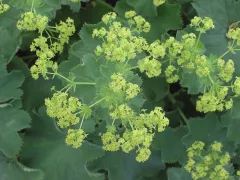
Lady's mantle
18 in · late May to early July
Scalloped, velvety leaves that hold beads of rain like mercury, under a froth of tiny chartreuse flowers in early summer.
-
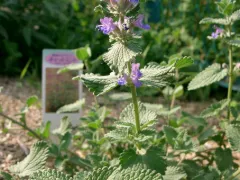
Catmint 'Walker's Low'
24 in · mid May to mid September
A tough, drought-tolerant mound of soft grey-green leaves and lavender-blue flowers that bees love.
-

Japanese painted fern
18 in · grown for its leaves
Arching fronds brushed with silver and burgundy brighten dark corners all season.
-

Bearded iris
2½ ft · late May to mid June
Ruffled, often scented flowers in almost every colour stand above fans of grey, sword-shaped leaves in late spring.
-
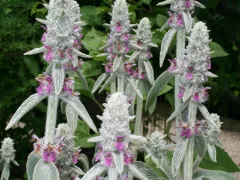
Lamb's ear
12 in · grown for its leaves
Soft, fuzzy silver leaves make it a favourite for edging and for softening bolder colours around it.
-

Chaste tree
11½ ft · early July to early September
A large shrub or small, multi-stemmed tree with aromatic, grey-green, fingered leaves and long spikes of lavender-blue flowers in the heat of summer, loved by bees and butterflies.
-
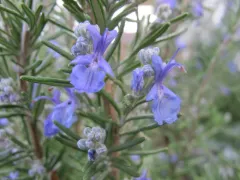
Rosemary
4 ft · early March to early May
The kitchen herb: a dense, aromatic, evergreen shrub with needle-like leaves and small, pale blue flowers from late winter into spring.
-
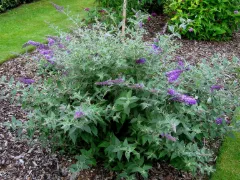
Butterfly bush 'Blue Chip'
2½ ft · early July to early October
A knee-high butterfly bush that sets almost no seed.
-

Blue fescue 'Elijah Blue'
10 in · grown for its leaves
A tight, spiky hemisphere of fine, powder-blue leaves that holds its colour through the summer better than other blue fescues.
-
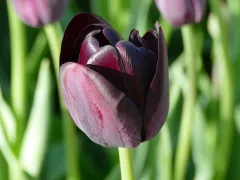
Tulip 'Queen of Night'
24 in · early May to late May
Satiny flowers of deep maroon-purple, close to black, on tall, strong stems in late spring.
-

Soapweed yucca
2½ ft · mid June to mid July · host plant
A spiky hemisphere of very narrow, stiff, blue-grey leaves edged in white threads, with a stout spike of greenish-white bells.
-

A bed planned only from these plants
The planner was given only the plants on this page that suit zone 6 and full sun, and designed this 16 × 8 ft (4.9 × 2.4 m) bed from them when the page was made.
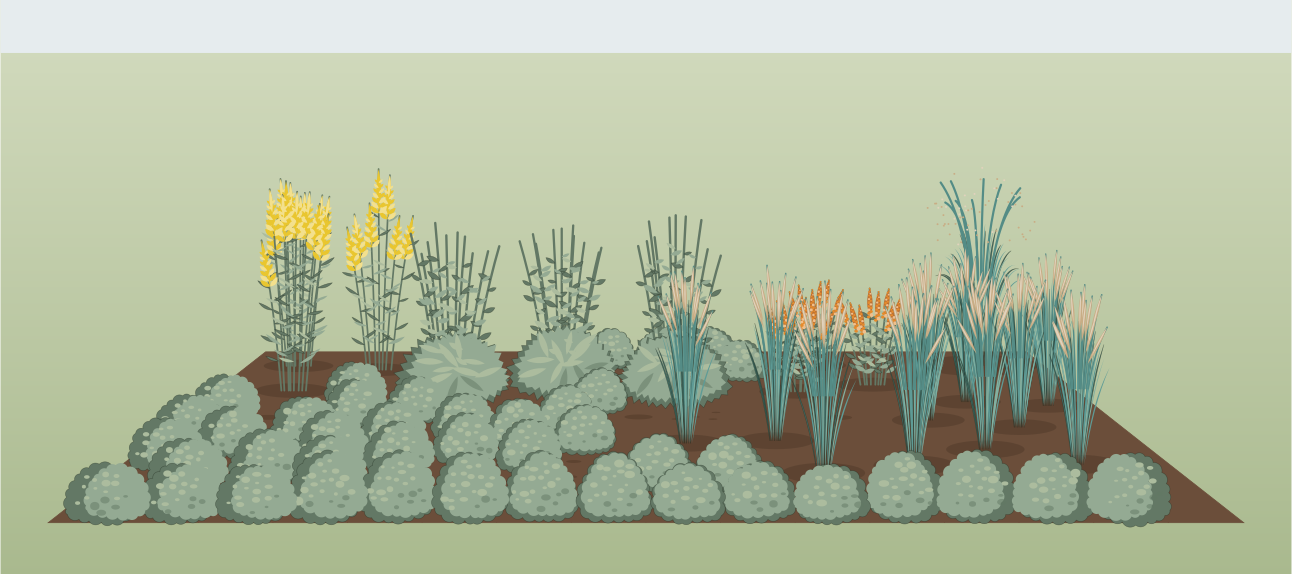
The plants
- 1 Common thyme × 9, lavender
- 2 Rock cress × 33, white
- 3 Bitter switchgrass 'Dewey Blue' × 1, tan
- 4 Southernwood × 3, grey-green leaves
- 5 Stiff goldenrod × 3, yellow
- 6 Sunset hyssop × 3, orange
- 7 Little bluestem 'The Blues' × 10, tan
- 8 Persian fritillary × 3, purple
- 9 Waterlily tulip × 7, red
- 10 Lady tulip × 5, red
Planned as a naturalistic planting: low grasses and groundcovers, the matrix, make up 55% of the planted ground. Hot colours (yellow, orange and red) with lavender and purple as the cool notes, and white and tan to calm things between them. Rock cress and common thyme finish the front edge.
The planner's own design check: 11 Excellent, 6 Good. It flags one thing to watch: Nothing on this plan is highly poisonous or an aggressive spreader.
Open this bed in the planner Change its size, the sun or the style, move plants about, or swap one for another.
All 151 plants
Show all 151, by where they go in a bed
Front of a bed 75
- Aubrieta 6 in · mid April to mid May
- Baby's breath 'Rosy Veil' 16 in · late June to late August
- Basket-of-gold 10 in · mid April to mid May
- Beach wormwood 'Silver Brocade' 8 in · grown for its leaves
- Blanket flower 'Arizona Sun' 12 in · mid June to early October
- Blanket flower 'Goblin' 14 in · mid June to early October
- Blue fescue 'Elijah Blue' 10 in · grown for its leaves
- Bog rosemary 'Blue Ice' 16 in · early May to late May
- Brunnera 'Alexander's Great' 16 in · late April to late May
- Brunnera 'Looking Glass' 14 in · late April to late May
- Calamint 16 in · mid July to early October
- California fuchsia 18 in · early August to mid October
- Catmint 'Cat's Meow' 18 in · late May to early September
- Catmint 'Junior Walker' 16 in · late May to early September
- Catmint 'Purrsian Blue' 16 in · late May to early September
- Catmint 'Walker's Low' 24 in · mid May to mid September
- Chinese wild ginger 8 in · grown for its leaves
- Cobweb houseleek 3 in · grown for its leaves
- Common thyme 10 in · late May to late June
- Coral bells 12 in · grown for its leaves
- Coral bells 'Georgia Peach' 14 in · grown for its leaves
- Coral bells 'Green Spice' 10 in · grown for its leaves
- Coral bells 'Plum Pudding' 10 in · grown for its leaves
- Cranesbill 'Ballerina' 6 in · late May to early September
- Creeping baby's breath 6 in · early June to mid July
- Creeping juniper 'Blue Chip' 10 in · grown for its leaves
- Dianthus 'Kahori' 8 in · mid May to early September
- English lavender 'Hidcote' 18 in · late June to late July
- English lavender 'Munstead' 16 in · late June to late July
- Hairy lip fern 8 in · grown for its leaves
- Hellebore 'Pink Frost' 16 in · late February to mid April
- Japanese painted fern 18 in · grown for its leaves
- Juniper 'Blue Star' 24 in · grown for its leaves
- Lady tulip 12 in · mid April to early May
- Lady's mantle 18 in · late May to early July
- Lamb's ear 12 in · grown for its leaves
- Lamb's ear 'Big Ears' 12 in · grown for its leaves
- Lamb's ear 'Silver Carpet' 6 in · grown for its leaves
- Lavender cotton 18 in · late June to late July
- Lungwort 'Diana Clare' 12 in · early April to mid May
- Lungwort 'Trevi Fountain' 12 in · early April to mid May
- Mediterranean sea holly 18 in · late June to early August
- Mountain bluet 'Amethyst in Snow' 18 in · late May to late June
- Pincushion flower 'Butterfly Blue' 16 in · mid May to early October
- Pincushion flower 'Pink Mist' 14 in · late May to early October
- Pink English lavender 18 in · late June to late July
- Plantain-leaved pussytoes 6 in · grown for its leaves · host plant
- Prairie smoke 12 in · late April to late May
- Pussytoes 4 in · grown for its leaves
- Renard's cranesbill 12 in · grown for its leaves
- Robin's plantain 'Lynnhaven Carpet' 6 in · early May to late May
- Rock cress 8 in · mid April to early May
- Rock rose 10 in · late May to early July
- Rock rose 'Henfield Brilliant' 10 in · late May to mid July
- Rock rose 'Wisley Primrose' 10 in · late May to mid July
- Seaside daisy 10 in · late May to late August
- Sedge 'Bunny Blue' 10 in · grown for its leaves
- Sedge 'Frosted Curls' 12 in · grown for its leaves
- Sedum 'Frosty Morn' 18 in · late August to early October
- Siberian bugloss 'Jack Frost' 16 in · late April to late May
- Silver mound artemisia 12 in · grown for its leaves
- Silver sage 12 in · grown for its leaves
- Snow-in-summer 8 in · late May to late June
- Spotted dead nettle 8 in · early May to mid July
- Spotted dead nettle 'Beacon Silver' 6 in · early May to late July
- Spotted dead nettle 'White Nancy' 6 in · early May to late July
- Tulip 'Angelique' 18 in · early May to late May
- Tulip 'Fusilier' 12 in · mid April to early May
- Tulip 'Purissima' 16 in · mid April to late April
- Tulip 'Spring Green' 18 in · early May to late May
- Turkestan tulip 10 in · late March to mid April
- Waterlily tulip 8 in · late March to mid April
- Woolly speedwell 14 in · late June to late July
- Woolly thyme 2 in · grown for its leaves
- Woolly yarrow 8 in · late May to early July
Middle of a bed 55
- Arborvitae 'Mr. Bowling Ball' 2½ ft · grown for its leaves
- Atlas fescue 2½ ft · late May to late June
- Bearded iris 2½ ft · late May to mid June
- Blanket flower 20 in · mid June to mid September
- Blanket flower 'Burgundy' 24 in · mid June to mid September
- Bluebeard 3 ft · early August to mid September
- Bluebeard 'Dark Knight' 3 ft · early August to mid September
- Butterfly bush 'Blue Chip' 2½ ft · early July to early October
- Catmint 'Six Hills Giant' 3 ft · late May to early September
- Catnip 2½ ft · grown for its leaves · host plant
- Caucasian scabious 'Fama' 24 in · late June to early September
- Common blanket flower 24 in · mid June to early September
- Corsican hellebore 2½ ft · late February to late April
- Culinary sage 24 in · early June to early July
- Cupid's dart 24 in · late June to late August
- Darwin hybrid tulip 24 in · late April to mid May
- Fernleaf yarrow 'Coronation Gold' 3 ft · late June to late August
- Ghost fern 2½ ft · grown for its leaves
- Globe thistle 'Arctic Glow' 3 ft · early July to mid August
- Jerusalem sage 3 ft · mid June to late July
- Juniper 'Grey Owl' 3 ft · grown for its leaves · host plant
- Large beardtongue 3 ft · late May to late June
- Lavandin 'Grosso' 2½ ft · early July to early August
- Lavandin 'Phenomenal' 2½ ft · late June to early August
- Lavandin 'Provence' 2½ ft · early July to mid August
- Leadplant 2½ ft · late June to early August
- Little bluestem 'The Blues' 3 ft · early August to early October · host plant
- Miss Willmott's ghost 3 ft · early July to mid August
- Mountain bluet 20 in · late May to late June
- Mullein 'Southern Charm' 2½ ft · late May to late July
- Painted fern 'Godzilla' 3 ft · grown for its leaves
- Pearly everlasting 24 in · late July to early September
- Persian cornflower 2½ ft · early June to mid July
- Persian fritillary 3 ft · late April to mid May
- Rose campion 2½ ft · early June to late July
- Russian sage 'Little Spire' 2½ ft · mid July to mid September
- Sea kale 24 in · late May to late June
- Showy milkweed 3½ ft · mid June to late July
- Sideoats grama 2½ ft · early July to mid August
- Soapweed yucca 2½ ft · mid June to mid July · host plant
- Society garlic 20 in · late May to mid September
- Southernwood 3½ ft · grown for its leaves
- Spanish lavender 24 in · early May to late June
- Sunset hyssop 24 in · mid July to mid September
- Texas hummingbird mint 2½ ft · mid July to early October
- Tulip 'Apeldoorn' 22 in · late April to early May
- Tulip 'Ballerina' 22 in · early May to mid May
- Tulip 'Queen of Night' 24 in · early May to late May
- Wallflower 'Bowles's Mauve' 2½ ft · mid April to early October
- White sage 'Silver King' 3 ft · grown for its leaves
- White sage 'Valerie Finnis' 24 in · grown for its leaves
- Whorled sage 'Purple Rain' 20 in · late June to late August
- Wormwood 'Powis Castle' 2½ ft · grown for its leaves
- Yarrow 'Moonshine' 24 in · mid June to early August
- Yarrow 'Terracotta' 2½ ft · late June to late August
Back of a bed 21
- Bitter switchgrass 'Dewey Blue' 4 ft · early August to early October · host plant
- Blue sage 4 ft · late August to mid October
- Boltonia 'Snowbank' 4 ft · early September to mid October
- Butterfly bush 'Miss Molly' 5 ft · early July to early October
- Chaste tree 11½ ft · early July to early September
- Clary sage 3½ ft · late June to early August
- Deer grass 4 ft · early August to early October
- False indigo 'Purple Smoke' 4 ft · mid May to mid June
- Giant feather grass 6½ ft · mid June to early August
- Globe thistle 3½ ft · mid July to mid August
- Globe thistle 'Blue Glow' 4 ft · mid July to late August
- Juniper 'Skyrocket' 15 ft · grown for its leaves
- Maximilian sunflower 8 ft · early September to mid October · host plant
- Mexican bush sage 4 ft · early September to early November
- Muhly grass 'White Cloud' 4 ft · early October to early November
- Plume poppy 7 ft · early July to mid August
- Rosemary 4 ft · early March to early May
- Russian sage 4 ft · mid July to mid September
- Sawara cypress 'Boulevard' 10 ft · grown for its leaves
- Spirea 'Grefsheim' 5 ft · mid April to early May
- Stiff goldenrod 4 ft · mid August to late September