Plants for a white garden
White-flowered plants for a white garden or moon garden: the beds that glow at dusk.
The most famous white garden is Vita Sackville-West's at Sissinghurst, planted in the 1950s: white flowers, grey and silver leaves and green, nothing else. Without colour to look at, the eye reads shape and texture, and the bed looks calm and cool in the heat of the day. At dusk white is the last colour to fade, which is why a white garden by a terrace is called a moon garden.
Every plant here has white flowers, or comes in white. A white bed needs plenty of green and grey between the flowers, and some variety of white: cream, green-white and pure white side by side are more alive than one white repeated.
332 plants: 174 perennials, 45 bulbs, 2 grasses and 111 shrubs.
The dozen to start with
-

Rose of Sharon
10 ft · mid July to mid September
An upright shrub with hollyhock-like flowers in pink, purple, white or violet-blue from midsummer to autumn, when few shrubs flower.
-
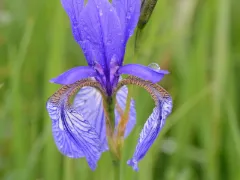
Siberian iris
2½ ft · late May to late June
Elegant, butterfly-like flowers in early summer above clumps of slender, grassy leaves.
-
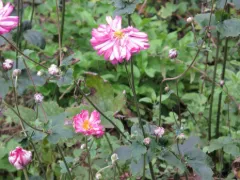
Japanese anemone
3 ft · mid August to early October
Graceful, simple flowers on tall stems that bring fresh colour to late summer and fall.
-

Common lilac
11½ ft · early May to late May · host plant
The lilac of old farmyards: large, heavily scented flower trusses in lilac, purple, white or pink in mid-spring, on a tall, suckering shrub that can live for a century.
-

Hollyhock
6 ft · early July to late August
Towering spires of wide, open flowers in almost every colour, the signature plant of the cottage garden.
-

Bigleaf hydrangea
5 ft · late June to late August
The classic mophead and lacecap hydrangea, with big, glossy leaves and large flower heads.
-
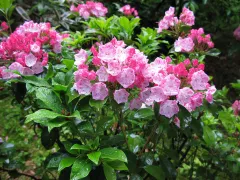
Mountain laurel
8 ft · late May to late June
A native evergreen with crimped, sugar-icing buds that open into cup-shaped flowers of white, pink or red in late spring, in clusters that cover the plant.
-
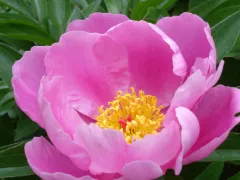
Peony
3 ft · late May to late June
Large, often fragrant blooms in late spring on a long-lived plant that can thrive for decades.
-
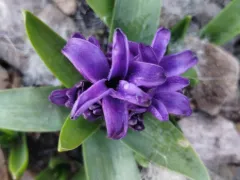
Hyacinth
10 in · mid April to early May
Dense, waxy spikes of intensely fragrant flowers in blue, purple, pink, white or soft yellow, in mid-spring.
-

Calla lily
2½ ft · mid May to mid July
Pure white, funnel-shaped flowers of great elegance, each wrapped around a yellow spike, above glossy, arrow-shaped leaves.
-
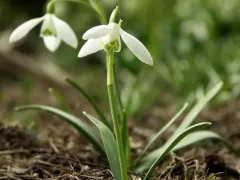
Snowdrop
6 in · early March to late March
Nodding white bells that push up through the last of the snow, weeks before anything else.
-
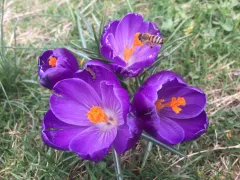
Crocus
5 in · late March to mid April
Goblet-shaped flowers that open wide in early spring sun and feed the first bees of the year.
A bed planned only from these plants
The planner was given only the plants on this page that suit zone 6 and full sun, and designed this 16 × 8 ft (4.9 × 2.4 m) bed from them when the page was made.
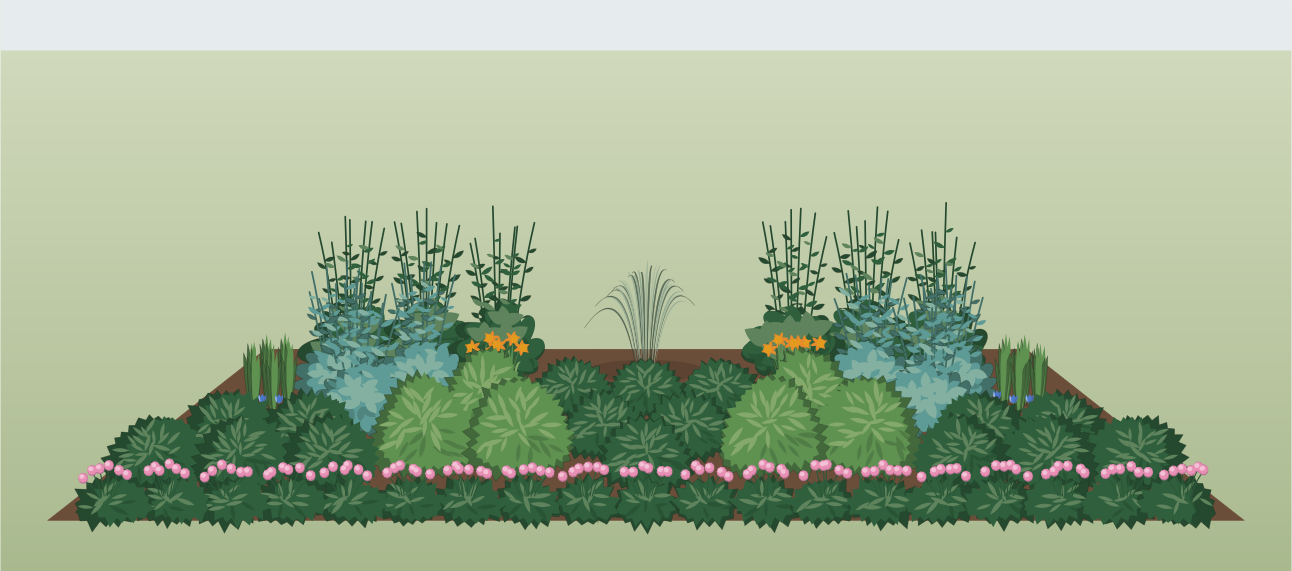
The plants
- 1 Sea thrift × 19, pink
- 2 Muhly grass 'White Cloud' × 1, white
- 3 Wild quinine × 6, white
- 4 Red valerian × 6, red
- 5 Winter heath × 16, purple
- 6 Heather × 6, purple
- 7 Spring starflower × 6, blue
- 8 Dutch iris × 14, yellow
- 9 Daffodil × 6, orange
Planned as a formal bed: 80 of the 80 plants (100%) are mirrored across the middle of the bed: each stands on the middle line or has a twin of its own kind opposite it. The bed is tied together by its repeats: four kinds come round again along it, among them winter heath and wild quinine. Sea thrift and winter heath finish the front edge.
The planner's own design check: 12 Excellent, 5 Good. It flags one thing to watch: Nothing on this plan is highly poisonous or an aggressive spreader.
Open this bed in the planner Change its size, the sun or the style, move plants about, or swap one for another.
All 332 plants
Show all 332, by where they go in a bed
Front of a bed 111
- Allegheny spurge 10 in · early April to early May
- Alpine aster 10 in · mid May to late June
- Autumn crocus 5 in · mid September to mid October
- Bearberry cotoneaster 12 in · late May to mid June
- Bergenia 'Bressingham White' 14 in · mid April to early May
- Bigroot cranesbill 16 in · mid May to late June
- Bloodroot 8 in · late March to mid April
- Bloody cranesbill 12 in · late May to late July
- Calamint 16 in · mid July to early October
- Calamint 'Montrose White' 16 in · late June to mid October
- Canada anemone 18 in · late May to late June
- Candytuft 10 in · mid April to late May
- Carpathian bellflower 10 in · late June to late August
- Checkered lily 12 in · mid April to early May
- Christmas rose 12 in · late February to early April
- Christmas rose 'Jacob' 10 in · late November to late December
- Common blue violet 8 in · mid April to late May · host plant
- Cotoneaster 'Coral Beauty' 18 in · late May to early June
- Cottage pinks 12 in · late May to late June
- Cottage pinks 'Mrs Sinkins' 12 in · early June to early July
- Cranesbill 'Biokovo' 10 in · late May to late June
- Creeping baby's breath 6 in · early June to mid July
- Creeping phlox 6 in · mid April to mid May
- Creeping woodland phlox 8 in · late April to late May
- Crocus 5 in · late March to mid April
- Daffodil 16 in · mid April to early May
- Daffodil 'Thalia' 14 in · mid April to early May
- Double snowdrop 5 in · early February to mid March
- Drumstick primrose 12 in · early April to early May
- Dutchman's breeches 8 in · mid April to early May
- Dwarf bearded iris 8 in · late April to mid May
- Dwarf crested iris 6 in · late April to mid May
- Dwarf Solomon's seal 8 in · early May to early June
- English daisy 6 in · mid April to mid June
- Fairy thimbles 4 in · late June to early August
- Foamflower 10 in · late April to late May
- Fringed bleeding heart 16 in · early May to late August
- Giant snowdrop 8 in · mid February to mid March
- Glory-of-the-snow 6 in · late March to mid April
- Grecian windflower 5 in · early April to early May
- Groundcover rose 18 in · late May to mid October
- Hardy cyclamen 5 in · late August to mid October
- Hardy orchid 16 in · mid May to mid June
- Heath aster 'Snow Flurry' 6 in · mid September to mid October
- Heather 16 in · late July to mid September
- Horned violet 6 in · mid April to late June · host plant
- Hosta 'So Sweet' 14 in · early August to early September
- Hyacinth 10 in · mid April to early May
- Iceland poppy 16 in · early May to late June
- Irish moss 1 in · mid May to late June
- Lady tulip 12 in · mid April to early May
- Large self-heal 8 in · mid June to early August
- Lenten rose 18 in · late March to early May
- Lily of the valley 8 in · early May to late May
- Lilyturf 16 in · early August to mid September
- Liverleaf 6 in · late March to late April
- Lowbush blueberry 16 in · early May to late May
- Lungwort 12 in · early April to early May
- Lupine Gallery Series 20 in · late May to early July
- Maiden pinks 8 in · early June to mid July
- Mazus 2 in · early May to mid June
- Meadow saffron 6 in · mid September to mid October
- Mossy saxifrage 5 in · late April to late May
- Mountain avens 3 in · late May to late June
- Mountain sandwort 4 in · mid May to late June
- Netted iris 5 in · early March to late March
- Pasque flower 10 in · early April to early May
- Poet's daffodil 16 in · early May to late May
- Polyanthus primrose 8 in · late March to mid May
- Rain lily 8 in · mid August to early October
- Rock cress 8 in · mid April to early May
- Rock rose 10 in · late May to early July
- Roof iris 14 in · mid May to early June
- Rue anemone 6 in · mid April to mid May
- Scarlet coral bells 18 in · late May to late July
- Sea thrift 8 in · early May to mid June
- Shasta daisy 'Snowcap' 14 in · late June to mid August
- Shooting star 16 in · early May to late May
- Siebold's primrose 10 in · early May to late May
- Snow crocus 3 in · early March to late March
- Snow-in-summer 8 in · late May to late June
- Snowdrop 6 in · early March to late March
- Snowdrop anemone 16 in · early May to late May
- Spanish bluebell 16 in · early May to late May
- Spike speedwell 18 in · late June to early August
- Spotted dead nettle 8 in · early May to mid July
- Spotted dead nettle 'White Nancy' 6 in · early May to late July
- Spring starflower 6 in · early April to early May
- Squirrel corn 8 in · mid April to early May
- Stokes' aster 18 in · late June to mid August
- Strawberry begonia 8 in · mid May to late June
- Summer snowflake 18 in · late April to mid May
- Sweet box 18 in · early February to late March
- Sweet violet 6 in · late March to early May · host plant
- Sweet William 18 in · late May to late June
- Sweet woodruff 8 in · early May to early June
- Three-toothed cinquefoil 6 in · late May to early July
- Tulip 18 in · late April to mid May
- Turkestan onion 10 in · mid May to early June
- Waterlily tulip 8 in · late March to mid April
- White barrenwort 'Niveum' 8 in · late April to mid May
- White trillium 16 in · mid April to mid May · host plant
- Wild strawberry 6 in · early May to early June
- Willowleaf cotoneaster 'Scarlet Leader' 24 in · late May to mid June
- Winter cyclamen 3 in · early February to late March
- Winter heath 10 in · late January to mid April
- Wintergreen 5 in · late June to late July
- Wood anemone 6 in · early April to early May
- Woodland phlox 12 in · late April to late May
- Woodland stonecrop 4 in · late April to late May
- Woodland strawberry 8 in · early May to late August
Middle of a bed 92
- Abelia 'Kaleidoscope' 2½ ft · mid June to early October
- Adam's needle 3 ft · late June to mid July · host plant
- African lily 3 ft · late June to early August
- Asiatic lily 3 ft · late June to mid July
- Astilbe 24 in · late June to mid July
- Astilbe 'Deutschland' 20 in · late May to late June
- August lily 24 in · mid August to mid September
- Autumn sage 2½ ft · mid May to mid October
- Balloon flower 24 in · early July to mid August
- Bearded iris 2½ ft · late May to mid June
- Bearded iris 'Immortality' 2½ ft · late May to mid June
- Beardtongue 'Husker Red' 2½ ft · late May to late June
- Birchleaf spirea 'Tor' 2½ ft · late May to mid June
- Black chokeberry 'Low Scape Mound' 20 in · early May to late May
- Bleeding heart 2½ ft · early May to early June
- Bowman's root 3 ft · late May to late June
- Calla lily 2½ ft · mid May to mid July
- Camassia 2½ ft · mid May to late May
- Columbine 24 in · early May to mid June
- Columbine meadow rue 3 ft · late May to late June
- Coneflower 'White Swan' 2½ ft · early July to early September · host plant
- Darwin hybrid tulip 24 in · late April to mid May
- David viburnum 3½ ft · mid May to late May
- Delphinium Magic Fountains 3 ft · late June to late July
- Deutzia 'Chardonnay Pearls' 2½ ft · early May to late May
- Doll's eyes 2½ ft · early May to late May
- Dutch iris 22 in · mid May to early June
- Dwarf fothergilla 3 ft · late April to mid May
- Easter lily 3 ft · late June to mid July
- European columbine 2½ ft · mid May to late June
- False Solomon's seal 2½ ft · early May to early June
- Feverfew 20 in · late June to mid August
- Floribunda rose 3 ft · early June to early October
- Flowering spurge 2½ ft · early July to late August
- Fringed pink 20 in · late June to late August
- Garden chrysanthemum 24 in · mid September to late October
- Garlic chives 20 in · late August to mid September
- Gas plant 3 ft · late May to late June
- Globe thistle 'Arctic Glow' 3 ft · early July to mid August
- Gooseneck loosestrife 3 ft · early July to mid August
- Hairy alumroot 'Autumn Bride' 24 in · late August to early October
- Hosta 'Guacamole' 24 in · early August to late August
- Hosta 'Royal Standard' 2 ft · early August to early September
- Hyssop 20 in · early July to late August
- Jacob's ladder 24 in · mid May to late June
- Japanese anemone 3 ft · mid August to early October
- Japanese iris 3 ft · late June to mid July
- Japanese primrose 20 in · mid May to late June
- Long-leaved speedwell 3 ft · late June to mid August
- Louisiana iris 3 ft · mid May to early June
- Masterwort 24 in · early June to late July
- Meadow cranesbill 2½ ft · mid June to mid July
- Meadow sage 24 in · late May to mid July
- Mock orange 'Miniature Snowflake' 3 ft · early June to late June
- Montauk daisy 3 ft · mid September to late October
- Mountain mint 3 ft · early July to early September · host plant
- Mourning widow 24 in · early May to mid June
- Musk mallow 2½ ft · late June to late August
- Nettle-leaved mullein 3 ft · mid June to early August
- New Jersey tea 3 ft · mid June to mid July · host plant
- New York aster 3 ft · late August to mid October · host plant
- Obedient plant 'Miss Manners' 2 ft · mid July to early September
- Oriental poppy 2½ ft · late May to late June
- Painted daisy 24 in · early June to mid July
- Peach-leaved bellflower 2½ ft · mid June to mid July
- Pearly everlasting 24 in · late July to early September
- Peony 3 ft · late May to late June
- Pieris 'Cavatine' 2½ ft · early April to early May
- Pineapple lily 24 in · late July to early September
- Red baneberry 24 in · early May to late May
- Red valerian 2½ ft · late May to early September
- Rose campion 2½ ft · early June to late July
- Sea kale 24 in · late May to late June
- Shasta daisy 'Crazy Daisy' 2 ft · late June to late August
- Shrubby cinquefoil 3 ft · early June to mid September
- Shrubby cinquefoil 'Abbotswood' 2½ ft · early June to mid September
- Siberian iris 2½ ft · late May to late June
- Slender deutzia 'Nikko' 24 in · early May to late May
- Slender mountain mint 2½ ft · early July to late August · host plant
- Sneezewort 'The Pearl' 24 in · late June to mid August
- Solomon's seal 3 ft · early May to late May
- Spiderwort 24 in · late May to late July
- Summersweet 'Hummingbird' 3 ft · mid July to mid August
- Sweetspire 'Little Henry' 2½ ft · early June to early July
- Variegated Solomon's seal 2½ ft · early May to late May
- White bleeding heart 2½ ft · early May to early June
- White snakeroot 3½ ft · late August to mid October
- White turtlehead 3 ft · early August to mid September
- White valerian 2½ ft · early June to early September
- White wood aster 24 in · late August to early October · host plant
- Yarrow 24 in · mid June to late August
- Yucca 'Color Guard' 2½ ft · late June to mid July · host plant
Back of a bed 129
- Allium 'Mount Everest' 3½ ft · late May to mid June
- American cranberrybush 10 ft · late May to mid June
- American elderberry 10 ft · mid June to mid July
- Arrowwood viburnum 8 ft · late May to late June
- Arrowwood viburnum 'Blue Muffin' 6 ft · late May to mid June · host plant
- Azalea 'Delaware Valley White' 4 ft · early May to late May
- Bigleaf hydrangea 5 ft · late June to late August
- Black chokeberry 5 ft · early May to late May
- Black chokeberry 'Viking' 6 ft · early May to late May
- Black cohosh 5 ft · early July to early August · host plant
- Boltonia 'Snowbank' 4 ft · early September to mid October
- Boneset 4 ft · early August to mid September
- Bottlebrush buckeye 10 ft · late June to late July
- Bridal wreath spirea 6½ ft · mid May to late May
- Bugbane 'Brunette' 5 ft · early September to early October
- Burkwood osmanthus 8 ft · mid April to early May
- Burkwood viburnum 8 ft · mid April to early May
- Bush clover 5 ft · late August to early October
- Buttonbush 6½ ft · late June to early August
- Canadian burnet 5 ft · mid August to early October
- Catawba rhododendron 8 ft · late May to mid June
- Chaste tree 11½ ft · early July to early September
- Cherry laurel 'Otto Luyken' 3½ ft · late April to mid May · host plant
- Chinese fringe flower 6½ ft · late March to early May
- Common lilac 11½ ft · early May to late May · host plant
- Crinum lily 4 ft · mid July to early September
- Culver's root 5 ft · early July to mid August
- Dahlia 3½ ft · mid July to mid October
- Delphinium 5 ft · late June to mid July
- Delphinium Pacific Giants 6 ft · late June to late July
- Doublefile viburnum 8 ft · early May to late May
- Doublefile viburnum 'Mariesii' 10 ft · mid May to late May
- Drooping leucothoe 4 ft · early May to late May
- Drooping leucothoe 'Rainbow' 4 ft · early May to late May
- English rose 4 ft · early June to early October
- Evergreen azalea 4 ft · mid April to mid May
- False spirea 'Sem' 3½ ft · late June to late July
- Firethorn 'Mohave' 10 ft · late May to early June
- Flame grass 4½ ft · early August to mid September
- Flat-topped aster 5 ft · early August to mid September · host plant
- Flowering quince 6 ft · late March to late April
- Fothergilla 'Mount Airy' 5 ft · late April to mid May
- Foxglove 4 ft · early June to mid July
- Foxglove beardtongue 3½ ft · late May to late June
- Foxtail lily 6 ft · early June to early July
- Garden phlox 3½ ft · mid July to early September
- Garden phlox 'David' 3½ ft · mid July to early September
- Gardenia 5 ft · late May to late July
- Giant fleeceflower 6 ft · early June to late August
- Gladiolus 4 ft · mid July to early September
- Glossy abelia 5 ft · mid June to early October
- Greater sea kale 6 ft · early June to early July
- Ground clematis 'Purpurea' 5 ft · early June to mid July
- Hardy hibiscus 5 ft · late July to mid September
- Highbush blueberry 6½ ft · early May to late May · host plant
- Hollyhock 6 ft · early July to late August
- Hybrid tea rose 4 ft · early June to early October
- Indian hawthorn 4 ft · early April to early May
- Japanese anemone 'Honorine Jobert' 4 ft · late August to mid October
- Japanese camellia 10 ft · early February to early April
- Japanese fatsia 6½ ft · mid October to late November
- Japanese pieris 8 ft · late March to late April
- Japanese pittosporum 10 ft · mid April to mid May
- Japanese skimmia 3½ ft · mid April to early May
- Koreanspice viburnum 5 ft · late April to early May
- Laurustinus 8 ft · early January to early April
- Lewis's mock orange 8 ft · early June to late June
- Lupine 3½ ft · late May to early July
- Madonna lily 4 ft · late June to mid July
- Mapleleaf viburnum 5 ft · late May to mid June · host plant
- Martagon lily 4 ft · late June to mid July
- Mexican orange blossom 6 ft · early May to late May
- Milky bellflower 4½ ft · late June to early August
- Mock orange 10 ft · late May to late June
- Mock orange 'Belle Etoile' 6 ft · early June to late June
- Mountain hydrangea 3½ ft · late June to mid August
- Mountain laurel 8 ft · late May to late June
- Muhly grass 'White Cloud' 4 ft · early October to early November
- Ninebark 'Dart's Gold' 5 ft · late May to late June
- Ninebark 'Diabolo' 8 ft · late May to late June
- Northern Lights azalea 5 ft · mid May to early June
- Obedient plant 3½ ft · early August to mid September
- Oleander 10 ft · mid June to early October
- Orienpet lily 6 ft · mid July to early August
- Oriental lily 4 ft · early August to late August
- Oriental lily 'Casa Blanca' 4 ft · early August to late August
- Pearlbush 'The Bride' 4 ft · early May to mid May
- Pieris 'Mountain Fire' 6½ ft · late March to late April
- Rattlesnake master 4 ft · mid July to late August · host plant
- Reblooming azalea 3½ ft · mid April to mid May
- Red chokeberry 'Brilliantissima' 7 ft · early May to late May
- Red osier dogwood 8 ft · late May to mid June · host plant
- Regal lily 5 ft · early July to late July
- Rhododendron 'Cunningham's White' 5 ft · mid May to early June
- Rodgersia 4 ft · late June to mid July
- Rose 'Iceberg' 4 ft · mid June to early October
- Rose of Sharon 10 ft · mid July to mid September
- Rose of Sharon 'Diana' 8 ft · mid July to mid September
- Rugosa rose 5 ft · early June to mid September
- Rugosa rose 'Blanc Double de Coubert' 5 ft · early June to mid September
- Sasanqua camellia 8 ft · early October to mid December
- Saskatoon serviceberry 10 ft · late April to early May
- Schip laurel 10 ft · late April to early May · host plant
- Seven-son flower 16½ ft · late August to mid September
- Shadblow serviceberry 16½ ft · mid April to early May · host plant
- Shasta daisy 'Becky' 3½ ft · early July to early September
- Snowmound spirea 4 ft · late May to early June
- Spirea 'Grefsheim' 5 ft · mid April to early May
- Spirea 'Ogon' 4 ft · early April to late April
- Star magnolia 'Royal Star' 13 ft · early April to late April
- Summersweet 6½ ft · mid July to mid August
- Swamp azalea 6½ ft · late June to mid July
- Swamp milkweed 4 ft · early July to early August · host plant
- Swamp milkweed 'Ice Ballet' 3½ ft · early July to mid August · host plant
- Sweet olive 13 ft · mid September to mid November
- Tree peony 5 ft · early May to late May
- Trumpet lily 5 ft · mid July to early August
- Viburnum 'Summer Snowflake' 6½ ft · mid May to early September
- Virginia sweetspire 5 ft · early June to early July
- Virginia sweetspire 'Henry's Garnet' 4 ft · early June to early July
- White false indigo 4 ft · late May to late June · host plant
- White fringe tree 15 ft · late May to early June
- White meadowsweet 4 ft · late June to late August · host plant
- White snakeroot 'Chocolate' 3½ ft · mid September to mid October
- Wild quinine 3½ ft · late June to late August
- Winter daphne 4 ft · early February to late March
- Winterberry 'Berry Poppins' 3½ ft · early June to late June · host plant
- Winterberry 'Winter Red' 8 ft · early June to late June · host plant
- Witherod viburnum 'Winterthur' 6½ ft · early June to late June · host plant